
Local service guide
Senior Care in Columbia, SC: Arrange the Right Help
To arrange Senior Care in Columbia, start with a written list of daily tasks, the hours you need covered, and any medical needs. Check a covered in-home care agency’s South Carolina license before hiring. For families in Richland or Lexington County, review caregiver respite and PACE eligibility before committing to a private schedule. Ask each provider for a written care plan, total charges, and replacement coverage for missed visits. [1] [2] [3] [4]
Define the tasks before choosing a provider
Write down what your relative needs help doing during a normal day. Include getting out of bed, bathing, dressing, using the toilet, eating, preparing meals, and moving around the home. South Carolina defines in-home care around personal needs and activities of daily living; that definition excludes skilled care and specific therapy for illness or injury. [3]
Describe medication help with care. The statute includes supervision of self-administered medication within personal assistance. If you need someone to administer medication or perform a medical task, ask the treating clinician to identify the appropriate service and qualifications before you accept a caregiver’s offer. [3]
Include your relative in the planning conversation. Record preferred routines, privacy needs, foods, communication needs, and tasks they want to keep doing themselves. For a discharge home, use the discharge instructions to prepare questions for the provider. Ask who will assess transfers and whether the proposed caregiver can carry out the agreed tasks.
Check the agency and the person entering the home
Ask an agency for its legal business name and in-home care license details. Use the South Carolina Department of Public Health’s In-Home Care Providers page to reach its official facility finder and background-check resources. The department’s definition covers businesses using employees, contractors, and certain financially interested referral arrangements. [4]
South Carolina law requires caregivers employed by licensed in-home care providers to undergo a criminal record check and submit to a drug test before employment. Ask the agency how it documents screening, trains caregivers for your relative’s needs, supervises visits, and handles complaints. Request evidence of insurance and ask who pays if a caregiver damages property. [3]
If the recipient or family hires an individual directly, the statute excludes that individual from its in-home care provider definition. Check references and qualifications, and clarify payment arrangements, insurance, absences, and supervision. Ask who will cover the visit if the caregiver cannot attend, and write down that agreement before care starts. [3]
Compare the full schedule and written cost
Give each prospective provider the same task list and proposed schedule. Request an itemized quote that states the hourly or visit charge, minimum booking, weekend and holiday charges, transport costs, cancellation terms, and assessment fees. Ask the provider to calculate the total for your planned week so you can compare offers on the same basis.
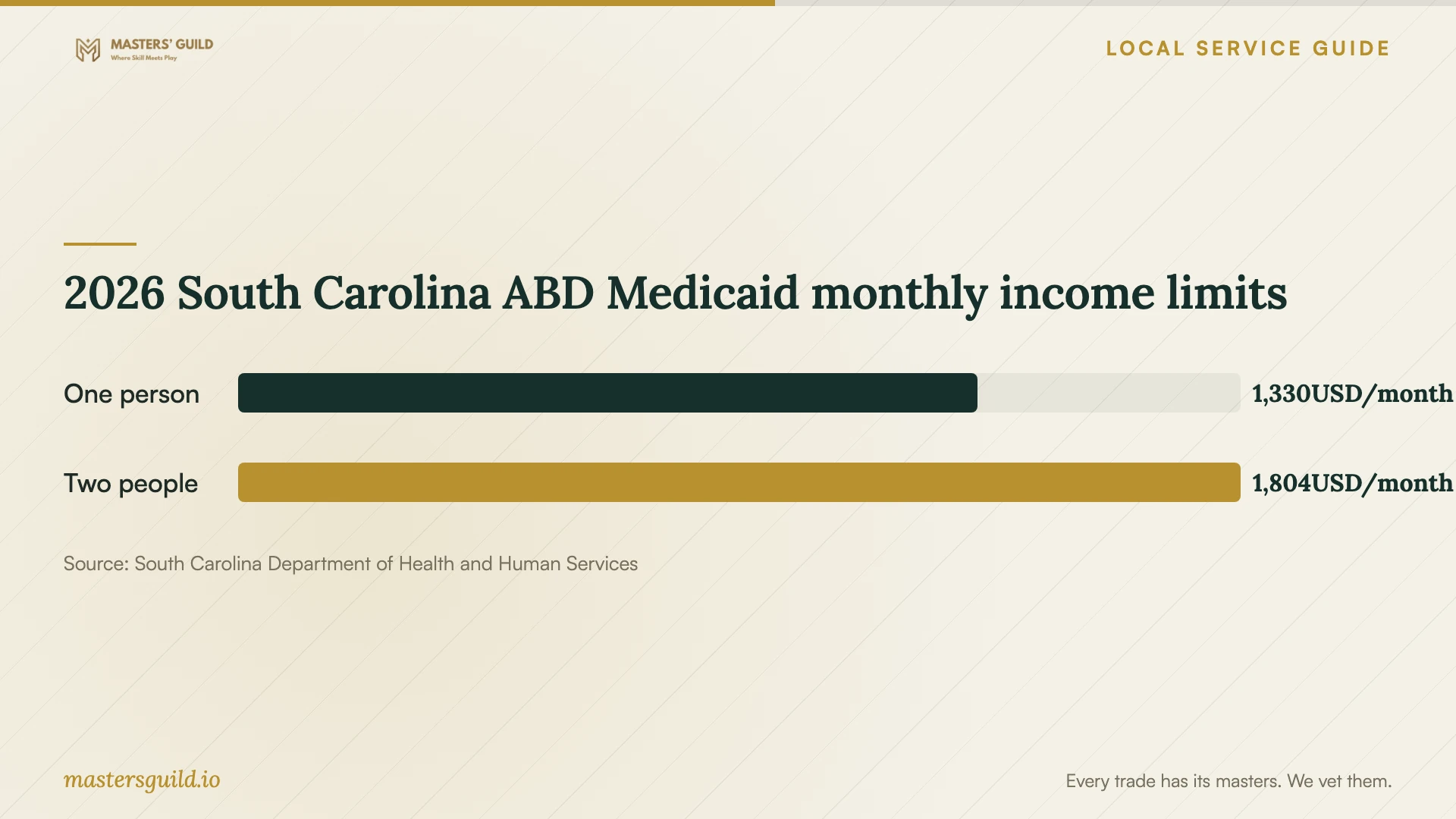
For overnight help, describe whether you expect a sleeping caregiver or someone awake throughout the shift. Ask how the provider handles interruptions, additional staff, and changing needs. For continuous coverage, request a staffing schedule and handover process. Keep private care quotes separate from the Medicaid income thresholds below; SCDHHS publishes those thresholds for program eligibility. [5]
Set a review date after care begins. Agree on how the caregiver records completed tasks, reports concerns, and contacts the family. Ask what requires a new assessment or a change in charges, and who must approve that change.
Review funding before committing to ongoing care
For Medicaid-supported long-term care at home, SCDHHS tells applicants to contact Healthy Connections about a Community Long Term Care determination before completing the application. Its long-term care eligibility guidance includes a nursing facility level of care and financial requirements. Call the Member Help Center at 888-549-0820 to ask which application and assessment apply to your situation. [5]
Do not use the general Aged, Blind or Disabled income chart as a complete test for long-term care eligibility. SCDHHS publishes separate eligibility categories and long-term care rules. Ask about your category, countable resources, household circumstances, and the services you seek. The department encourages people who are unsure of eligibility to apply. [5]
SCDHHS states that PACE applicants must have Medicare or Medicaid, or both. They must also be at least 55, live in a PACE organization’s service area, meet the nursing home level of care certified by SCDHHS, and be able to live safely in the community with PACE assistance. Ask the program to assess these requirements before you plan around enrollment. [2]
PACE coordinates Medicare- and Medicaid-covered services and other care its clinical team determines necessary, including home care and transportation. SCDHHS says Medicaid participants have no monthly premium for the long-term care portion; Medicare participants without Medicaid pay long-term care and drug-coverage premiums. Enrollees may need to use a PACE-preferred doctor, so discuss your existing clinicians before enrollment. [2]
2026 South Carolina ABD Medicaid monthly income limits
Local details that affect your job
Arrange Midlands respite through an intake
The Central Midlands Aging and Disability Resource Center serves unpaid caregivers in Fairfield, Lexington, Newberry, and Richland counties. Its caregiver program supports people caring for adults 60 or older with health problems and people caring for someone of any age with Alzheimer’s disease or a related disorder. Start with the caregiver coordinator’s intake and needs assessment, then submit the appropriate application and documentation. Alzheimer’s respite requires a doctor’s written diagnosis. The center guides approved applicants toward an approved provider; vouchers are typically valid for 90 days. Disclose existing respite funding because the program prohibits simultaneous funding from two sources, and ask about a waiting list before relying on a start date. [1]
Check the address and eligibility for PACE-Midlands
SCDHHS lists Prisma Health SeniorCare PACE-Midlands for Richland and Lexington counties at 803-931-8175. Applicants must have Medicare or Medicaid, or both, live within the organization’s service area, be at least 55, meet the state-certified nursing home level of care, and be able to live safely in the community with PACE assistance. Confirm the home address and assessment process before building a care budget around enrollment. [2]
Choose the next step for your care arrangement
| Your situation | Care route to explore | Next step |
|---|---|---|
| Help with bathing, dressing, meals, or toileting | Licensed in-home care agency | Check the license and request a care plan for the specified tasks. |
| The recipient or family hires an individual directly | Direct hire, excluded from this provider licensing definition | Check references and agree on supervision and backup coverage. |
| An unpaid family caregiver needs a break | Midlands caregiver respite | Complete intake; disclose other respite funding and ask about availability. |
| Age 55 or older, with Medicare or Medicaid and substantial care needs | PACE-Midlands | Confirm the service address, state-certified care level, and safe community living requirements. |
| Seeking Medicaid-supported long-term care at home | Healthy Connections and CLTC | Ask about the CLTC determination before completing the application. |
Your hiring checklist
- Prepare a task list, proposed schedule, and the care recipient’s preferences.
- Ask the clinician to clarify medical tasks and medication responsibilities.
- Check the agency’s legal name and license through the official DPH resources.
- Ask about caregiver screening, task training, supervision, and insurance.
- Get a written weekly total with minimum hours and additional charges.
- Agree on replacement coverage, visit records, and family contacts.
- Confirm funding approval and provider requirements before counting on assistance.
- Set a date to review the care plan and charges.
Frequently Asked Questions
Does a nonmedical home care agency need a license?
A business that meets South Carolina’s in-home care provider definition must obtain a license. The law includes personal assistance and excludes specified arrangements, including an individual hired directly by the recipient or family. Check the agency through the DPH in-home care resources. [3] [4]
Can I combine a respite voucher with another funded respite program?
The Midlands caregiver program prohibits receiving respite funding from two sources simultaneously, including the programs it lists such as CLTC, hospice, Medicaid PACE, and VA in-home care. Tell the coordinator about existing assistance before applying. [1]
Does PACE cover home care and transport?
SCDHHS includes home care and transportation among PACE services, within coordinated care and the team’s determination of medical necessity. Ask PACE-Midlands what the assessed plan would cover and whether enrollment would change your doctors. [2]
How should I compare private senior care costs?
Request comparable written quotes for the same tasks and hours. Ask each provider to include minimum bookings, overnight arrangements, transport, and cancellation charges in the total. Use the Medicaid income chart as a funding reference when discussing eligibility with Healthy Connections. [5]
Sources and scope
This guide combines the sources below with practical planning guidance. Figures apply to the stated geography and period; request a written quote for your property.