
Local service guide
Pest Control Services in Columbia, SC
For Pest Control Services in Columbia, start with pest identification and a written inspection scope, then compare treatment and follow-up terms. For structural pest work, verify the company’s South Carolina Category 7A business credentials through Clemson’s Department of Pesticide Regulation. Ask who will perform the treatment and who supervises that person. For suspected termites, request an inspection diagram and review damage exclusions before signing. [2] [3]
Define the problem before requesting treatment
Tell each company where you saw the pest, when you first noticed it and which rooms or exterior areas need inspection. Send clear photographs if you have them. Describe previous treatments and provide any existing service contract. Ask the inspector to confirm the pest before you authorize a treatment aimed at it.
For possible termites, photograph shelter tubes, damaged wood or winged insects without disturbing the area. Clemson Extension describes earthen shelter tubes as a sign of subterranean termite activity and explains that homeowners can confuse termite swarmers with flying ants. Ask for identification rather than choosing a treatment from a photograph alone. [3]
Request a written scope that names the target pest, areas the company will inspect, proposed method and excluded work. For a recurring plan, ask which pests it covers and whether the company charges for return visits. Keep termite treatment, rodent entry repairs and other requested work as separate quote items so you can compare each obligation.
Verify South Carolina credentials
South Carolina requires commercial licensing for compensated pesticide applications in specified categories, including structural pest control. Clemson’s Department of Pesticide Regulation also requires a business license for Category 7A activities. Use its licensing page’s verification options and match the business name and applicator information to the company providing your quote. [2]
Ask whether the person arriving holds a commercial applicator license or works as a trained technician, and request the relevant identification. Clemson describes a Verifiable Technician Training program with annual retraining. A company’s business license alone does not answer your question about the visiting worker’s credentials or supervision. [2]
Request current proof of liability insurance that covers pesticide use and transport. Clemson states that Category 7A and 7B applicators must maintain at least $100,000 in combined single-limit comprehensive general liability coverage. Treat that regulatory minimum as a credential check, and ask the company to explain its actual coverage. [1]
Compare termite methods and contract obligations
Ask the inspector to explain how the proposed termite method fits your foundation and inspection findings. Clemson Extension describes liquid soil treatments that protect the structure and bait systems that require scheduled monitoring. Liquid treatment may involve trenching and slab drilling to establish a continuous barrier. Request the planned work locations and monitoring schedule in writing. [3]
For termite bids, Clemson recommends comparing two or three firms and obtaining a diagram that identifies damage, structural or drainage problems and inaccessible areas. Ask how the company will handle a blocked crawlspace, enclosed porch or other inspection gap before you accept its assessment. [3]
Read the warranty for damage liability and species exclusions. Clemson warns that some firms limit liability for damage after treatment or exclude damage from specific termites. Ask whether your agreement includes retreatment, repair coverage or both. Request renewal charges, cancellation terms and any homeowner repair requirements before signing. [3]
Prepare for the visit and plan follow-up
Ask the company for written preparation and re-entry instructions for the proposed product and method. Tell it about children, pets and any household concerns before scheduling. Clemson’s regulator states that pesticide label directions govern application and storage. Follow the instructions for your treatment rather than assuming the same waiting time applies to every visit. [1]
Make agreed inspection areas accessible and point out leaks, wet wood and standing water near the foundation. Clemson Extension recommends correcting drainage, reducing wood-to-ground contact and removing cellulose debris around the structure as part of termite prevention. Ask which corrections you should arrange and which, if any, the pest-control company includes. [3]
Before the technician leaves, request a service record and a clear follow-up plan. Ask what activity to monitor, when to report it and whether another visit costs extra. Keep photographs and dated notes so you can describe any change at the next inspection.
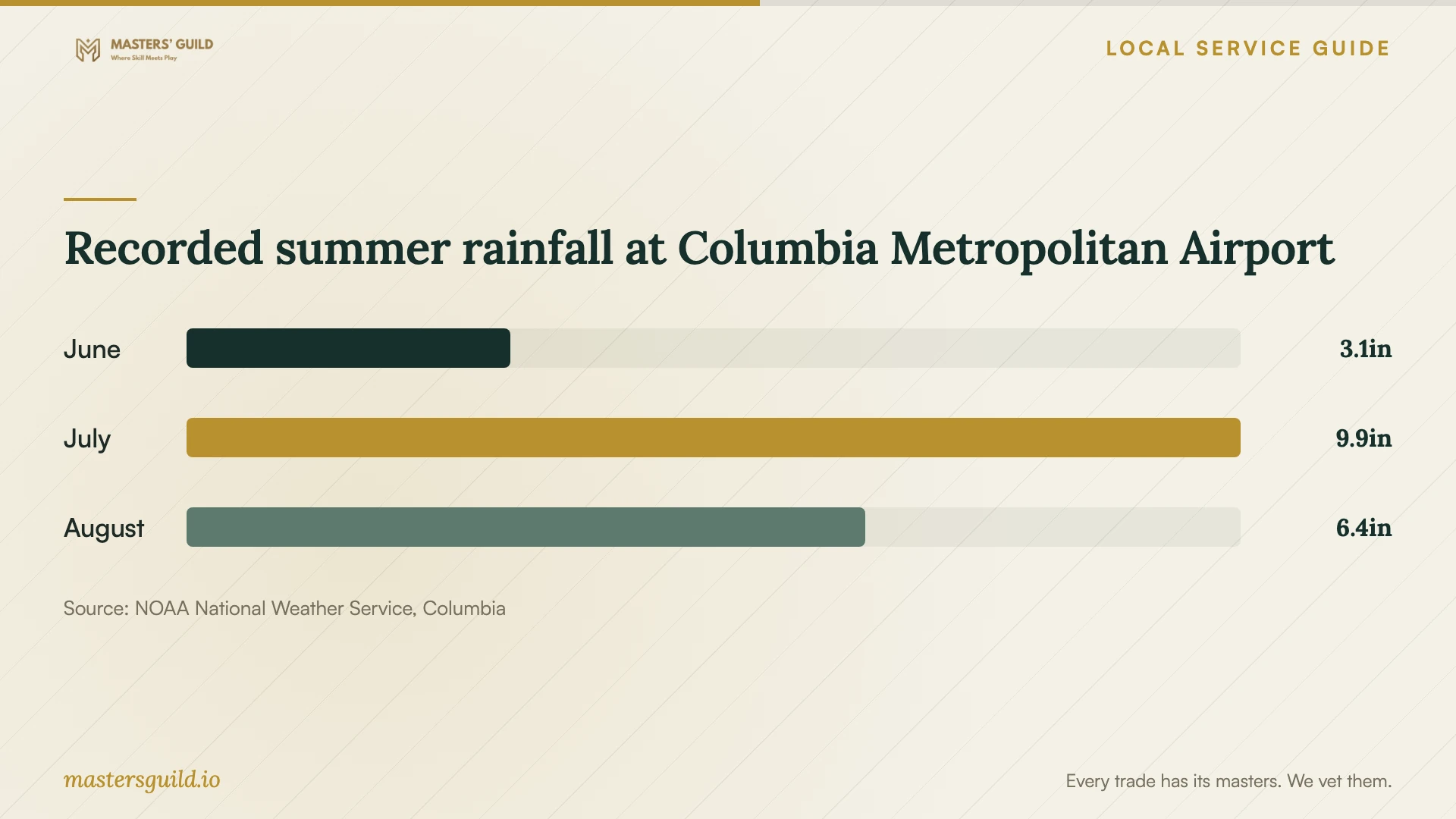
Recorded summer rainfall at Columbia Metropolitan Airport
Local details that affect your job
Verify the branch responsible for your home
For structural pest-control businesses serving Columbia, South Carolina requires a Category 7A Designated Certified Applicator at each business location. Clemson says that person must work at the assigned location full time while it operates and cannot serve as DCA for multiple locations. Ask for the responsible branch and its DCA when checking credentials, especially if the company operates several branches. [2]
Recheck credentials for work after December
South Carolina commercial applicator licenses expire on December 31 each year, and structural pest business licenses also require annual renewal. If you arrange an ongoing plan or schedule treatment across the year-end boundary, verify renewed credentials before the next service. Clemson states that an inactive license does not authorize pest-control work. [1] [2]
Use local rainfall context to discuss drainage
The National Weather Service recorded 9.92 inches of rain at Columbia Metropolitan Airport in July 2024. That historical airport measurement does not describe moisture at your home. Use visible pooling, gutter overflow or wet crawlspace wood to direct the inspection, and ask about drainage corrections alongside termite treatment. [4] [3]
Match the quote to the work you need
| Situation | Request | Check before accepting |
|---|---|---|
| Unidentified household pest | Inspection and pest identification | Named target pest, treatment areas and follow-up terms |
| Suspected subterranean termites | Inspection diagram and method explanation | Damage, drainage issues and inaccessible areas |
| Liquid termite treatment | Written trenching and drilling scope | Work locations and restoration responsibilities |
| Termite bait system | Station plan and monitoring schedule | Monitoring charges and renewal obligations |
| Recurring service across year-end | Renewed South Carolina credentials | Business and commercial applicator license status |
Your hiring checklist
- Record pest sightings, affected areas and previous treatments.
- Request pest identification and a written inspection scope.
- Verify the business, responsible applicator and visiting worker’s credentials.
- Request current proof of pesticide liability coverage.
- Compare initial charges, recurring charges and return-visit terms.
- Read termite damage coverage, exclusions and renewal requirements.
- Obtain preparation, re-entry and follow-up instructions before treatment.
Frequently Asked Questions
How much should I budget for treatment?
Request a written quote after pest identification and inspection. The evidence used here does not establish Columbia treatment prices. Ask for the initial charge, scheduled follow-up charges, optional repairs and recurring fees so you can compare the full proposed commitment.
Can I treat termites myself?
Clemson Extension cautions that homeowners seldom have the equipment, training and knowledge needed to inspect and treat their own houses for termites. Arrange a professional inspection and ask the inspector to explain the findings before choosing a method. [3]
Does a termite warranty include repairs?
Read the individual contract. Clemson notes that some firms limit damage liability or exclude particular termite species. Ask the company to identify repair coverage, retreatment coverage, exclusions and conditions in writing. [3]
Where can I report suspected pesticide misuse?
Clemson’s Department of Pesticide Regulation lists 864-646-2150 for reporting suspected unlicensed pesticide applications, fraud or pesticide misuse. Keep the company name, service record and your description of the application available. [1]
Sources and scope
This guide combines the sources below with practical planning guidance. Figures apply to the stated geography and period; request a written quote for your property.