
Local service guide
lawn mowing in Columbia, SC: Plan the Right Service
For lawn mowing in Columbia, choose a provider who will agree on your grass type, cutting height, visit schedule and clipping disposal before starting. Ask for a written scope covering mowing, trimming, edging and cleanup. Use growth to set the interval: Clemson recommends removing no more than one-third of the grass height during a cut. [2]
Define the visit before comparing quotes
Give each provider the same description of your yard: the areas to mow, gate access, slopes, obstacles and places that need hand trimming. Send photographs of the front and back lawn, narrow passages and any overgrown patches. Ask each provider to name the included tasks so you can compare offers on the same scope.
Request separate prices for the first visit and recurring care if your lawn needs an initial cleanup. Ask whether the quote includes edging along walks, trimming around fences, clearing clippings from hard surfaces and removal of bagged material. Set an approval rule for extra work before the crew arrives.
Agree on the payment basis, cancellation terms and procedure for a missed visit. Ask for proof of insurance and a contact for reporting damage. If you want fertilizing, weed treatment or shrub work, request separate scope descriptions rather than assuming the mowing quote covers them.
Set the mower height for your grass
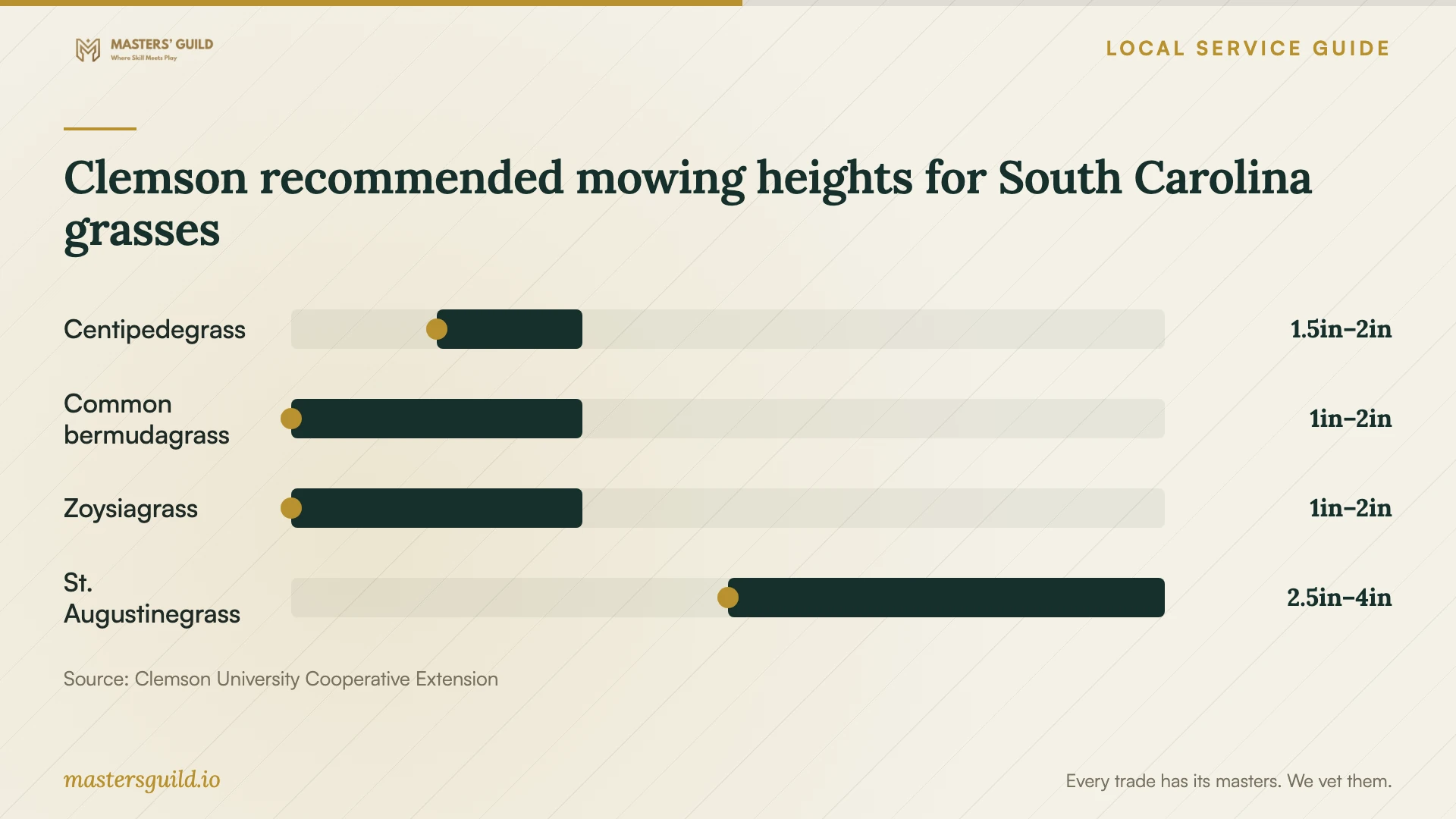
Ask the provider to identify your turf before choosing a mower setting. Clemson's South Carolina guidance recommends 1.5 to 2 inches for centipedegrass, 1 to 2 inches for common bermudagrass and zoysiagrass, and 2.5 to 4 inches for St. Augustinegrass. Use these ranges as the starting point for a discussion about your lawn. [2]
Point out shaded areas and discuss a separate setting for them. Clemson recommends keeping grass in shade at the highest recommended height for its species. Its mowing-height guidance also explains that a higher cut encourages deeper roots and greater drought tolerance, which matters when planning care during hotter, drier summer conditions. [3]
Ask how the crew maintains sharp blades and avoids scalping uneven ground. Clemson explains that dull blades tear and bruise grass leaves, while reel mowers can scalp turf on uneven surfaces. If you want a low-cut lawn, discuss the mower type as well as the requested height. [2]
Choose a schedule that follows growth
Use the one-third rule to judge whether your proposed interval works. For a lawn maintained at 2 inches, Clemson gives a mowing trigger of about 3 inches. Measure a few representative areas before visits and ask the provider to review the interval if the grass exceeds that trigger between cuts. [2]
For an overgrown lawn, ask for a staged approach. Clemson recommends raising the mowing height first, then reducing it toward the recommended height over subsequent mowings. Avoid requesting a single cut down to your usual setting without discussing how much grass the crew would remove. [2]
Put the rescheduling procedure in writing. Ask who will contact you after a weather delay, whether you can approve an added visit, and how the crew will handle an overgrown lawn after a missed appointment. Review the recurring plan when growth changes rather than committing to an inflexible calendar.
Decide where the clippings will go
Consider returning clippings to the lawn as your default mowing specification. Clemson recommends recycling clippings because they return nutrients to the soil. Following the one-third rule also produces smaller clippings that filter down to the soil surface. [2]
If you want bagging, identify who will handle the bags and where the crew should leave them. Confirm collection eligibility, pickup timing and placement requirements for your address with Columbia Solid Waste. Ask whether the planned contractor-generated waste qualifies for collection before directing the crew to leave it for pickup. [1]
Clemson recommended mowing heights for South Carolina grasses
Local details that affect your job
City yard-trimmings acceptance
Columbia Public Works accepts grass clippings and routine yard-maintenance waste as yard trimmings. It also lists loose or bagged leaves and branches less than 6 feet long. If your mowing visit includes branch cleanup, ask the crew to separate and prepare that material within the listed limit. Confirm collection arrangements with Solid Waste at 803-545-3800. [1]
Chargeable cleanup needs a separate plan
The city's yard-trimmings page lists tree removal and lot clearing as subject to a charge. It also requires separating bricks, concrete and other building materials from yard waste. If your first visit includes clearing a neglected area, ask the provider to distinguish routine mowing debris from these categories and state who will arrange disposal and pay any charges. [1]
Regional guidance for shaded yards
Clemson's mowing-height article comes from an Extension horticulture agent serving Fairfield, Kershaw and Richland counties. It recommends the highest species-appropriate mowing height for shaded turf. Apply that regional guidance here by pointing out shaded sections during the estimate and asking the crew to record their cutting height rather than using one setting across the whole property. [3]
Match the service plan to your yard
| Your situation | What to request | Reason |
|---|---|---|
| Grass grows beyond the agreed mowing trigger | Review the visit interval using the one-third rule | Clemson recommends removing no more than one-third of the grass height per cut. |
| Lawn has become overgrown | A higher first cut followed by staged height reductions | Clemson recommends reducing overgrown grass toward its target height over subsequent mowings. |
| Part of the lawn grows in shade | A species-appropriate setting at the upper end of its range | Clemson recommends the highest recommended height for shaded grass. |
| You want clippings removed | A written bagging or hauling scope and confirmed disposal arrangements | Columbia lists grass clippings as accepted yard trimmings. |
| Cleanup includes tree removal or lot clearing | Separate work and disposal prices | Columbia lists these categories as subject to a charge. |
Your hiring checklist
- Photograph the lawn, access gates, obstacles and overgrown areas.
- Ask the provider to identify your grass and record the agreed cutting height.
- List mowing, trimming, edging and hard-surface cleanup as separate scope items.
- Choose whether the crew should return, bag or haul away clippings.
- Separate initial cleanup and disposal charges from the recurring visit price.
- Agree on weather delays, missed visits and approval of extra work.
- Clear toys and pet waste, secure pets and mark irrigation heads before arrival.
Frequently Asked Questions
Should I choose weekly or biweekly mowing?
Choose an interval that lets the crew follow the one-third rule. Clemson's example calls for mowing a lawn maintained at 2 inches when it reaches about 3 inches. Ask the provider to review the schedule against actual growth and explain how you can approve extra visits. [2]
Can the crew leave grass clippings on the lawn?
Yes. Clemson recommends returning clippings to the lawn to recycle nutrients. Specify this in your quote and ask the crew to follow the one-third rule, which produces smaller clippings that filter down to the soil. [2]
Does Columbia accept mowing waste?
Columbia Public Works lists grass clippings and routine yard-maintenance waste as accepted yard trimmings. Confirm collection eligibility, pickup timing and placement requirements for your address with Columbia Solid Waste. Agree with your provider on who will prepare and place the material. [1]
How should I compare mowing prices?
Request quotes for the same areas, tasks and visit interval. Ask each provider to separate the first cleanup from recurring mowing and identify any bagging, hauling or extra-work charges. Compare the total agreed scope and payment terms before choosing.
Sources and scope
This guide combines the sources below with practical planning guidance. Figures apply to the stated geography and period; request a written quote for your property.