
Local service guide
House Cleaning in Columbia, SC: Plan the Right Visit
For House Cleaning in Columbia, SC, choose the visit around the rooms and tasks you need finished, then ask for a written scope and total price. Separate routine upkeep, detailed buildup removal, and move-out work in your request. If you have flood damage or wet building materials, arrange water-damage or mold-remediation help before booking a housekeeping visit; South Carolina DES recommends specialists for flooded-home cleanup. [2]
Choose the visit by the work you want completed
Describe the result you want instead of relying on the label standard or deep clean. For routine upkeep, request a room list covering floors, accessible surfaces, kitchen counters, and bathroom fixtures. For a detailed visit, name the buildup and neglected areas: shower edges, baseboards, cabinet fronts, or dust behind movable furniture. Ask the cleaner to confirm each task.
For a move-out clean, send the property manager's cleaning requirements with your request. Specify whether you need empty cabinets, appliance interiors, closets, and interior glass cleaned. Schedule the visit after you remove belongings, and leave time for a walkthrough before handing over the keys. Ask how the cleaner handles any missed task you identify.
Get a quote you can compare
Give each cleaner the same information: approximate floor area, bathroom count, occupied or empty rooms, pets, photos of problem areas, and your deadline. Request a total for the agreed work and separate prices for optional tasks. Ask whether the cleaner brings supplies, who will enter your home, and how they handle damage. Request proof of liability coverage and review what it covers.
For an hourly quote, ask how many people will work, whether the rate applies per person, and what spending limit you can set. For a fixed quote, ask which conditions would change the price. Confirm cancellation terms, access arrangements, and the process for reporting missed work. Choose a cleaner whose written scope matches your priorities.
Match bathroom cleaning to the residue
Columbia Water reports water hardness of 1–2 grains per gallon and explains that calcium and magnesium determine hardness. If you use its supply, describe the deposits you can see rather than assuming your bathroom needs a heavy hard-water treatment. Ask the cleaner to identify the surface material and proposed product before treating stone, grout, or plated fixtures. [1]
Columbia Water says pink or black residues on surfaces that stay moist generally come from biological growth originating in the air or on the surfaces. The utility recommends drying those areas and cleaning them with a disinfectant solution. Include shower corners, toilet bowls, and other affected surfaces in the scope. Ask who will handle drying and upkeep between visits. [1]
Separate water damage from housekeeping
After flooding or a leak, tell the provider which materials got wet and when. South Carolina DES says excess moisture and standing water contribute to mold growth, and cleaning and drying wet items within 24–48 hours can help prevent it. The agency recommends water-damage specialists or mold-remediation companies for flooded-home cleanup. Arrange that assessment before requesting a whole-home cosmetic clean. [2]
If floodwater reached the HVAC system, South Carolina DES recommends having a professional experienced in mold cleanup check and clean the system before you turn it on. The agency warns that operating a flooded system may spread mold through the house. Explain this condition when arranging access, and keep HVAC assessment separate from the housekeeping scope. [2]
Prepare the home and check the finished work
Clear counters and floor paths so the cleaner can reach the surfaces you want cleaned. Put away valuables, documents, and fragile objects. Identify surfaces that need particular care, provide their care instructions, and agree on where pets will stay. Confirm parking, entry, water access, and whether you need to be home.
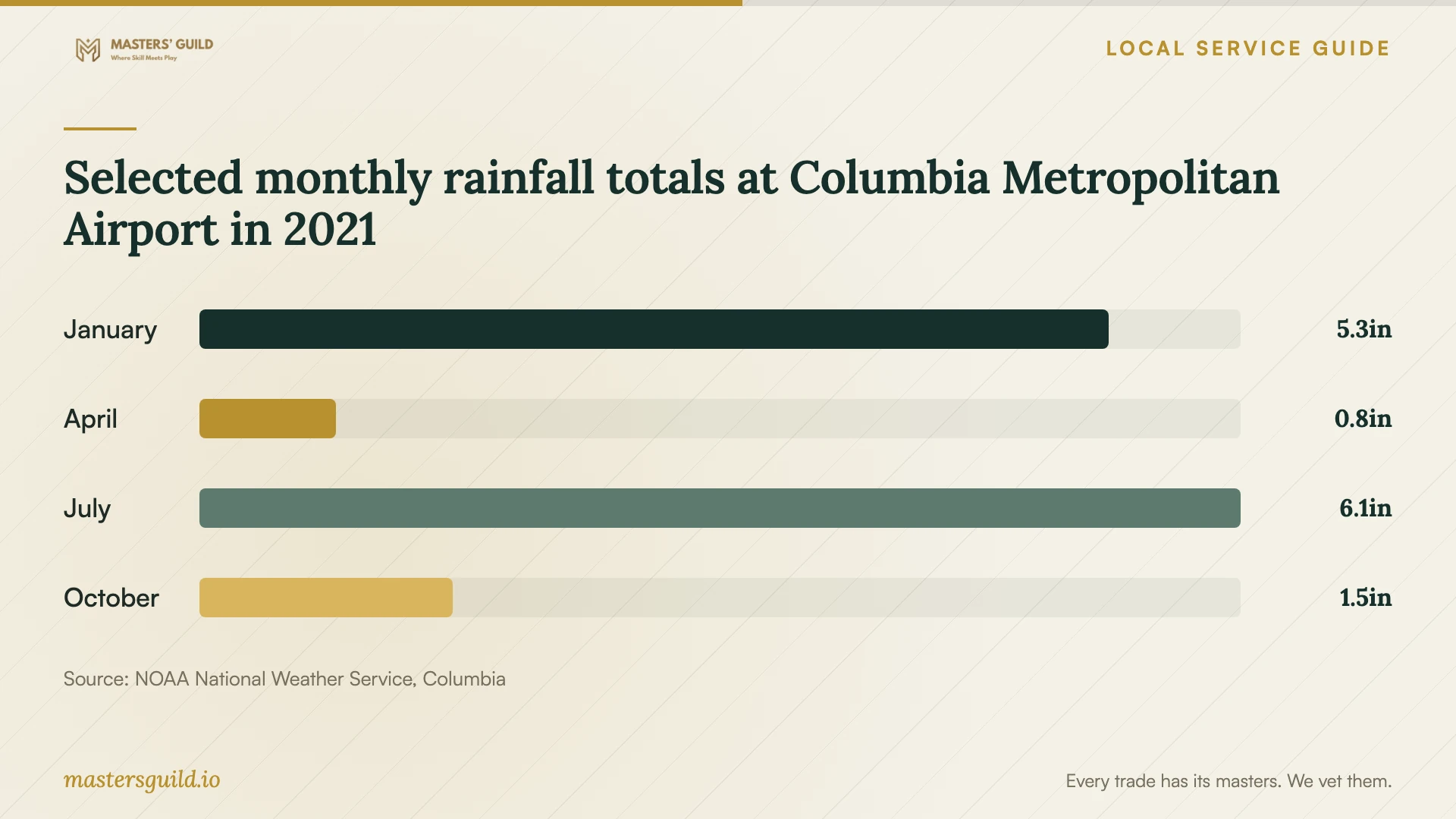
If visitors or pets track wet dirt indoors, ask the cleaner to include entry mats and the floor around the door. Use the rainfall chart as historical context for wet-weather planning, then base your visit on the dirt and moisture in your own home. At the walkthrough, check the agreed tasks before adding new requests; distinguish removable soil from damage you may need someone else to repair. [3]
Selected monthly rainfall totals at Columbia Metropolitan Airport in 2021
Local details that affect your job
Discolored tap water can change the cleaning schedule
If you receive Columbia Water service and your tap water turns yellow, rusty, or brown, tell the cleaner before they start laundry or dishwashing. The utility advises avoiding those tasks until the discoloration clears and says bleach can set discoloration stains into fabric. For ongoing discoloration without an in-home remedy, contact Columbia Water at 803-545-3300 rather than asking the cleaner to keep treating the stains. [1]
Check a sink odor before adding a deodorizing task
Columbia Water identifies drain deposits as the most common cause of a musty or earthy odor noticed when water runs. Hair, soap, and food waste can accumulate in the drain and support bacteria that produce odors. Describe where and when you smell it, and ask whether the cleaner's scope includes drain cleaning or disinfection. Contact Columbia Water at 803-545-3300 with concerns about the water's taste, smell, or appearance. [1]
South Carolina offers mold information, not a home inspection
For questions about wet or moldy materials, South Carolina DES lists its mold information hotline at 888-815-3509. The agency says it cannot test, monitor, or inspect homes for mold or indoor air quality. Use the hotline for general guidance and arrange a separate professional assessment when you need someone to examine water damage in your home. [2]
Match your situation to the next step
| Your situation | What to arrange | What to confirm |
|---|---|---|
| Routine dust and surface dirt | A visit with a room-by-room maintenance scope | Included surfaces, floor care, and recurring visit terms |
| Buildup or neglected areas | A detailed visit with photos and named tasks | Products, surface compatibility, and extra charges |
| An empty home before handover | A move-out visit tied to the handover requirements | Appliance interiors, cabinets, deadline, and walkthrough |
| Rusty or brown tap water | Pause laundry and dishwashing until it clears | Ongoing discoloration with Columbia Water |
| Flooded rooms or soaked materials | Water-damage or mold-remediation assessment | Drying needs and HVAC checks before operation |
Your hiring checklist
- List the rooms, priority surfaces, and tasks you want completed.
- Send photos of buildup, delicate finishes, and any water damage.
- Request the total price, exclusions, and separate add-on prices.
- Confirm staffing, supplies, liability coverage, and damage reporting.
- Agree on entry, parking, pet arrangements, and access to utilities.
- Clear floor paths and put away fragile or private belongings.
- Arrange a walkthrough and confirm how to report missed work.
Frequently Asked Questions
How much should I budget for a cleaning visit?
Request a written quote for your home and task list. Set your budget around that scope, with optional work priced separately. Ask whether the quote covers the first visit and what a later maintenance visit would include. Agree on a spending limit before approving hourly work.
Should I pay extra for hard-water deposit removal?
Ask the cleaner to inspect the deposits first. Columbia Water reports hardness of 1–2 grains per gallon for its supply. That figure does not identify the residue on your fixtures or describe a private well. Approve treatment for the buildup present and the surface material involved. [1]
Can a house cleaner handle cleanup after flooding?
Arrange a water-damage or mold-remediation assessment before booking housekeeping. South Carolina DES recommends specialists for flooded-home cleanup and says porous materials that cannot dry within 24–48 hours may need replacement. Tell the provider if water reached the HVAC system. [2]
What should I ask about cleaning products?
Give the cleaner your surface-care instructions and any fragrance preferences. Ask which products they plan to use and whether they can accommodate your request. South Carolina DES warns against mixing bleach with other household cleaners, including ammonia, because the mixture can produce dangerous fumes. [2]
Sources and scope
This guide combines the sources below with practical planning guidance. Figures apply to the stated geography and period; request a written quote for your property.