
Local service guide
Gardening in Columbia, SC: Hiring and Planning
For Gardening in Columbia, hire around a written scope: identify the beds, name the tasks, agree on materials and decide who removes debris. Separate a one-time cleanup from ongoing care. Before approving fertilizer or replacement planting, consider soil testing; before approving pesticide treatment, check the applicator’s South Carolina license for the proposed work. [3] [4]
Define the work before comparing gardeners
Walk through the garden and divide the work into cleanup, planting and continued care. Mark plants you want to keep. Give the gardener photos and approximate bed dimensions, then identify weeds, unwanted seedlings and areas that need attention. Ask the gardener to confirm uncertain plant identities before removing them.
For a cleanup, specify hand weeding, removal of dead growth, bed edging and the final condition you expect. For planting, agree on plant names, quantities, sizes and locations before buying materials. For repeat visits, list the tasks you expect each time and agree on how the gardener will request approval for additional work.
Ask about experience with the plants you own, request proof of liability insurance and identify who will perform the work. Agree on access, water use and protection for plants beside working areas. If you want help with a vegetable garden, discuss what you intend to harvest and how much care you can provide between visits.
Compare the complete quote
Request an itemized quote covering labor, plants, mulch or compost, delivery and disposal. For hourly work, agree on an initial spending limit and a point at which the gardener must contact you. For a fixed price, write down the beds and tasks included. Ask how the provider handles weather delays and material substitutions.
Separate the first cleanup from the maintenance agreement. Define what counts as completion for each: cleared beds and removed debris for the cleanup, then an agreed task list for later visits. Before accepting a recurring plan, decide who waters new plants and checks the garden between appointments.
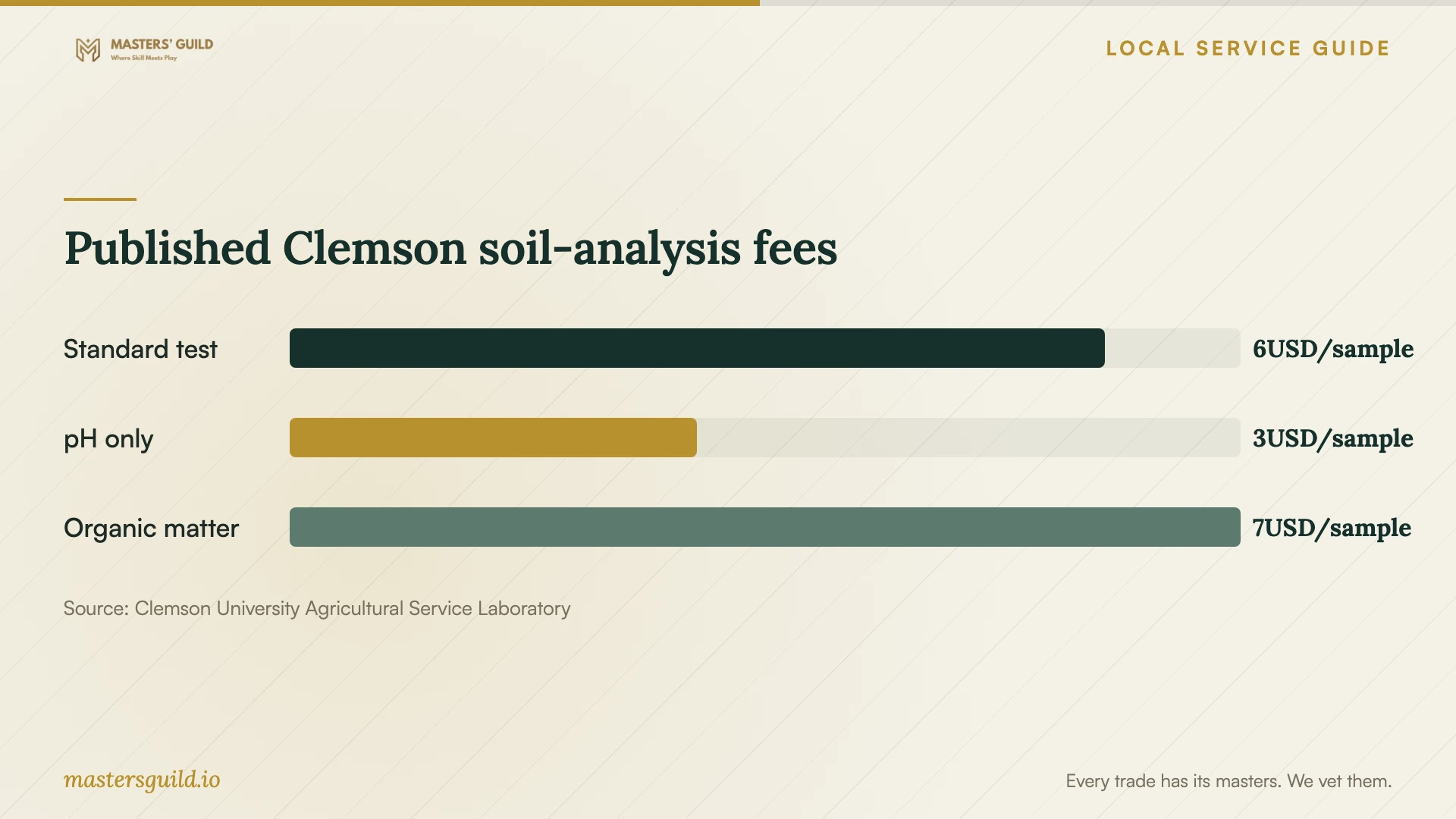
The supplied official sources do not establish a local gardening labor rate. Use quotes for your property to set the budget. Clemson’s published soil-test fees below cover laboratory analyses; they do not establish the cost of a gardener’s visit, sample collection, delivery or soil amendments. [4]
Test soil before buying amendments
Clemson recommends soil sampling and testing to guide fertilizer and limestone applications in home gardens, ornamentals and lawns. Its laboratory explains that testing helps avoid the expense and environmental hazards of excessive fertilizer. Ask your gardener to base proposed amendments on the results and explain the quantities before ordering. [4]
Clemson’s standard soil test includes pH, nutrient measurements, lime requirements and recommendations. The laboratory lists organic-matter analysis as a separate service. Before submitting samples, agree on the analyses you need, who collects and labels the samples, and who will review the report with you. [4]
Richland County Extension lists local soil-sample drop-off options and weekday Master Gardener assistance. Use that support if you need help interpreting a proposed garden treatment, and give the gardener a copy of any results before approving amendments. [5]
Schedule vegetable planting by crop
Clemson places Richland and Lexington counties in its Coastal Plain gardening region. Use that column of its vegetable planting table when arranging a planting visit. The guidance concerns vegetables; ask for a separate plan for ornamental beds, shrubs and hedges. [2]
For fall planning, Clemson lists Coastal Plain planting windows of October 1 through November 30 for garlic, September 5 through November 1 for lettuce, and August 1 through October 30 for kale and collards. Have the gardener identify the crop and planting method rather than promise a general fall planting date. [2]
Clemson advises at least six hours of direct sun for South Carolina vegetable gardens and full sun for fruiting vegetables such as peppers and tomatoes. Before commissioning a bed, check the proposed site’s light and water access. Clemson also describes containers as an option where soil or landscape space is unavailable, provided light, water and soil-volume requirements are met. [2]
Agree on pesticide use and debris removal
Ask whether the gardener proposes hand removal or pesticide treatment for weeds and pests. Clemson requires South Carolina commercial applicator licensing for restricted-use pesticides and for compensated applications on another person’s property in specified categories, including Category 3. Request the applicator’s name, license number and applicable category, then use the verification links on Clemson’s licensing page. [3]
Clemson states that its Department of Pesticide Regulation business-license requirement applies to Category 7A work. Avoid treating that business credential as a universal requirement for gardening. Confirm the authorization that applies to the treatment you intend to buy, and ask the provider to explain the product, target problem and label precautions. [3]
Columbia Public Works accepts loose or bagged leaves, grass clippings, routine yard-maintenance waste and branches shorter than six feet. It lists tree removal and lot clearing as subject to a charge and requires separation of building materials from yard waste. Put branch preparation, hauling and any disposal charges in the quote. [1]
Published Clemson soil-analysis fees
Local details that affect your job
Soil-sample drop-off without a trip to the Extension office
Richland County Extension lists community drop-offs at First Priority Garden Center, 1067 Woodleys Way; Seven Oaks Plant Shop, 4522 St. Andrews Road; and South Ground Supply Company, 2840 Dreher Shoals Road. Ask the office at 803-865-1216 ext 0 about sample preparation before taking a sample. For an office visit, enter Sandhill Research and Education Center through Two Notch Road or Clemson Road and select Richland Ext./Soil Sample at the gate keypad. The office closes for lunch from 1 to 2 p.m. [5]
City compost requires a scheduled pickup
Columbia Public Works makes compost available to citizens at its facility across from the Animal Shelter on Humane Lane off Shop Road. The city directs residents to call Solid Waste at 803-545-3800 to schedule pickup. Before including this compost in your garden plan, agree on who schedules, collects and transports it; the page does not establish a delivered gardening price. [1]
Choose the next step for your garden
| Your priority | Work to arrange | Clarify before hiring |
|---|---|---|
| Overgrown beds | A defined cleanup | Plants to retain, removal method and debris destination |
| Fertilizer or lime | Soil testing and a results-based plan | Clemson recommends testing to guide these applications |
| Vegetable planting | A crop-specific planting visit | Use Clemson’s Coastal Plain schedule for Richland and Lexington counties |
| Chemical weed or pest treatment | A treatment plan with applicable authorization | Check the applicator and license category through Clemson |
| City collection of garden debris | Debris preparation in the cleanup scope | Branches must be shorter than six feet; tree removal and lot clearing are subject to a charge |
Your hiring checklist
- Photograph the beds and mark plants the gardener must keep.
- List cleanup, planting and recurring care as separate scopes.
- Request itemized labor, materials, delivery and disposal charges.
- Agree on plant names, quantities and substitutions before purchase.
- Decide who arranges soil testing and reviews the results.
- Check applicable pesticide credentials before approving treatment.
- Confirm access, water use, debris handling and the spending limit.
- Assign watering and garden checks between visits.
Frequently Asked Questions
How much should I budget for a gardener?
Request quotes for your beds and task list. Compare labor, materials and removal charges, and agree on a spending limit for hourly work. The official sources supplied here establish soil-analysis fees, but do not establish local gardening labor prices. [4]
Can I use the Piedmont planting dates?
Clemson assigns Richland and Lexington counties to its Coastal Plain gardening region. Use the Coastal Plain dates for vegetable planning and discuss the crop, planting method and site with your gardener. [2]
Can the gardener leave all cleanup debris for city collection?
Agree on the disposal plan before work starts. Columbia accepts routine yard-maintenance waste and branches shorter than six feet, but lists tree removal and lot clearing as subject to a charge. Building materials must remain separate from yard waste. [1]
Does a pesticide applicator need a separate business license?
Clemson distinguishes commercial applicator licensing from its pesticide business licensing. The Department of Pesticide Regulation requires the latter for Category 7A activities. For proposed garden treatments, check the applicator’s authorization and category rather than assuming the same business-license rule covers all work. [3]
Sources and scope
This guide combines the sources below with practical planning guidance. Figures apply to the stated geography and period; request a written quote for your property.