
Local service guide
Flooring Installation and Repair in Columbia, SC
Arrange Flooring Installation and Repair in Columbia, SC with an on-site assessment, an itemized quote, and contractor credentials that cover the proposed material and repairs. Settle surface preparation and old-floor removal before booking installation. South Carolina defines qualifying residential specialty undertakings as work exceeding $500; its floor-covering classification lists asphalt, vinyl, rubber, linoleum, and carpet. For hardwood, tile, or structural work, confirm the appropriate credential with the Residential Builders Commission. [1]
Define the repair before selecting materials
Show the installer loose pieces, raised edges, staining, and movement underfoot. Explain when you noticed the damage and describe any leak history. Request repair and replacement proposals where both seem feasible. Have the installer explain how they would match the existing finish and handle adjoining rooms.
Have the installer inspect the underlying surface and identify any further assessment needed before quoting preparation. Request the chosen product’s installation instructions and a written plan for moisture testing, surface preparation, and material storage. Agree on who will address a leak or structural concern before anyone covers the area.
Verify credentials for the entire job
South Carolina’s Residential Builders Commission defines residential specialty contracting for qualifying specialized construction, repairs, or improvements exceeding $500. Its floor-covering classification includes installation, replacement, repair, accessories, and surface preparation for asphalt, vinyl, rubber, linoleum, and carpet. [1]
The Commission prohibits specialty contractors from undertaking work outside their registration scope, including hiring or subcontracting others to perform that work on their behalf. Obtain the contractor’s registration or license number and check the Commission’s Licensee Lookup. Confirm the applicable credential with the Commission if your proposal includes hardwood, tile, joists, or other work beyond the listed coverings. [1]
Review proof of insurance and identify who will supervise the installation. Request examples of comparable work and written terms for correcting installation defects. Clarify who handles a complaint involving both the product and the installation.
Choose an old-floor removal plan
Pause removal if you suspect asbestos in existing flooring. SCDES explains that destructive methods can make asbestos-containing flooring friable, or capable of crumbling into powder. It identifies chipped asbestos floor tiles and cut or ripped asbestos vinyl sheet flooring as subject to regulatory requirements, with a qualification for private residences. [2]
SCDES states that work at private residences is not regulated unless a licensed asbestos abatement contractor performs it. Consult its Asbestos Section about your property and proposed work before settling the removal schedule. Treat determining whether the material contains asbestos as a separate question from determining which regulations apply. [2]
SCDES describes installing new flooring over existing asbestos-containing flooring as a possible alternative when the old material remains in good condition without chipping or crumbling. The agency advises retaining records of the concealed flooring. Before choosing this option, have the installer assess product compatibility, finished height, door clearance, and transitions. [2]
Compare complete quotes and arrange access
Request separate amounts for materials, installation, removal and disposal, preparation, and trim or transitions. Specify the product name, installation method, rooms, stairs, and who supplies materials. For concealed repairs, agree on an approval process and how the contractor will calculate added charges before work begins.
Agree on furniture moving, appliance handling, dust control, storage, and access to occupied rooms. Have the contractor distinguish preparation time from installation time and explain the product instructions for returning furniture and using the floor. Include any assessment or abatement work in the schedule before committing to a completion date.
Inspect seams, edges, transitions, trim, and door operation with the installer at handover. Record unresolved items. Keep product identification, care instructions, warranty terms, and any records of flooring concealed beneath the new surface.
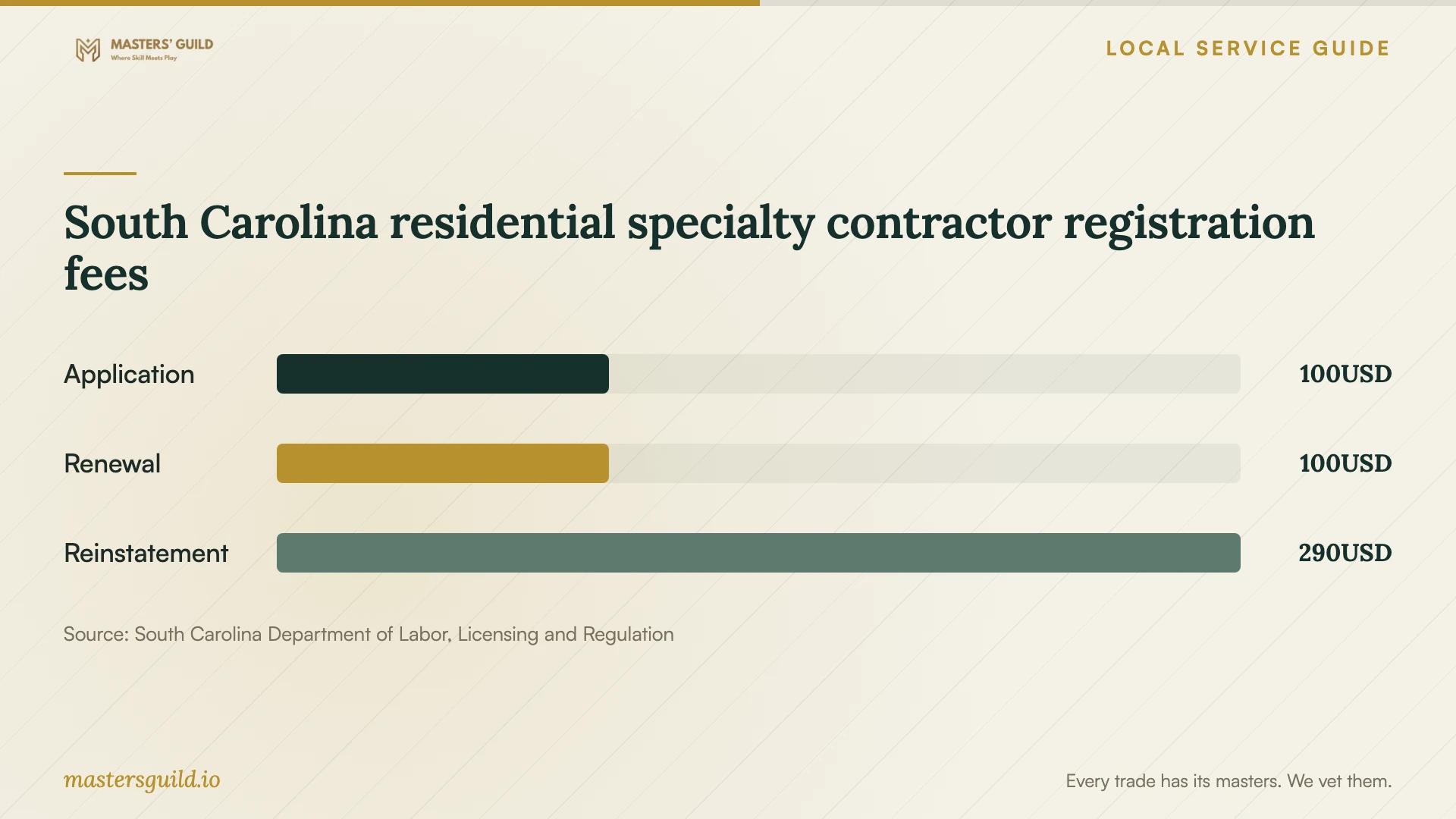
South Carolina residential specialty contractor registration fees
Local details that affect your job
Columbia permit confirmation and submission
For a property within City jurisdiction, confirm permit requirements with the Development Center at 803-545-3420. Describe the flooring and any proposed repairs beneath it. Columbia directs one- or two-family projects to its residential section and commercial or multi-family projects to its commercial section. Applicants can submit permits through the Access Portal or email [email protected]. The City accepts email submissions when the needed permit is unavailable in the portal. [3]
Applications around the 2027 code transition
Columbia states that permit requests submitted after December 31, 2026 must follow the 2024 Building Code Editions, effective January 1, 2027. If your repair requires a permit and you expect to apply around year-end, confirm the applicable edition with the contractor and Development Center before finalizing the proposal. [3]
South Carolina contractor scope check
For qualifying residential specialty work exceeding $500, check the contractor’s credential and trade classification with the Residential Builders Commission. The floor-covering classification names specified materials and includes surface preparation. For a proposal combining vinyl replacement with structural repairs, confirm authorization for each part before signing; the Commission prohibits specialty contractors from undertaking work outside their registered scope. [1]
South Carolina asbestos scheduling
Contact the SCDES Asbestos Section at 803-898-4289 to confirm how the rules apply to your project. For regulated asbestos removal, SCDES requires an application, fees, and a permit before renovation, with notification up to 10 working days ahead depending on the amount removed. The agency recognizes residential exceptions, so confirm your project’s status before agreeing to an abatement start date. [2] [4]
Choose your next step
| Situation | Next step | Question to settle |
|---|---|---|
| Damage in a limited area | Request repair and replacement proposals | Can the installer obtain a finish match you will accept? |
| Qualifying vinyl or carpet undertaking exceeding $500 | Verify the applicable residential specialty credential | Does the registered scope cover preparation and installation? |
| Hardwood, tile, or structural repairs | Confirm the credential with the Commission | Who is authorized for each part of the work? |
| Suspected asbestos flooring | Pause destructive removal and consult SCDES | Should you assess removal or covering the intact material? |
| Work that may require a City permit | Confirm requirements with the Development Center | Which submission route and code edition apply? |
Your hiring checklist
- Photograph damage and list rooms, approximate measurements, and leak history.
- Obtain a written assessment and surface preparation plan.
- Check the contractor’s credential against each part of the scope.
- Resolve suspected asbestos before approving destructive removal.
- Confirm permit requirements for the address and proposed repairs.
- Compare itemized quotes using the same product and scope.
- Agree on room access, furniture handling, and approval of added charges.
- Inspect the completed floor and collect care, warranty, and concealed-material records.
Frequently Asked Questions
How should I budget for the job?
Obtain itemized quotes after an on-site assessment. Have each contractor price the same product, measured area, preparation, removal, and finishing work. Agree on how you will approve concealed repairs, and identify any assessment or abatement work before setting the total budget.
Does flooring replacement need a Columbia permit?
Confirm requirements with the Development Center at 803-545-3420. Give the property address and describe the exact scope, including repairs beneath the finish floor. Columbia provides residential routing for one- or two-family projects and commercial routing for commercial or multi-family projects. [3]
Can I cover an existing asbestos-containing floor?
SCDES describes covering it as a possible alternative when the existing flooring remains in good condition without chipping or crumbling. Keep records of the concealed material. Have the installer assess product compatibility, clearances, and transitions before choosing this option. [2]
Does paying a registration fee prove a contractor can do my job?
Verify the contractor’s current credential and registered trade scope through the Commission’s Licensee Lookup. The Commission limits specialty contractors to their registration scope. Its application, renewal, and reinstatement fees are administrative charges to contractors; use the scope check to evaluate the proposed work. [1]
Sources and scope
This guide combines the sources below with practical planning guidance. Figures apply to the stated geography and period; request a written quote for your property.