
Local service guide
Duct cleaning in Columbia, SC
Duct cleaning in Columbia, SC should start with an inspection and a written scope. Consider hiring when a contractor shows substantial mold growth on hard duct surfaces, pest infestation, or excessive debris, especially particles blowing from supply registers. EPA recommends cleaning as needed rather than on a routine schedule. Have the contractor identify the cause, explain how they will clean the system, and separate repair work from the cleaning quote. [1]
Decide whether cleaning addresses your problem
Have the provider inspect the supply and return ducts and accessible equipment before recommending a service. EPA identifies substantial visible mold on hard surfaces, vermin, and excessive dust or debris as reasons to consider cleaning. Request photographs of the duct interior and an explanation of where the contamination sits. [1]
Treat a mold diagnosis with care. Have the contractor show you the suspected growth and identify the duct material. EPA says an expert must confirm whether a substance is mold and may need laboratory analysis. Wet or moldy duct insulation requires removal and replacement because cleaning cannot resolve that condition. [1]
Describe the problem you want to solve: debris leaving a register, a musty smell, a wet duct section, or uneven room temperatures. Have the provider explain which proposed work addresses that problem. EPA reports little evidence that cleaning ducts alone improves system efficiency, and it says duct cleaning has not been shown to prevent health problems. [1]
Compare complete scopes and written prices
Compare at least three providers using the same proposed scope. EPA describes system cleaning as including supply and return ducts, registers, grilles, coils, drain pans, fans, and air-handling components. Have each bidder name the components they will clean and explain exclusions. Leaving a contaminated component untreated can contaminate the system again. [1]
Request the total price, the number of systems covered, access arrangements, and separate prices for repairs or chemical treatments. If a provider bills by the hour, request the expected hours and possible interruptions. EPA advises homeowners to obtain a written agreement covering the total cost and scope before work starts. [1]
EPA's consumer guidance lists a typical national reference range of $450 to $1,000 per heating and cooling system, depending on scope, size, accessibility, region, and contamination. The document carries an October 1997 publication date. Treat that figure as historical background and use current written estimates for your Columbia budget. [1]
Discuss the provider's experience with your duct material, protection for furnishings, and collection of loosened debris. EPA recommends equipment that exhausts particles outdoors or HEPA vacuum equipment when exhaust remains indoors. For fiberglass duct board or fiberglass-lined ducts, EPA specifies soft-bristled brushes. [1]
Keep repairs and chemical treatments explicit
Request a separate repair proposal if the inspection reveals leaks, damaged insulation, or wet duct material. EPA advises correcting water leaks, checking condensate drainage, and sealing and insulating ducts in unconditioned spaces such as attics and crawlspaces. Have the contractor explain the cause of moisture before approving cleaning or replacement. [1]
Review proposed sanitizers or internal coatings before agreeing to them. Request the product label, the intended use, the duct material, and the reason physical cleaning and moisture control cannot address the problem. EPA's guidance says no biocides are registered for fiberglass duct board or fiberglass-lined ducts and advises against routine internal encapsulating sealants. [1]
For a proposal that includes residential HVAC repair or installation, check the contractor's applicable credentials through South Carolina LLR's Licensee Lookup. The Residential Builders Commission lists residential HVAC contracting among its licensed categories. Match your credential questions to the proposed work, and contact the Commission if you need clarification about the cleaning scope. [4]
Prepare access and inspect the finished work
Before the visit, clear space around registers and the air handler. Tell the provider about access restrictions, pets, recent renovation work, and known duct damage. Agree on how long they expect to occupy each work area and whether you need to move furniture. Keep the written scope available during the visit.
Have the provider inspect for asbestos-containing materials before disturbing the system. EPA says these materials require specialized procedures and contractors with appropriate training and equipment. If the cleaner identifies suspect insulation or register components, pause that part of the work and discuss how they will arrange an assessment. [1]
Before accepting the job, have the provider show the cleaned components, including interior photographs where direct inspection is difficult. EPA recommends a visual inspection and checking that the provider reattaches registers, seals and reinsulates access holes, and leaves the system functioning in heating and cooling modes. Request corrections for gaps against the agreed scope. [1]
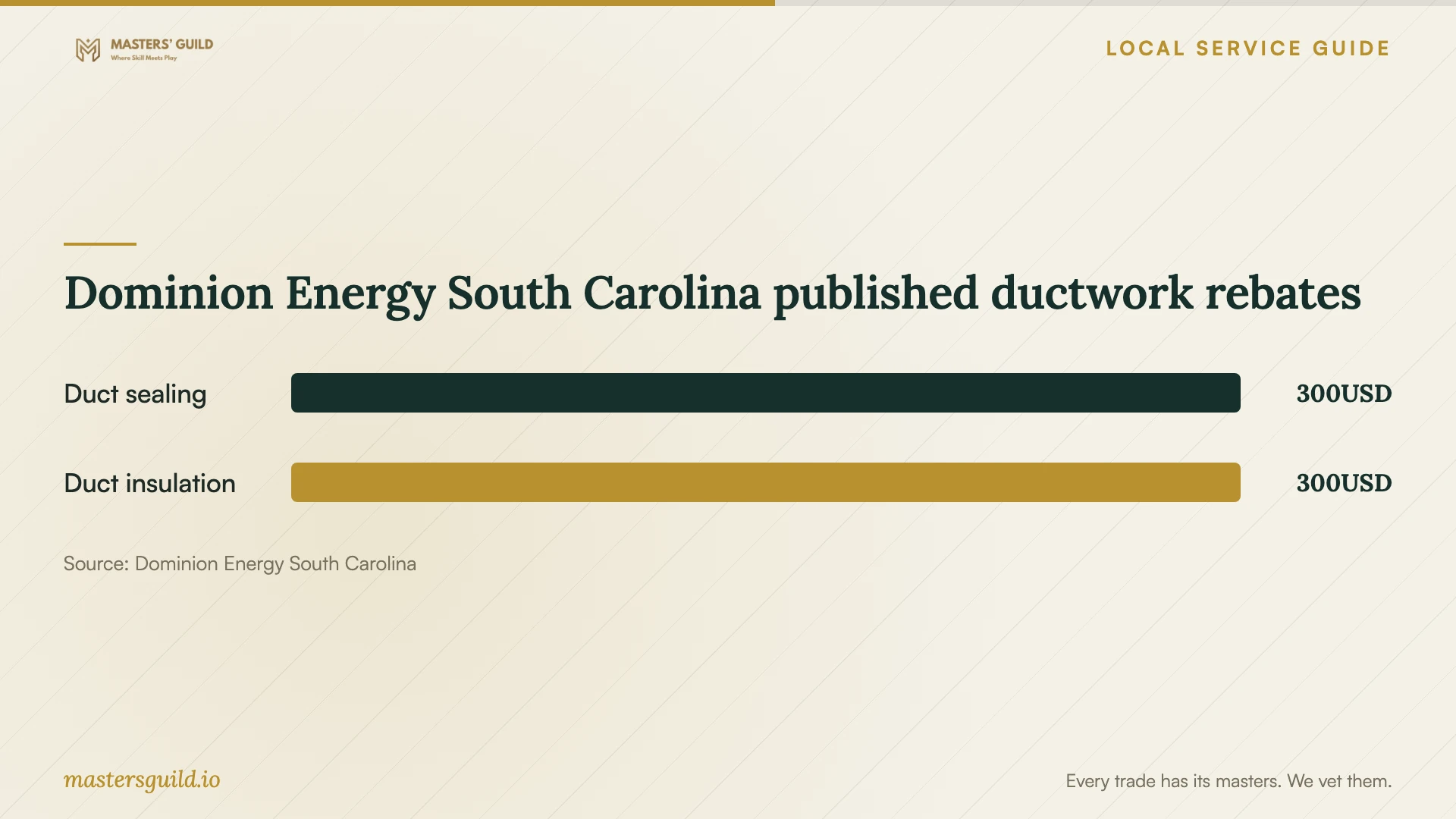
Dominion Energy South Carolina published ductwork rebates
Local details that affect your job
Check your electric account before planning rebate work
Dominion Energy South Carolina lists $300 for duct sealing and $300 for duct insulation, including complete ductwork replacement. You must receive residential electric service from Dominion Energy South Carolina; receiving only its natural gas service while a co-op supplies electricity does not qualify. If an inspection points to leaking or poorly insulated ducts, confirm your account eligibility and program conditions before choosing a repair scope. [2]
Arrange rebate testing before sealing starts
For its duct sealing rebate, Dominion requires duct-blaster leakage testing before and after the improvement. A licensed mechanical contractor must perform the duct improvements. Submit the completed application and detailed installation invoice within 90 days of installation. Have the contractor include testing and documentation in the proposal before work begins; review the application for the remaining eligibility conditions. [2]
Confirm City requirements before approving added work
For a property within City of Columbia jurisdiction, confirm requirements with Development & Inspections for your proposed scope, including any duct alteration or HVAC replacement. The City provides permitting assistance at 803-545-3420 and accepts permit applications through its Access Portal or by email to the Development Center. It directs one- and two-family projects to its residential section and multifamily projects to its commercial section. [3]
Choose the next step from the inspection
| Finding | Next step | Question to ask |
|---|---|---|
| Dust on return grilles only | Clean accessible grilles and assess before booking a system cleaning. | Can you show heavy contamination inside the ducts? |
| Excessive debris or particles leaving supply registers | Consider cleaning after identifying and correcting the source. | Which components will you clean and how will you contain debris? |
| Suspected mold | Have an expert confirm the finding, identify the duct material, and address moisture before choosing treatment. | Can you show the growth, and does confirmation require laboratory analysis? |
| Wet or moldy duct insulation | Arrange removal and replacement of affected insulation and correct the moisture source. | Which insulation needs replacement, and how will you stop water entering? |
| Leaking or poorly insulated ducts | Evaluate sealing or insulation and check Dominion program eligibility. | Does the proposal include required testing and rebate documentation? |
| Proposed duct alterations or HVAC replacement | Check contractor credentials and confirm City permitting requirements for properties in City jurisdiction. | Who will confirm requirements before the added work starts? |
Your hiring checklist
- Describe the problem and request photographs of the areas the provider recommends cleaning.
- List the HVAC systems and components you want included in each quote.
- Compare written totals, exclusions, access charges, and proposed add-ons.
- Have the contractor explain moisture, pest, or damaged-insulation findings before cleaning.
- Check applicable credentials for any HVAC repair or installation added to the job.
- If seeking a Dominion rebate, confirm eligibility, testing, and invoice arrangements before work.
- Clear access and agree on furniture protection, pet arrangements, and expected interruptions.
- Review the cleaned components and completed access-hole repairs before accepting the job.
Frequently Asked Questions
Should I schedule duct cleaning every year?
EPA recommends cleaning as needed rather than as routine annual maintenance. Request evidence of substantial contamination. Continue regular filter changes and equipment maintenance, using filters recommended by your system's manufacturer. [1]
Does a duct-cleaning quote include dryer-vent cleaning?
Have the bidder name the vents and systems covered. Do not assume a quote for HVAC supply and return ducts covers the dryer exhaust. Request a separate scope and price if you want both services.
Can I claim a Dominion rebate for cleaning?
Dominion lists rebates for duct sealing and insulation, including replacement under the insulation category. It does not list a cleaning rebate on this program page. Confirm residential electric eligibility and all application conditions before arranging improvement work. [2]
Can a company claim EPA certification for duct cleaning?
EPA says it does not certify, endorse, or approve duct-cleaning companies. Discuss the provider's training, experience with your system, cleaning procedures, and applicable credentials for any repair work. [1] [4]
Sources and scope
This guide combines the sources below with practical planning guidance. Figures apply to the stated geography and period; request a written quote for your property.