
Local service guide
Concrete Work in Columbia, SC: Plan and Hire
Arrange Concrete Work in Columbia, SC by defining the repair or new pour, checking approvals, and comparing written scopes before choosing a contractor. For a new driveway within the city, Columbia requires a curb cut permit through its Development Center. Ask who will handle that approval and any required inspections before you agree to a pour date. [1]
Define the problem before requesting a price
Tell each contractor what you need the surface to do: carry vehicles, provide a patio, connect a walkway, or support a structure. Include approximate dimensions, photos, access restrictions, and any standing water you have observed. For existing concrete, photograph cracks and changes in height and describe whether you have noticed movement.
Ask the contractor to explain the proposed remedy at the site visit. For a repair, request the boundaries of the work and the problems it will address. For replacement, ask how the crew will remove the old concrete and prepare the ground. If you suspect a foundation problem, ask who will assess it before you authorize a surface repair.
Settle driveway approvals before the layout
Columbia’s front-yard parking guidance requires residential vehicles in front yards and secondary front yards on corner lots to park on an improved surface. The city says any new driveway requires a curb cut permit through the Development Center and flags further requirements for driveways and parking surfaces in historic districts. [1]
Before accepting a driveway drawing, ask the Development Center which approvals apply to your address and proposed work. Describe whether you plan a new driveway, a wider parking area, or replacement within an existing footprint. Ask the contractor to identify the approval owner, fees included in the quote, and any layout changes that could require another review.
Use the city guidance for property within Columbia’s jurisdiction. If you are unsure which authority handles your address, establish that before using this permit process. Keep the approved layout with the contract so you and the crew can compare it with the forms before pouring.
Match the contractor’s registration to the work
South Carolina’s Residential Builders Commission describes residential specialty contracting as qualifying specialized undertakings exceeding $500 that are not regulated under Chapter 11, Title 40. Its mason classification covers installation, alteration, and repair of poured-in-place concrete foundations, including footings and reinforced slabs. Registered specialty contractors must stay within their registered scope. [3]
Ask for the credential number and trade classification, then check them through the Commission’s licensee lookup. Describe the complete job when asking the Commission about suitability; do not assume one classification covers every driveway, patio, structural repair, or addition. The Commission states that a residential specialty contractor cannot construct residential additions without supervision by a residential builder or another appropriately licensed person or entity. [3]
Request proof of liability coverage and ask how the contractor handles worker coverage. Confirm who will sign the contract, supervise the crew, and resolve defects. Ask for examples of similar work and written warranty terms, including exclusions and the process for reporting a problem.
Compare complete quotes and realistic schedules
Request the same scope from each bidder: measured area, slab thickness, concrete specification, reinforcement if proposed, excavation, base preparation, drainage direction, joints, and finish. Ask each contractor to identify demolition, hauling, truck or pump access, protection of adjacent surfaces, permits, and cleanup. Require a written allowance or change-order process for ground conditions the crew cannot assess before excavation.
For permitted work, Columbia instructs contractors to obtain inspection approval before placing concrete for footings, foundations, and slabs. Licensed contractors schedule building inspections through the Access Portal. The city sets a 3:00 pm cutoff for next-day requests, offers no same-day inspections, and schedules requests after the cutoff for the day after next. [2]
Ask the contractor to show the inspection step in the schedule before booking concrete delivery. Agree on who will notify you of approval or delay. Put weather postponements, protection during curing, and the contractor’s instructions for walking, parking, or placing furniture on the surface in writing. Do not treat the crew’s last workday as permission to resume all use.
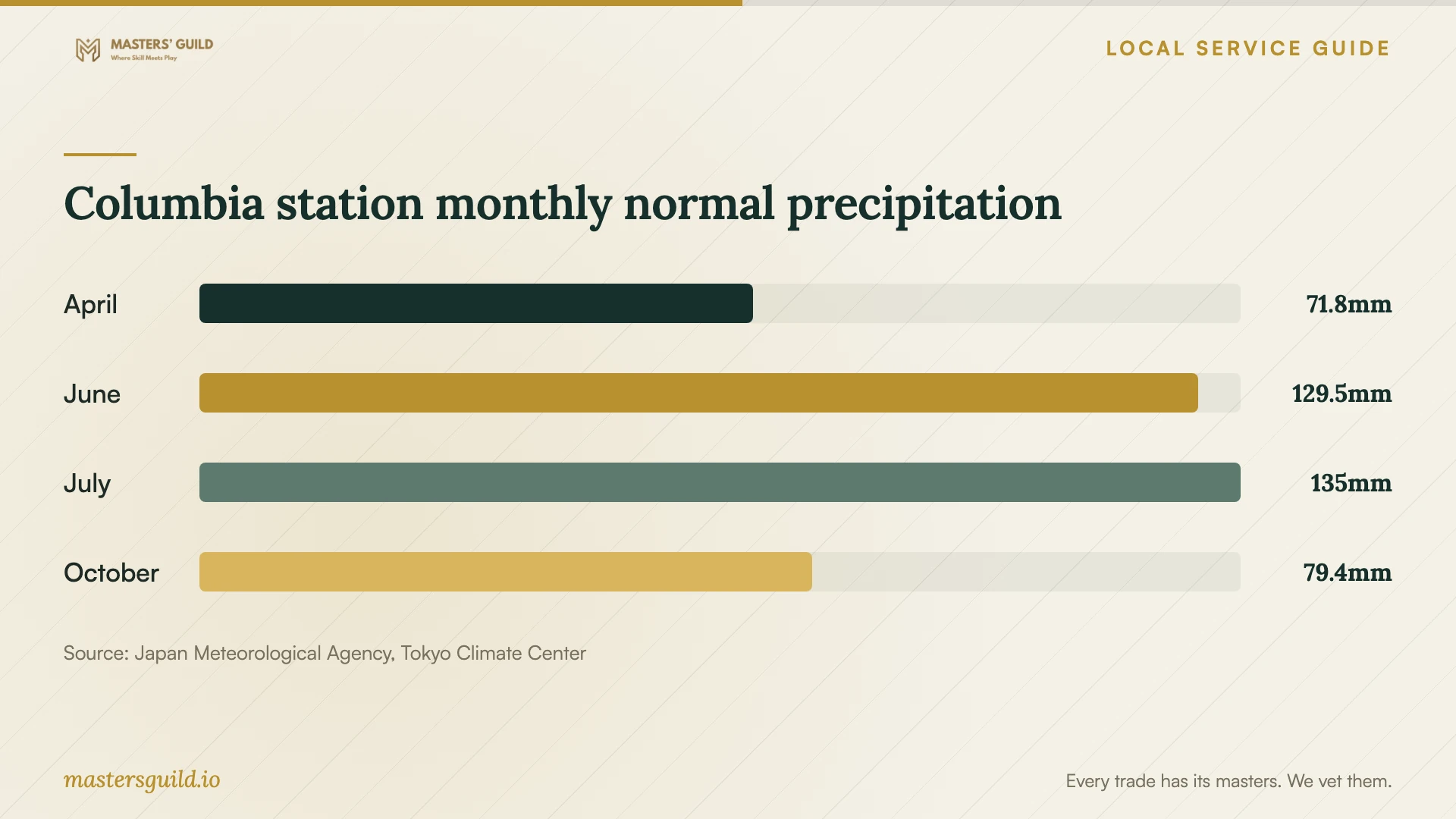
Columbia station monthly normal precipitation
Local details that affect your job
New driveway and historic-district checks
Columbia directs new driveway curb cut permits through the Development Center and warns of further historic-district requirements. For permitting questions, call 803-545-3420. Describe the address and proposed parking surface before paying for a final layout or scheduling demolition. [1]
Inspection approval affects the pour date
The city prohibits concrete placement before approval of required footing, foundation, and slab inspections. Contractors must plan around the 3:00 pm inspection-request cutoff and the absence of same-day inspections. For help with an inspection, the Building Inspections office lists 803-545-3422. Ask your contractor to confirm approval before dispatching the concrete truck. [2]
Questions to resolve before choosing a scope
| Your project | Resolve before hiring | Ask the contractor |
|---|---|---|
| New city driveway | Curb cut permit through the Development Center | Who obtains approval, and does the quote include it? |
| Driveway in a historic district | Possible additional driveway and parking-surface requirements | Will you confirm the permitted layout before setting forms? |
| Footing, foundation, or slab under city inspection | Inspection approval before concrete placement | Where does approval fit before concrete delivery? |
| Residential foundation or reinforced slab | Credential scope; the mason classification includes this work | Which registration or license covers the complete undertaking? |
| Repair of existing concrete | Written diagnosis and repair boundaries | What problem will this repair address, and what remains outside the scope? |
Your hiring checklist
- Photograph the site and record dimensions, observed water pooling, and intended use.
- Confirm the permitting jurisdiction for your address and ask which approvals apply.
- Check the contractor’s credential number and classification against the complete scope.
- Request matching written specifications for preparation, concrete, drainage, joints, and finish.
- Identify who handles approvals, inspections, delivery changes, and cleanup.
- Agree on written change orders, payment milestones, warranty terms, and surface-use instructions.
Frequently Asked Questions
Does a new driveway need a permit?
Within Columbia, the city says any new driveway requires a curb cut permit through the Development Center. Historic districts may have further requirements. Ask the city about your address and scope before committing to a layout; this guidance does not establish the requirements for every replacement or nearby jurisdiction. [1]
Can the contractor request an inspection on the pour day?
Columbia offers no same-day building inspections. Contractors must request next-day inspections by 3:00 pm, and the city requires inspection approval before concrete placement for footings, foundations, and slabs. Ask for a schedule that includes approval before delivery. [2]
What should a concrete quote include?
Request dimensions, thickness, concrete specification, preparation, drainage, reinforcement if proposed, joint layout, finish, removal, disposal, access arrangements, and cleanup. Ask for separate explanations of allowances, exclusions, approvals, and aftercare so you can compare the same work across bidders.
Which contractor credential should I check?
Check the credential against the specific undertaking. South Carolina lists poured concrete foundations, footings, and reinforced slabs within its residential mason classification and restricts specialty contractors to their registered scope. Ask the Residential Builders Commission to clarify coverage if the job includes an addition or several trades. [3]
Sources and scope
This guide combines the sources below with practical planning guidance. Figures apply to the stated geography and period; request a written quote for your property.