
Local service guide
Commercial Building Cleaning in Columbia, SC
Arrange Commercial Building Cleaning in Columbia, SC by walking the premises with bidders and giving each the same task list, visit schedule, and access requirements. Ask for itemized quotes and insurance documentation. Confirm the business-license jurisdiction for the address, and define washwater or grease-handling responsibilities before approving exterior or food-service work. [1] [2] [3]
Define the work during a site walkthrough
Show each bidder the areas you want cleaned: reception, workrooms, restrooms, kitchen or break room, storage, and entrances. Identify floor materials and mark spaces the crew should leave alone. Ask the bidder to write a task and frequency beside each area so you can check the proposal against the walkthrough.
Specify whether you want desk surfaces wiped, bins emptied, interior glass cleaned, and restroom supplies replenished. Decide who supplies liners, paper products, soap, equipment, and cleaning products. For occupied desks, agree on a clear-surface rule and tell the crew how to handle papers, screens, and personal belongings.
Ask for separate descriptions of the first clean and recurring visits. If you run a medical or dental practice, give bidders your facility's written cleaning protocol and ask them to identify the tasks they can undertake. Define responsibility for sharps, clinical waste, and restricted rooms before signing.
Compare the full contract cost
Request a recurring price tied to the written scope, plus separate charges for the initial clean and optional work. Have each bidder state the billing period, planned visits, holiday arrangements, supply charges, and process for approving extras. You can then compare the amount you would pay for the same service schedule.
Ask bidders to identify assumptions that could change the quote, such as accessible floor area, furniture moving, or use of your equipment. Discuss the cancellation notice, renewal terms, missed-visit remedy, and price-change process. Do not accept an undefined deep-cleaning allowance without a task list and approval procedure.
Check licensing, insurance, and crew access
The City of Columbia requires people conducting business wholly or partly within city limits to obtain a business license and pay an annual license tax. Its licensing guidance directs applicants to determine the address's jurisdiction first. Ask the provider to confirm which jurisdiction covers your premises and supply the applicable business-license details. [1]
Request current general liability insurance documentation and ask about workers' compensation coverage. South Carolina's Workers' Compensation Commission says businesses that regularly employ four or more employees in the state generally need coverage, counting part-time workers and family members. Exemptions apply; paying workers through 1099 forms alone does not determine the obligation. [4]
Ask who will enter the building, whether the provider uses subcontractors, and who supervises the crew. Agree on key or badge custody, alarm instructions, permitted rooms, and a contact for access problems. Put damage reporting and end-of-visit lockup checks in writing, and keep access credentials out of a shared bid document.
Plan exterior washing and kitchen waste handling
Columbia Water says water entering storm drains flows into nearby waterways without treatment. Before approving exterior building or walkway washing, point out nearby drains and ask bidders to describe containment, collection, and disposal. Confirm the proposed disposal route with the utility when needed; the stormwater page does not establish an approved washwater-disposal method. [2]
Columbia Water's commercial grease program covers businesses that regularly prepare food and discharge to the City's sanitary sewer system. The utility requires structures and procedures to keep fats, oils, and grease out of sewers. For a restaurant, school kitchen, or grocery food-preparation area, define kitchen-floor cleaning, grease waste collection, and grease-device servicing as separate responsibilities. [3]
The utility says grease interceptors need a licensed grease hauler or recycler and cleaning at least every six months; establishment needs can require a shorter interval. Ask who books that service, who witnesses it, and who updates the maintenance log. Do not assume a janitorial quote includes interceptor pumping. [3]
Set the schedule and inspect the result
Choose a cleaning window around staff, customers, deliveries, and opening time. Ask the cleaner to state the expected completion time and how long you should keep people off treated floors. Agree on a rescheduling process for exterior work and a way to request extra entrance cleaning after wet weather.
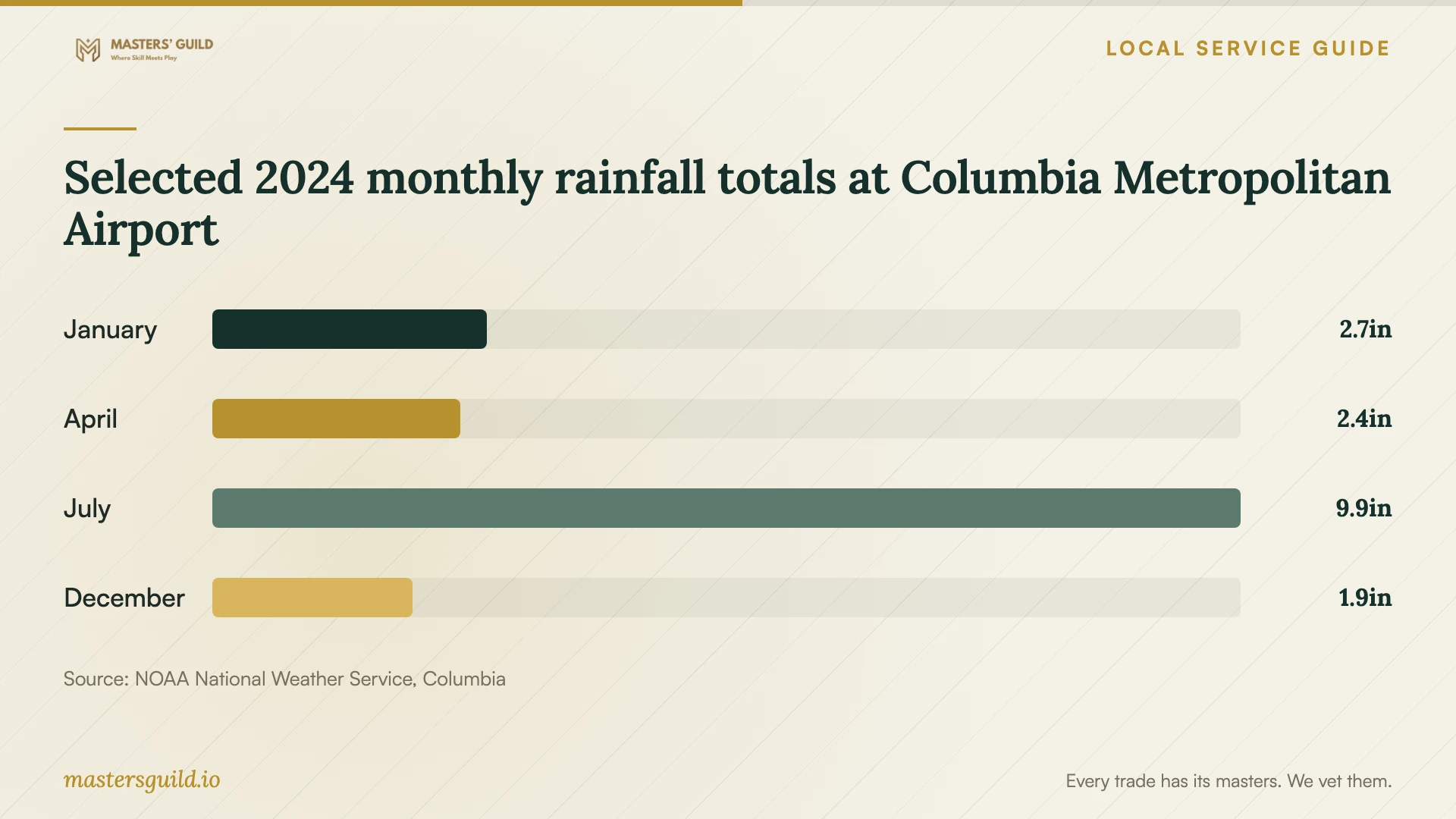
The rainfall chart uses selected observed monthly totals from Columbia Metropolitan Airport in 2024. Use it as historical context when discussing entrance mats and weather-dependent work. Choose the actual cleaning date using the forecast and conditions at your premises. [5]
Walk through after the first clean using the agreed task list. Check restroom fixtures, floor edges, entrance glass, bins, and supply levels. Send the supervisor a specific description of missed work and agree on a correction deadline. Review the scope after staff have used the space so you can adjust tasks without leaving the crew to guess.
Selected 2024 monthly rainfall totals at Columbia Metropolitan Airport
Local details that affect your job
Confirm the licensing jurisdiction
The City's licensing page warns that Columbia includes several local licensing jurisdictions and directs applicants to check the proposed address. Confirm the jurisdiction for your job before checking a provider's license. For City licensing questions, Business Licensing lists 803-545-3345 and an office at 1339 Main Street, first floor. [1]
Require a drain-protection plan
Columbia storm drains carry water to streams, creeks, rivers, and other waterways without treatment. Make the cleaner's containment and disposal plan part of an exterior-washing quote. Ask the bidder to identify the drains at your property and explain how the crew will prevent polluted runoff from reaching them. [2]
Assign grease-maintenance records
For food premises connected to the City's sanitary sewers, include grease-control responsibilities in the cleaning plan. Columbia Water directs businesses to keep grease-trap cleaning logs on site for two years. Name the manager who retains those records and confirm whether the cleaner or a separate grease-service contractor performs the maintenance. [3]
Match the quote to your premises
| Your situation | What to specify | What to confirm |
|---|---|---|
| Office or shop | Room-by-room recurring tasks and supply responsibility | Visit schedule, access window, and missed-work remedy |
| Carpet or finished floors | A separate scope for extraction or finishing | Furniture moving, drying time, and reopening arrangements |
| Exterior walls or walkways | Washwater containment, collection, and disposal | Protection of storm drains that discharge without treatment |
| Food-preparation premises on City sewer | Kitchen cleaning and grease-device servicing responsibilities | Licensed interceptor service and the establishment's maintenance schedule |
| Medical or dental practice | Your facility's written cleaning protocol and restricted areas | Who handles clinical waste and supervises the work |
Your hiring checklist
- Give bidders the same room list, floor materials, tasks, and visit schedule.
- Separate the initial clean, recurring visits, and optional floor or window work.
- Confirm who buys supplies and approves additional charges.
- Request business-license details and current insurance documentation.
- Write down access, alarm, restricted-room, and lockup instructions.
- Ask exterior-cleaning bidders for a washwater containment and disposal plan.
- Assign kitchen grease servicing and maintenance records to named people.
- Agree on inspection, correction, cancellation, and renewal terms.
Frequently Asked Questions
How much should I budget for cleaning?
Use written quotes based on a walkthrough. Ask each bidder to price the same recurring tasks and identify initial-cleaning, supply, and optional-service charges. Compare the total for your planned billing period before choosing a provider.
Does a cleaner need a City business license?
The City requires a business license for business activity wholly or partly within city limits. Check the premises' licensing jurisdiction first, then ask the provider for the applicable license details. [1]
Can a small cleaning company be exempt from workers' compensation?
South Carolina lists exemptions, including businesses employing fewer than four employees. The Commission also says contractor coverage questions can require case-specific assessment and that it does not issue exemption certificates. Ask the provider to explain its coverage position and consult your insurance professional if you need help assessing it. [4]
Should the janitorial contract include grease-interceptor cleaning?
Define it as a separate service if you need it. Columbia Water says interceptor cleaning requires special training and equipment and a licensed grease hauler or recycler. Its minimum interval is six months, with shorter intervals depending on establishment needs. [3]
Sources and scope
This guide combines the sources below with practical planning guidance. Figures apply to the stated geography and period; request a written quote for your property.