
Local service guide
Bricklaying and Masonry in Columbia, SC
For Bricklaying and Masonry in Columbia, SC, choose a contractor whose credentials cover your proposed work, compare written repair scopes, and confirm approvals before setting a start date. South Carolina includes masons among registered residential specialty trades. Columbia routes historic alterations through preservation staff and provides a separate permitting process. Have each bidder inspect the damage and explain the proposed repair before you commit. [1] [2] [3]
Define the repair before comparing quotes
Give each bidder photographs and a list of concerns, such as missing mortar, damaged bricks, cracked walls, deteriorating steps or chimney damage. During the visit, have the contractor mark the proposed repair areas and explain what they intend to retain or replace. Include a discussion of any further assessment they recommend before pricing.
For visibly leaning or bulging walls, or loose masonry overhead, keep people away and arrange a professional assessment before authorizing surface repairs. Establish who will assess stability and whether the proposal needs drawings or additional trades. Discuss visible movement before accepting a mortar-only repair.
Require an itemized proposal covering joint repairs, brick replacement, access equipment, testing and cleanup. Have the bidder state quantities and describe how they will obtain your approval for concealed damage or extra work. Compare totals after confirming that the proposals cover the same areas and finish.
Verify authority for residential masonry work
The South Carolina Residential Builders Commission defines residential specialty contracting as specialized construction or repair undertakings exceeding $500 that are not regulated by Chapter 11, Title 40. Its mason classification includes brick, concrete block, poured-in-place concrete foundations and other residential masonry products. Obtain the contractor’s registration or applicable license details and check them through the Commission’s licensee lookup. [2]
The Commission does not authorize residential specialty contractors to construct additions without supervision by a residential builder or another appropriately licensed person or entity. It also prohibits them from undertaking work outside their registration, including hiring others to perform that work on their behalf. For an addition or a project involving several trades, establish who holds authority and responsibility for the complete undertaking. [2]
Review insurance documentation and examples of completed work with similar materials and access conditions. For older brickwork, speak with references about restoration projects and the finished appearance. Confirm who will supervise your crew and who will answer questions during the job.
Specify mortar and approve a sample
Repointing means removing deteriorated mortar from masonry joints and placing replacement mortar. GSA’s national historic-masonry procedure describes joint preparation and replacement, with testing and mockups before full work. For your proposal, identify the joints to repair and agree on a sample area before the crew proceeds. [4]
For historic masonry, GSA calls for replacement mortar that matches the original color, grain size and texture. It specifies compressive strength no greater than the original mortar or surrounding brick or stone and uses laboratory analysis to establish the formulation. Discuss the need for analysis with a preservation-qualified professional before selecting mortar. [4]
Use the sample to judge mortar removal, brick-edge protection, cured color and joint finish. Record your acceptance criteria in the proposal. GSA provides its procedure as national reference guidance requiring project-specific professional judgment; confirm Columbia design approvals with City staff. [1] [4]
Plan protection, curing and the final walkthrough
Agree on protection for windows, planting beds, parked vehicles and occupied entrances. Include equipment locations, daily cleanup and work-area boundaries in the proposal. For chimney or upper-wall repairs, review the access plan before the crew arrives.
GSA’s historic repointing procedure addresses rain, temperature and wind restrictions and calls for at least 72 consecutive hours of damp curing. Have your contractor explain the proposed mortar’s requirements and identify who will maintain protection, including over weekends. Let the project professional set the specification for your building. [4]
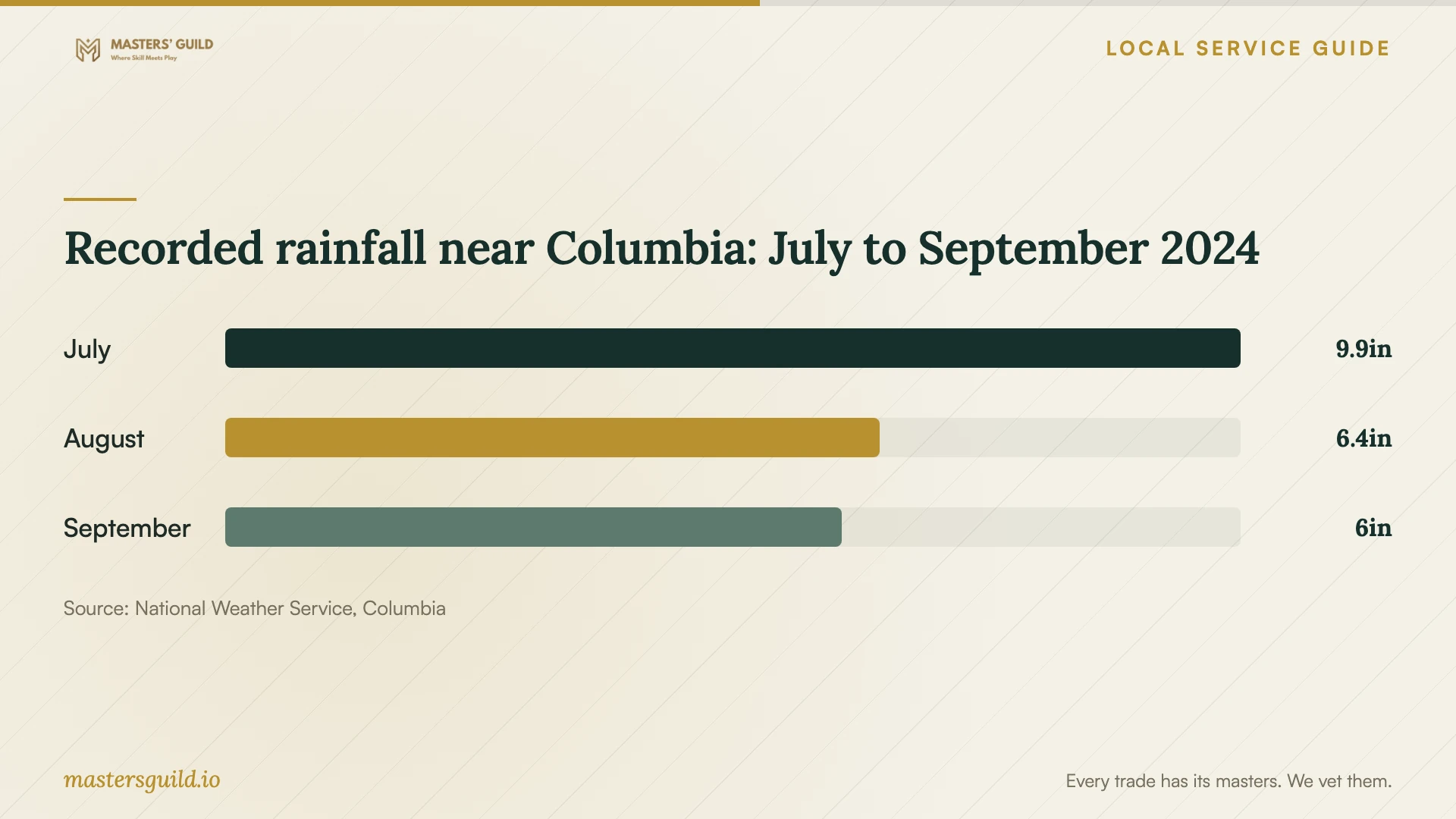
The chart records rainfall at Columbia Metropolitan Airport during July through September 2024. Use these historical observations to discuss rain protection and scheduling flexibility. For actual work dates, agree on how the contractor will decide to postpone work and who will return to maintain curing protection. [5]
Before final payment, walk through the marked repair areas with the contractor and compare the finish with your approved sample. Collect photographs, mortar product or formulation details, care instructions and warranty terms. Write down unfinished items and agree on a return date.
Recorded rainfall near Columbia: July to September 2024
Local details that affect your job
Start historic review with Columbia preservation staff
Columbia preservation staff administer Certificates of Design Approval for alterations to historic buildings and sites. The City directs projects to staff for consultation first; staff determine whether they can approve the proposal or must route it through the Historic Preservation Design Review Commission. Confirm your property’s protection and the review route before agreeing to brick removal, mortar replacement or a changed exterior finish. [1]
Confirm your permit scope through the Development Center
Columbia directs one- and two-family projects to its residential permitting section and commercial or multifamily projects to its commercial section. Applicants can use the Access Portal or email the Development Center. Send your address and proposed masonry scope when seeking a permit determination. The City lists 803-545-3420 for permitting assistance and 803-545-3422 for inspection requests, with inspection requests also available through the portal. [3]
Resolve the code edition before a year-end application
Columbia announces adoption of the 2024 Code Edition effective January 1, 2027. It says permit requests submitted after December 31, 2026 must follow the 2024 Building Code Editions. For a project planned across year-end, confirm the application timing and applicable requirements with the contractor and Development Center before finalizing the proposal. [3]
Choose the next step for your masonry project
| Project | Next step | Point to resolve before hiring |
|---|---|---|
| Joint repairs on historic masonry | Discuss mortar analysis and a sample repair with a preservation-qualified professional. | Proposed mortar strength, appearance and removal method. |
| Alterations to a protected historic property | Consult Columbia preservation staff first. | Staff approval or Historic Preservation Design Review Commission review. |
| A residential addition involving masonry | Confirm supervision by a residential builder or another appropriately licensed person or entity. | Authority and responsibility for the complete undertaking. |
| A permit request planned across year-end | Confirm submission timing with the Development Center. | The code edition applicable to the permit request. |
Your hiring checklist
- Photograph the damage and identify the areas each bidder should inspect.
- Arrange further assessment for visible movement or loose overhead masonry before approving repairs.
- Verify the contractor’s registration or license scope and review insurance documentation.
- Confirm the permitting authority for your address and obtain guidance for the proposed scope.
- Consult preservation staff before committing to alterations if the property may have historic protection.
- Agree on mortar selection, a sample repair and acceptance criteria.
- Document access, curing, weather delays and approval of extra work.
- Walk through the completed repair and collect photographs, care instructions and warranty terms.
Frequently Asked Questions
Does a residential mason need a South Carolina credential?
The Residential Builders Commission includes masons among registered residential specialty trades. Its definition covers specialty undertakings exceeding $500 that are not regulated by Chapter 11, Title 40. Obtain the contractor’s registration or applicable license details and verify that their authority covers your proposed work. [2]
Do I need a permit for repointing?
Ask the Development Center whether your proposed repointing needs a permit or inspections. Provide your address, photographs and repair scope. If the property has historic protection, consult Columbia preservation staff about design approval before committing to the work. [1] [3]
Should I approve the mortar before work starts?
Agree on the proposed mortar and a cured sample before full work begins. For historic masonry, GSA guidance calls for matching the original appearance and limiting replacement mortar strength relative to the original mortar and surrounding masonry. Discuss testing with a preservation-qualified professional. [4]
How should I compare masonry prices?
Give bidders the same repair areas and obtain itemized written proposals. Compare quantities, brick replacement, mortar selection, equipment, cleanup and curing arrangements. Resolve exclusions and the process for approving extra work before choosing a contractor.
Sources and scope
This guide combines the sources below with practical planning guidance. Figures apply to the stated geography and period; request a written quote for your property.