
Local service guide
Mold Removal in Colorado Springs: Hiring Guide
Arrange Mold Removal in Colorado Springs around the moisture source, affected materials, and cleanup scope. Ask a contractor to identify the water problem and explain what they will clean, remove, dry, and repair. EPA says homeowners can handle many patches under about 10 square feet, but sewage contamination, suspected HVAC contamination, or hidden growth calls for additional precautions and experienced help. [1] [2]
Choose the right cleanup scope
Measure the visible patch and describe the water event when you request an assessment. EPA uses less than about 10 square feet as a general guide for cleanup that homeowners can handle in many cases. That size alone does not settle the decision: EPA directs homeowners with sewage or other contaminated-water damage to professionals with experience cleaning and repairing affected buildings. [2]
Tell the assessor about musty odors, earlier leaks, and stains even if you cannot see mold. EPA identifies the backs of drywall, spaces around pipes, carpet undersides, and roof materials as possible hidden-growth locations. Avoid opening suspect cavities yourself; disturbing hidden mold can release spores. Ask an experienced professional to explain the investigation before authorizing demolition. [1]
If you suspect mold in the heating or cooling system, tell the contractor before the visit. EPA advises against running an HVAC system that you know or suspect has mold contamination because it could spread mold through the building. Ask who will assess the system and how that work fits into the cleanup. [2]
Compare written estimates by work included
Give each contractor the same photos and description. Request separate descriptions of inspection, cleanup, disposal, drying, moisture-source repair, and rebuilding. Ask who performs each part, which rooms they need to enter, how they will protect occupied areas, and what you must move before work starts. Have the contractor identify exclusions and the approval process for additional work.
Ask the contractor to distinguish materials they can clean from materials they propose to discard. EPA recommends detergent and water for mold on hard surfaces, followed by complete drying. Moldy porous materials such as carpet and ceiling tiles may need disposal because workers may not be able to remove growth from their internal spaces. [2]
Require an explanation for a spray-only proposal. EPA says killing mold does not replace removal, since dead mold can still cause allergic reactions. EPA also advises against routine bleach or other biocide use during mold cleanup. Ask how the contractor will remove growth and correct moisture rather than judging the proposal by the chemical name. [1]
Plan the budget and household access
Build your budget from a written assessment rather than a room label. Ask for the total for the known scope, the basis for any equipment charges, and prices or approval terms for discoveries behind finishes. Confirm whether the estimate includes replacing removed drywall, flooring, or trim. Keep moisture repairs and reconstruction visible in your comparison.
Agree on access hours, equipment placement, and which areas you can use during work. Ask the contractor to explain any proposed separation of the work area and whether household members need to stay elsewhere. If you have health concerns, EPA recommends consulting a health professional before cleanup; use that advice when arranging occupancy. [2]
Decide whether testing adds useful information
You usually do not need a mold test to establish that visible growth needs cleanup. EPA says sampling is unnecessary in most cases with visible mold and notes that no EPA or other federal limits exist for mold or mold spores. A test cannot demonstrate compliance with a federal mold standard. [1]
Ask a proposed tester to state the question, sampling plan, and how they will interpret the results. EPA says surface sampling may help determine whether workers have cleaned an area adequately and recommends professionals with experience designing and interpreting mold sampling. Decide who reviews the results and what happens if the agreed completion criteria are unmet. [1]
Check completion before closing the job
Walk through the cleaned area with the contractor and review the moisture repair. EPA's completion guidance requires correcting the water problem and removing mold; visible growth and moldy odors should no longer be present. EPA also recommends revisiting the area after cleanup to check for renewed water damage or growth. Staining can remain after removal, so ask the contractor to explain any marks. [1]
Request photos of areas that workers will cover during rebuilding, a record of the moisture-source repair, and written follow-up instructions. Agree on who you should contact if an odor or wet patch returns. Keep those records with the estimate and any approved changes.
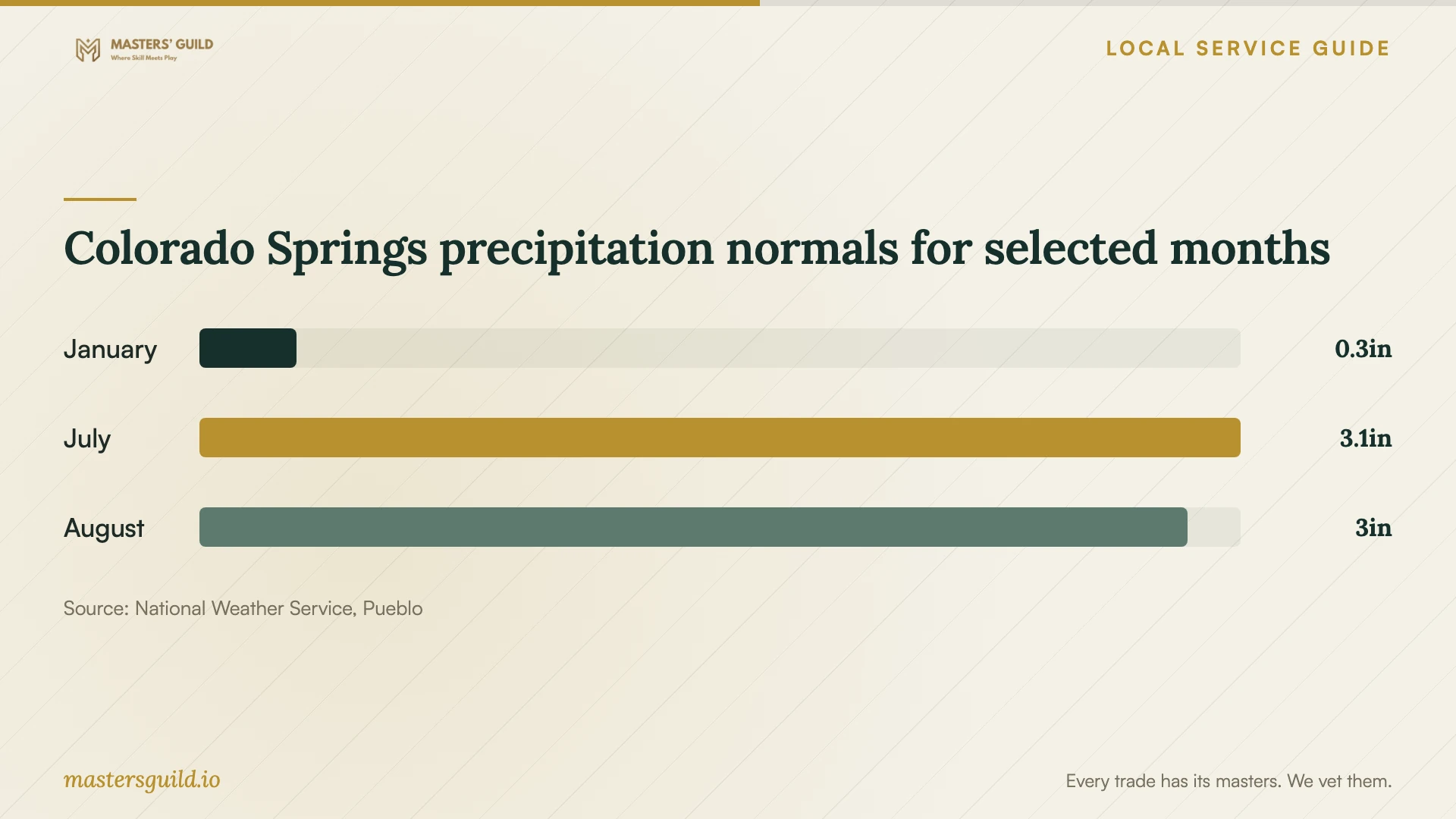
Colorado Springs precipitation normals for selected months
Local details that affect your job
El Paso County flood cleanup: arrange electrical safety first
For a flooded home here, follow El Paso County Public Health's reentry guidance: turn off the main power only if you can reach it from a dry location. If reaching the switch requires entering standing water, call an electrician. The county also advises an electrical-system check before restoring power. Tell the cleanup contractor about standing water so you can coordinate electrical access before work. [3]
El Paso County flood cleanup: include contaminated-material disposal
El Paso County Public Health warns that floodwater and debris may contain sewage. Its guidance calls for discarding drywall and insulation contaminated by sewage or floodwater and keeping children and pets out until cleanup is complete. For a local flood-related job, request a scope that addresses contaminated materials and household access. Pair that with a professional experienced in contaminated-water damage, as EPA recommends. [3] [2]
Match the situation to the next step
| Situation | Next step | Reason |
|---|---|---|
| Small patch under about 10 square feet | Consider homeowner cleanup after checking water source and health concerns. | EPA says homeowners can handle many patches of this size. |
| Musty odor with no visible source | Consider an experienced professional for investigation. | EPA identifies odors and past water damage as reasons to suspect hidden mold. |
| Sewage or contaminated-water damage | Hire someone experienced in contaminated-water cleanup and repair. | EPA recommends professional help for this damage. |
| Suspected HVAC contamination | Do not run the system; arrange assessment. | EPA warns that operation could spread mold. |
| Floodwater blocks access to the power switch | Call an electrician to disconnect power. | El Paso County advises against entering standing water to operate the switch. |
Your hiring checklist
- Prepare photos, the approximate affected area, and a description of the leak or flood for the assessor.
- List musty odors and earlier water damage, including areas without visible growth.
- Ask for mold-cleanup references and the remediation guidelines the contractor follows.
- Request a written scope separating cleanup, disposal, drying, water-source repair, and rebuilding.
- Confirm access hours, occupied-area arrangements, and what you need to move.
- Ask what decision any proposed sampling will change.
- Agree on completion criteria, records, and follow-up before accepting the estimate.
Frequently Asked Questions
Can I paint over the affected area?
Clean up the mold and dry the surface before painting or caulking. EPA warns that paint applied over moldy surfaces is likely to peel. Include the moisture-source repair in the plan before restoring finishes. [2]
Does recurring bathroom mold mean I need demolition?
EPA says increased ventilation and more frequent cleaning can prevent or reduce recurring bathroom mold. Start by discussing those measures and any leaks with the assessor. Ask for an explanation of suspected hidden damage before approving removal of finishes. [1]
How soon should I address wet materials?
EPA recommends drying water-damaged areas and items within 24 to 48 hours to prevent mold growth. Treat that as a prompt-drying goal, rather than a guarantee that a particular material is mold-free or a prediction of project duration. [1]
What indoor humidity should I aim for afterward?
EPA recommends keeping indoor relative humidity below 60 percent if possible, ideally between 30 and 50 percent. Use a humidity meter and discuss persistent condensation or wet surfaces with the person responsible for moisture repairs. [1]
Sources and scope
This guide combines the sources below with practical planning guidance. Figures apply to the stated geography and period; request a written quote for your property.