
Local service guide
Bathroom remodeling in Colorado Springs, CO
Bathroom remodeling in Colorado Springs starts with a written scope: identify the fixtures you want to keep, define the shower work, and ask contractors to quote the same materials and responsibilities. Before approving demolition in a pre-1978 home, follow EPA’s recommendation to hire a lead-safe certified contractor. Before ordering a toilet, check Colorado Springs Utilities rebate eligibility and assign responsibility for receipts and the application. [1] [2]
Define the work before comparing quotes
Describe the problem you want to solve: a leaking shower, difficult tub access, limited storage or worn finishes. Separate required repairs from optional changes. Give bidders room measurements and photographs, then ask them to inspect the bathroom before agreeing on the scope.
Ask each contractor to specify the shower base, waterproofing system, tile coverage, vanity dimensions and fixture models. Include lighting, ventilation, demolition, debris removal and protection of adjoining rooms. Assign responsibility for checking permit requirements for your address and proposed work, obtaining any required approvals and arranging inspections.
Compare exclusions and material allowances alongside the total price. Ask which selections still need a firm price and who pays for delivery. Agree that the contractor will photograph damage discovered during demolition, describe the repair and obtain your written approval for additional charges before proceeding.
Approve the exact toilet model
Colorado Springs Utilities offers its water customers a $100 rebate for each qualifying ultra-high-efficiency toilet. Its rules specify a 0.8-gallon-per-flush toilet with MaP Premium certification, a single-flush design and a Maximum Performance flush score of at least 600. Dual-flush and 1.28-gallon-per-flush models do not qualify. [1]
Ask the contractor to put the exact model in the quote and check it against the utility’s qualified equipment information before ordering. Have the installer confirm fit, bowl height and clearance. Review any proposed substitute before approving the purchase. [1]
Utilities limits customers to three rebates per service address every three years and caps each rebate at the toilet’s cost excluding tax. Qualifying purchases do not guarantee approval. The utility awards rebates on a first come, first served basis, subject to available funds. [1]
Plan the rebate paperwork with the installation
Utilities requires new qualifying equipment and purchase and installation between January 1 and December 31 of the current calendar year. It sets January 31 of the following year as the application postmark deadline. If your remodel may cross year-end, confirm the program timing before buying. [1]
Retain receipts showing purchase date, purchase price, make and model, and quantity. Utilities does not accept equipment photographs as model verification. To apply online, log in to My Account, open Customer Center, select the rebates and programs option, choose the rebate application and attach your receipts. [1]
Decide who will purchase the toilet, gather the documents and submit the application before signing. Utilities issues approved rebates as service-account credits and allows up to eight weeks for processing. Plan your contractor payments without relying on an immediate credit. [1]
Prepare for demolition and bathroom downtime
Check your home’s construction year before arranging work that disturbs painted surfaces. EPA says homes built before 1978 are more likely to have lead-based paint and recommends hiring a contractor certified and trained in lead-safe work practices for renovation in those homes. Do not assume the construction year confirms the presence of lead in your bathroom. [2]
EPA warns that sanding, cutting and other activities that disturb lead-based paint can create hazardous dust and chips. Ask the contractor for lead-safe credentials and an explanation of how they will handle paint disturbance, adjoining rooms and cleanup. [2]
Ask for the expected dates when the toilet, sink and shower will be unavailable. Agree on water shutoff notices, daily access and the steps needed before you can use the room again. If this is your only bathroom, settle your alternative arrangements before demolition begins.
Include hot-water use in fixture discussions
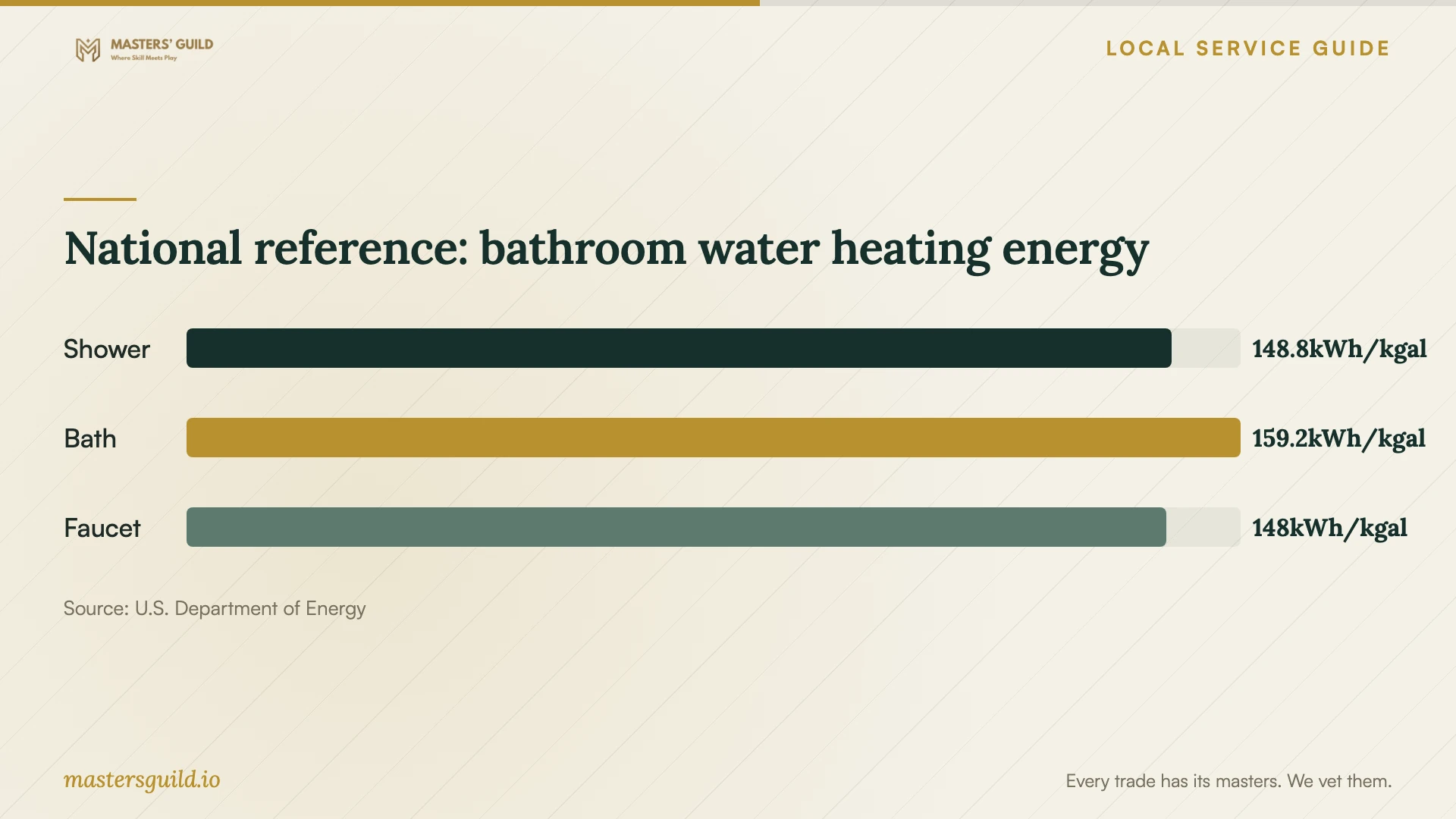
Ask the contractor to identify shower and faucet flow rates alongside the proposed models. The Department of Energy publishes generalized heating-energy reference values for shower, bath and faucet water use. These national facility references explain the relationship between water use and heating energy; they do not measure your household’s consumption. [3]
Use the chart to frame questions about hot-water use, then discuss comfort and your household’s routines before selecting fixtures. Request separate prices for optional equipment changes. Do not treat these reference values as a forecast of your utility bill or a promised saving. [3]
National reference: bathroom water heating energy
Local details that affect your job
Utility eligibility changes your fixture selection
Colorado Springs Utilities water customers can seek $100 per qualifying toilet. Check for a 0.8-gallon-per-flush, single-flush MaP Premium model with a flush score of at least 600 before authorizing an order. A dual-flush or 1.28-gallon model would miss the program’s eligibility rules. [1]
Utility deadlines change purchasing and handover
Utilities requires purchase and installation within the current calendar year and sets the following January 31 as the application postmark deadline. Assign responsibility for receipts and submission before work begins. Collect purchase date, price, make and model, and quantity; equipment photographs do not satisfy model verification. Apply through My Account and budget for an account credit rather than an immediate payment. [1]
Choose the next step for your project
| Your situation | Planning step | Question for the contractor |
|---|---|---|
| You want new finishes | Identify surfaces and fixtures you want to retain. | Does the scope include preparation, protection and cleanup? |
| You want a replacement shower | Request the waterproofing system and finish materials in writing. | Which materials and installation steps does your price include? |
| You want the utility toilet rebate | Check the exact model against Utilities eligibility rules. | Is this a qualifying 0.8-gallon single-flush MaP Premium model? |
| Your home predates 1978 | Follow EPA’s recommendation to hire a lead-safe certified contractor. | How will you manage paint disturbance and cleanup? |
| Work may cross year-end | Check Utilities purchase, installation and application deadlines. | Who will retain receipts and submit the application? |
Your hiring checklist
- Give bidders the same measurements, photographs and required work.
- Request exact fixture models and a written waterproofing scope.
- Assign responsibility for permit checks and any required inspections.
- Ask the contractor about lead-safe credentials before paint disturbance in an older home.
- Confirm toilet eligibility and assign rebate paperwork responsibilities.
- Agree on written approval for additional repairs and charges.
- Plan bathroom access, shutoff notices, room protection and cleanup.
Frequently Asked Questions
How should I compare contractor quotes?
Give contractors the same written scope. Compare fixture models, waterproofing, material allowances, demolition, cleanup and exclusions. Ask who will check permit requirements and how you will approve repairs discovered after demolition. Request clarification of any selection that lacks a firm price.
Does any water-saving toilet qualify for the rebate?
Colorado Springs Utilities requires a qualifying 0.8-gallon-per-flush, single-flush MaP Premium toilet with a flush score of at least 600. It excludes dual-flush and 1.28-gallon models. You must be a Utilities water customer, and approval depends on program rules and available funds. [1]
What should I ask before renovating a pre-1978 bathroom?
EPA recommends hiring a contractor certified and trained in lead-safe work practices for renovation in a pre-1978 home. Ask for those credentials and discuss paint disturbance, dust control and cleanup before demolition. EPA warns that disturbing lead-based paint can create hazardous dust and chips. [2]
Can the chart predict my energy savings?
The chart presents generalized heating-energy reference values reproduced by the Department of Energy from a 2009 study. It does not measure your water use, heater efficiency or utility rates. Use it as background for fixture discussions, without treating it as a household savings estimate. [3]
Sources and scope
This guide combines the sources below with practical planning guidance. Figures apply to the stated geography and period; request a written quote for your property.