
Local service guide
Tile Setting in Cleveland, OH: Hiring and Planning
Arrange Tile Setting in Cleveland, OH by defining the removal and installation work, verifying contractor registration and confirming permits before demolition. Cleveland requires contractors who build or rehabilitate homes to be bonded, insured and registered; electricians and plumbers must also be licensed. Request a written scope covering preparation, materials, waterproofing where relevant, cleanup and return to use before choosing an installer. [1]
Define the work before comparing installers
Give each installer the same room photographs, dimensions, tile selection and intended layout. Identify whether you want a backsplash, floor or shower. Mark the edges of the work, including thresholds, corners, niches and transitions. Request a site visit before accepting a final quote if the installer needs to assess the existing floor or wall.
Request separate descriptions for removal and disposal, underlying surface repairs, installation materials, tile setting, grout and edge finishing. For shower work, have the installer name the proposed waterproofing system and describe the treatment around drains, corners and penetrations. Identify who supplies each material and who handles fixture removal or utility changes.
Obtain project-specific quotes. Compare the complete scope and exclusions, then resolve differences before choosing. Agree on how the contractor will document concealed damage and price additional work. Require a written change description and your approval before proceeding with work outside the contract.
Check registration and permit responsibilities
Cleveland directs homeowners hiring contractors for building, rehabilitation or repair to call 216.664.2910 to verify registration. The city also advises obtaining permit copies before work starts. Match the registered business name to your contract and request bonding and insurance documentation. [1]
Confirm permits for the complete scope. Cleveland lists plumbing, drainage, electrical and structural changes among work requiring permits. Its listed minor-repair exemptions do not name tile installation. Describe what the installer will remove, repair or relocate and request a determination for your project. [2]
Before applying for a building permit, Cleveland requires applicants to complete a Project application and receive approval. Anyone can look up a permit without a login. Name the person responsible for applications and inspections in your contract, obtain the project reference and check the permit record before authorizing demolition. [2]
Resolve suspect materials before removal
EPA says you cannot determine whether a building material contains asbestos by looking at it. If you suspect existing floor tile contains asbestos and plan to disturb it during renovation, EPA recommends sampling by a trained, accredited asbestos inspector and analysis by a qualified laboratory. This guidance does not establish that your floor contains asbestos. [3]
Tell the installer about existing floor layers and previous testing. Resolve any assessment before authorizing removal, and agree on who arranges it. Have the contractor explain how the findings will change the removal scope, price and schedule. Keep assessment records with the contract.
Set a pause-and-review procedure for unexpected conditions. Request photographs, a repair description and a written price before approving added work. Include adjoining-room protection, debris handling and cleanup in the original scope so you can assess those arrangements before hiring.
Separate permit fees from the installation quote
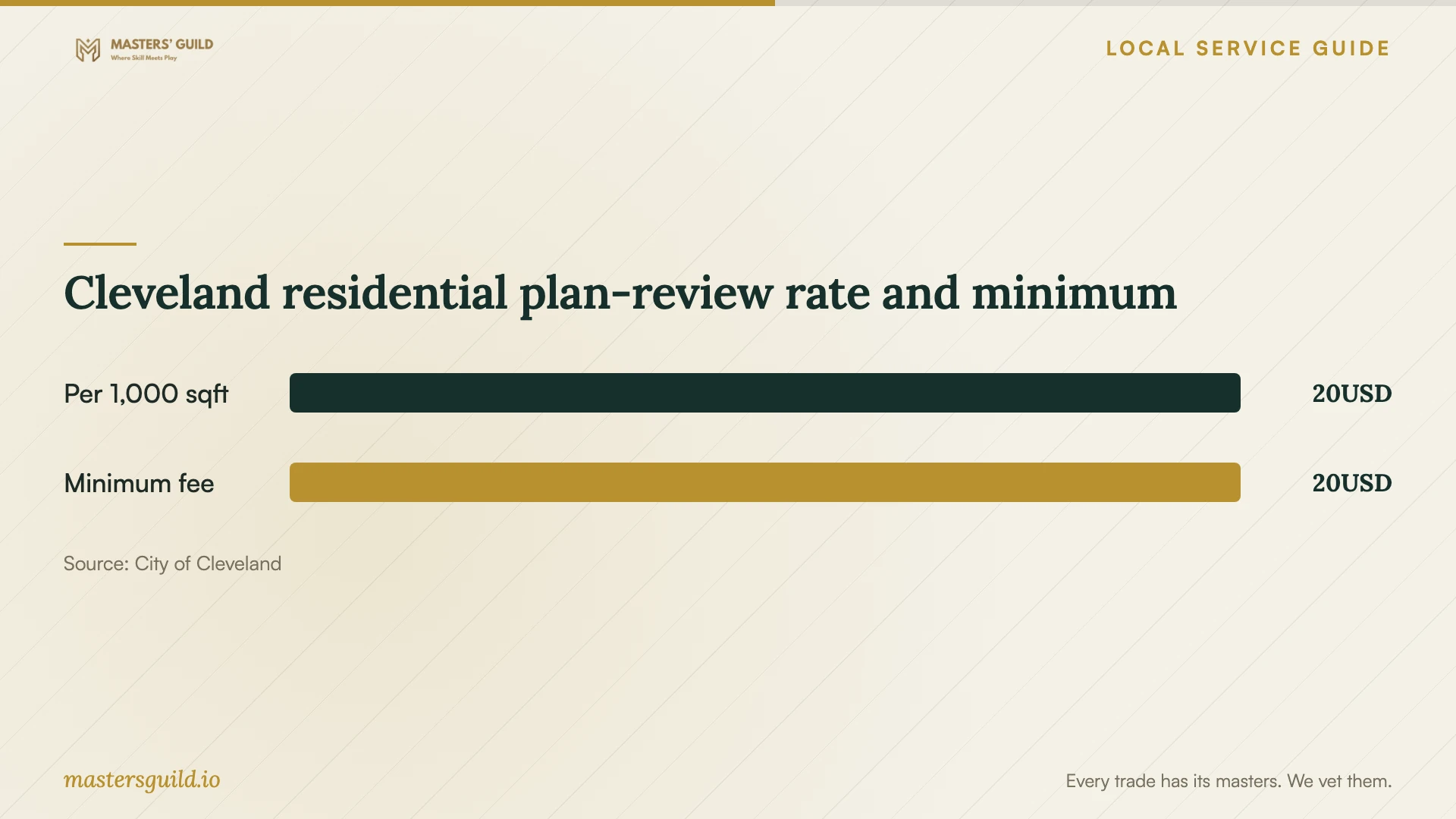
Cleveland’s contractor guidance lists a residential plan-review charge of $20 per 1,000 square feet of work, with a $20 minimum. The city describes this charge for reviewing plans for homes, garages, sheds, fences and swimming pools. Confirm whether plan review applies to your renovation and request the applicable fees before signing. [1]
The fee chart concerns residential plan review, not tile installation prices or a complete permit budget. Have the contractor identify application charges, permit charges and any administration allowance in the quote. Request confirmation of current charges for your exact project from the city. [1]
Agree on access and acceptance
Request a schedule covering removal, preparation, installation, inspections and return to use. Have the contractor provide waiting periods from the selected materials’ instructions. For bathroom work, agree on shower and toilet access, fixture disconnection and reinstallation, and where workers will store materials.
Approve the layout before installation, including visible cuts, trim and transitions. At handover, inspect the agreed work with the contractor, record unfinished items and collect care instructions and product details. For work requiring city inspection, Cleveland tells homeowners not to accept the work before a city inspector performs the final inspection. [1]
Cleveland residential plan-review rate and minimum
Local details that affect your job
Verify the business doing the work
Call Cleveland’s registration verification line at 216.664.2910 before signing. The city requires contractors building or rehabilitating homes to carry bonding, insurance and registration, with licensing also required for electricians and plumbers. Identify accompanying trades by business name so you can check who will perform utility work. [1]
Check approval before demolition
Cleveland requires an approved Project application before a building permit application and allows anyone to look up permits without logging in. For a shower project involving plumbing or drainage changes, obtain the project reference, check the permit record and request permit copies before work begins. Confirm the requirements for tile-only work with the city. [1] [2]
Choose the next step for your tile project
| Project situation | Next step | Question for the installer |
|---|---|---|
| Backsplash or floor with no planned utility changes | Confirm requirements with the city; its listed minor-repair exemptions do not name tile installation. | What removal, preparation, trim and cleanup does your quote include? |
| Shower renovation changing plumbing or drainage | Resolve permits and identify the licensed plumber. | Who handles applications, inspections and waterproofing details? |
| Removal of floor tile suspected to contain asbestos | Arrange trained, accredited professional sampling and qualified laboratory analysis before disturbance. | Who arranges assessment and revises the scope after the findings? |
| Renovation requiring residential plan review | Confirm applicable review and permit charges with the city. | Which charges and administration allowances have you included? |
Your hiring checklist
- Photograph existing surfaces and record dimensions and the boundaries of the work.
- Choose tile, layout, grout appearance, trim and transitions for comparable quotes.
- Verify contractor registration and request bonding and insurance documentation.
- Confirm the full permit scope and assign application and inspection responsibilities.
- Resolve assessment of suspected asbestos-containing material before demolition.
- Request preparation, waterproofing, disposal and cleanup details in writing.
- Agree on change approvals, access restrictions, return to use and handover records.
Frequently Asked Questions
Does tile installation need a Cleveland permit?
Confirm your scope with the city. Its permit guidance lists plumbing, drainage, electrical and structural changes among permit-triggering work, while its minor-repair exemptions do not name tile installation. Describe the entire renovation when requesting a determination. [2]
How do I verify a contractor’s registration?
Cleveland directs homeowners to call 216.664.2910. Use the business name on the proposed contract. Request bonding and insurance documentation and identify any electricians or plumbers, whom the city also requires to be licensed. [1]
Can I identify asbestos in old floor tile myself?
EPA says appearance cannot establish whether material contains asbestos. If you suspect asbestos and renovation will disturb the material, EPA recommends sampling by a trained, accredited inspector and analysis by a qualified laboratory. [3]
What should a shower tile quote include?
Request removal, surface preparation, the named waterproofing system, drain and penetration details, tile installation, grout, finishing and cleanup. Identify fixture work, exclusions, change-approval terms and return-to-use instructions. Have each installer quote the same scope.
Sources and scope
This guide combines the sources below with practical planning guidance. Figures apply to the stated geography and period; request a written quote for your property.