
Local service guide
Kitchen Remodeling in Cleveland, OH: Plan and Hire
For Kitchen Remodeling in Cleveland, hire against a written scope that names the contractor, trade subcontractors, permit responsibilities, materials, and payment milestones. Check credentials before signing: the city registers building contractors and requires Ohio licensing before electrical, plumbing, and HVAC contractors register. Separate cosmetic work from changes to building systems, then confirm the permit requirements for your proposed work with Building & Housing. [1]
Define the kitchen you want before requesting bids
Write down what you want to keep, replace, and move. Include cabinets, counters, flooring, lighting, appliances, sink location, and any proposed wall changes. Give each bidder the same list and appliance specifications. Ask each contractor to identify assumptions that require a site visit or further investigation.
Request separate prices for optional work, such as moving the sink or replacing cabinets instead of refinishing them. Specify cabinet construction, counter material, hardware, and installation responsibilities. Ask who measures for counters and who handles an appliance that does not fit. Compare the complete scope before choosing a bid.
Confirm permits and the people doing regulated work
Cleveland’s Building & Housing FAQ says homeowners need residential permits for electrical, plumbing, and HVAC work, while painting and minor maintenance or repairs do not require a permit. For a kitchen project that combines these tasks, describe the whole scope to the department and ask which applications and inspections apply. [1]
The city registers building contractors. Its contractor FAQ also says electrical, plumbing, and HVAC contractors must first obtain an Ohio license before registering with Cleveland. Ask your remodeler to identify those subcontractors and provide their state license and city registration details. Confirm the credentials of the people who will perform the work. [1]
Put permit responsibility in the contract: name who applies, who pays the fees, and who schedules inspections. If you intend to apply as the homeowner, Cleveland requires an Affidavit for a Homeowner’s Permit with each residential permit application. Ask the department how that process applies to your arrangement before submitting. [1]
Address lead compliance before demolition
For rental units built before 1978, Cleveland requires owners to obtain Lead Safe Certification or an exemption. The city exempts owner-occupied properties from certification and provides an exemption affidavit. Treat that certification distinction as a property compliance question; an owner-occupancy exemption does not establish whether the paint in your kitchen contains lead. [2]
Check the property’s certification status through the city’s Citizen Access Portal. The city says you can search without an account and recommends using the parcel number. Its application guidance directs owners to Cuyahoga County MyPlace for the parcel number and construction year. [2]
If you have a lead risk assessment, share the relevant findings with your contractor before agreeing to demolition. Cleveland describes the report as identifying paint and dust hazards, recommended repairs, and clearance requirements. Ask the contractor to explain containment, cleanup, and coordination with the assessor in the written scope. [2]
Build a budget and schedule you can review
Request an itemized quote with materials, installation, demolition, disposal, permit allowances, and exclusions. Ask the contractor to label allowances and explain how your selections change the final bill. Agree on a written change-order process before work starts, including how you approve extra work and schedule changes.
Ask for a sequence covering ordering, delivery, demolition, trade work, inspections, cabinet installation, counter measurement, and completion. Have the contractor identify which materials must arrive before demolition. Plan where you will prepare food and wash dishes, and agree on work hours, access, dust separation, and daily cleanup.
Keep tax expectations tied to the actual project
Cleveland’s tax abatement guidance lists kitchen remodeling among interior improvements that do not increase assessed residential value. It lists whole-home gut renovation and added living area among improvements that do increase assessed value. If your kitchen belongs to a broader renovation, ask the city to review that full scope before counting on an abatement. [3]
For eligible abatement projects, the city requires permits that reflect the actual scope and cost, along with compliance with its Green Building Standard. The city instructs applicants to hire an appropriate third-party green professional during planning. Keep the itemized scope, permit records, and before-and-after photos if you intend to apply. [3]
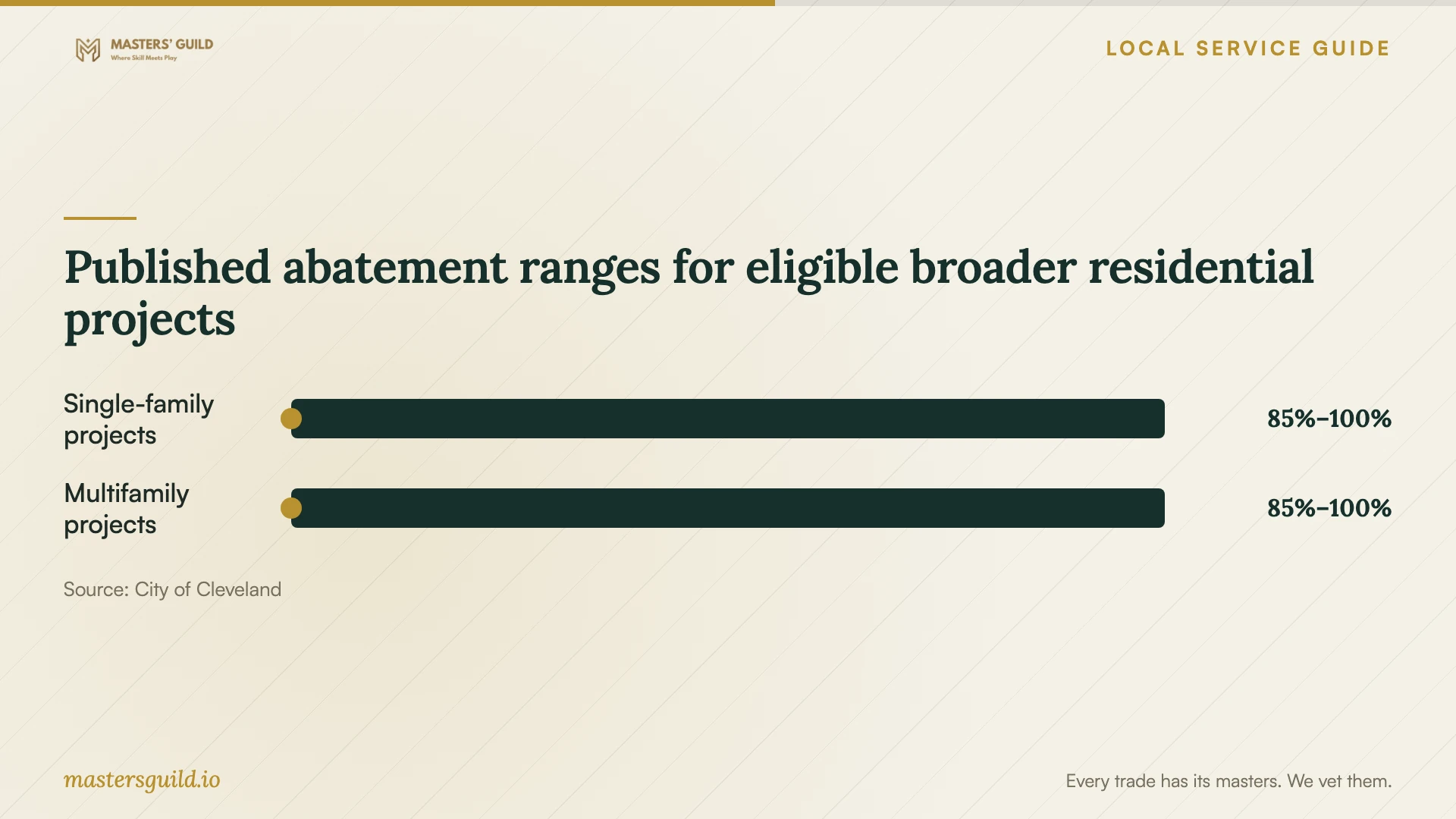
Published abatement ranges for eligible broader residential projects
Local details that affect your job
A homeowner permit requires an affidavit
Cleveland requires an Affidavit for a Homeowner’s Permit with each residential permit application. Before accepting a bid that asks you to obtain permits, confirm the application arrangement with Building & Housing at 216-664-2282 and put the contractor’s responsibilities in writing. [1]
Check rental lead records by parcel number
Owners of rental units built before 1978 must obtain Lead Safe Certification or an exemption. You can check certification status without a portal account using the parcel number. If the renovation overlaps with remediation, the city’s application process asks for the contractor name and Lead Firm Certification number when cleaning or remediation occurred before inspection. [2]
A kitchen remodel has a specific tax distinction
The city lists kitchen remodeling as an improvement that does not increase assessed residential value, but distinguishes gut renovation and added living area. For a broader project, contact the tax abatement program at 216-664-4423 during planning and confirm eligibility before including tax benefits in your budget. [3]
Choose the next step for your scope
| Proposed work | Local consideration | Next step |
|---|---|---|
| Painting and minor repairs | Cleveland exempts painting and minor maintenance or repairs from permits. | Describe any additional work before treating the project as cosmetic. |
| Electrical, plumbing, or HVAC work | Cleveland requires residential permits for these trades. | Name the subcontractors and assign applications and inspections. |
| Kitchen in a pre-1978 rental | The owner needs Lead Safe Certification or an exemption. | Check portal records and share any risk assessment with the contractor. |
| Kitchen-only remodeling | The city lists kitchen remodeling among improvements that do not increase assessed value. | Avoid budgeting for an abatement without a city eligibility review. |
| Kitchen within a whole-home gut renovation | The city lists gut renovation among improvements that increase assessed value. | Discuss the full project and green verification requirements during planning. |
Your hiring checklist
- Give each bidder the same written scope and appliance specifications.
- Request material specifications, allowances, exclusions, and optional prices.
- Ask for contractor insurance documentation and the names of trade subcontractors.
- Confirm credentials and assign permit and inspection responsibilities in the contract.
- Resolve property lead compliance questions before arranging demolition.
- Agree on written change orders and payment milestones.
- Confirm deliveries and arrange a temporary food preparation area.
- Request inspection records, warranties, and a written completion list before final payment.
Frequently Asked Questions
Do I need a permit if I keep the kitchen layout?
Confirm the work itself with the city. Cleveland requires residential permits for electrical, plumbing, and HVAC work, even though its FAQ exempts painting and minor maintenance or repairs. Keeping the layout does not answer which trades your project involves. [1]
Which contractor credentials should I request?
Ask for city registration details and the names of the electrical, plumbing, and HVAC subcontractors. Cleveland says those trade contractors must first obtain Ohio licensing before registering with the city. Request insurance documentation as part of your contract review. [1]
Does an owner-occupied home need Lead Safe Certification?
Cleveland exempts owner-occupied properties from Lead Safe Certification and provides an exemption affidavit. Its rental certification rules require owners of units built before 1978 to obtain certification or an exemption. Discuss paint disturbance and cleanup with your contractor regardless of occupancy. [2]
Should I include tax abatement in my kitchen budget?
Get a city eligibility review first. Cleveland lists kitchen remodeling among improvements that do not increase assessed residential value. A broader gut renovation has a different classification, and eligible abatement projects must meet accurate permitting and green building requirements. [3]
Sources and scope
This guide combines the sources below with practical planning guidance. Figures apply to the stated geography and period; request a written quote for your property.