
Local service guide
Cleveland interior design: hiring and project planning
For interior design in Cleveland, choose a designer by the work you need: furnishing advice, a room plan, purchasing help, or renovation coordination. Request a written scope and separate design fees from furniture and construction spending. If you plan to remove partitions or relocate plumbing or wiring, settle permit and drawing responsibilities before approving the layout; Cleveland lists these changes as permit work. [1]
Choose the designer’s role before comparing proposals
Start with the problem you want to solve. Describe the furniture you will keep, the activities the room must accommodate, and the choices you want help making. Request a consultation proposal if you want advice you can carry out yourself. Request a measured layout and specification list if you want someone to develop a room plan.
For purchasing help, ask who places orders, who owns the vendor accounts, and who handles damaged deliveries or returns. For renovation coordination, name the person responsible for drawings, contractor communication, site visits, and construction changes. Have the designer identify work that needs an architect, engineer, or trade contractor.
Review a sample deliverable alongside portfolio photos. Look for how the designer documents dimensions, furniture placement, finish selections, and revisions. Choose someone whose proposed work addresses your room and your budget, then put those deliverables in the agreement.
Resolve permits and drawing requirements before renovation
Cleveland lists interior reconfiguration, structural changes, full window or door replacement, and upgrades or relocation of electrical, plumbing, and HVAC systems among projects requiring permits. The city requires an approved Project application before a building permit application. Its review process includes Zoning, Planning, Landmarks, Right of Way, and other review bodies. [1]
The city requires drawings for alterations involving wall or partition removal, rearrangement of internal spaces, and changes to egress. Its drawing guidance also covers installation of new plumbing, gas piping, heating, ventilation, refrigeration, or electrical systems and alterations or extensions to those systems. [1]
For building-system plan approval, the city lists exceptions: gas, HVAC, or plumbing pipe extensions under 50 feet; temporary wiring; and component replacements that do not extend, alter, or void approval of the entire system. These are exceptions to plan approval, not a statement that the work needs no permit. Confirm both requirements with the city for your proposed scope before agreeing to a drawing package. [1]
Cleveland recommends professionally sealed drawings for one-, two-, and three-family dwellings but does not require the seal; its guidance allows design calculations as a substitute. Write the approval handoff into your agreement: who submits the application, answers review comments, revises drawings, and communicates approval to the contractor. [1]
Separate design fees from the total project budget
Have each designer price the same scope. Request the fee basis, payment milestones, included meetings, revision allowance, and charges for additional work. Put furniture, freight, installation, contractor labor, permit fees, and specialist drawings on separate budget lines. Request written purchasing terms covering markups, discounts, cancellation, and returns.
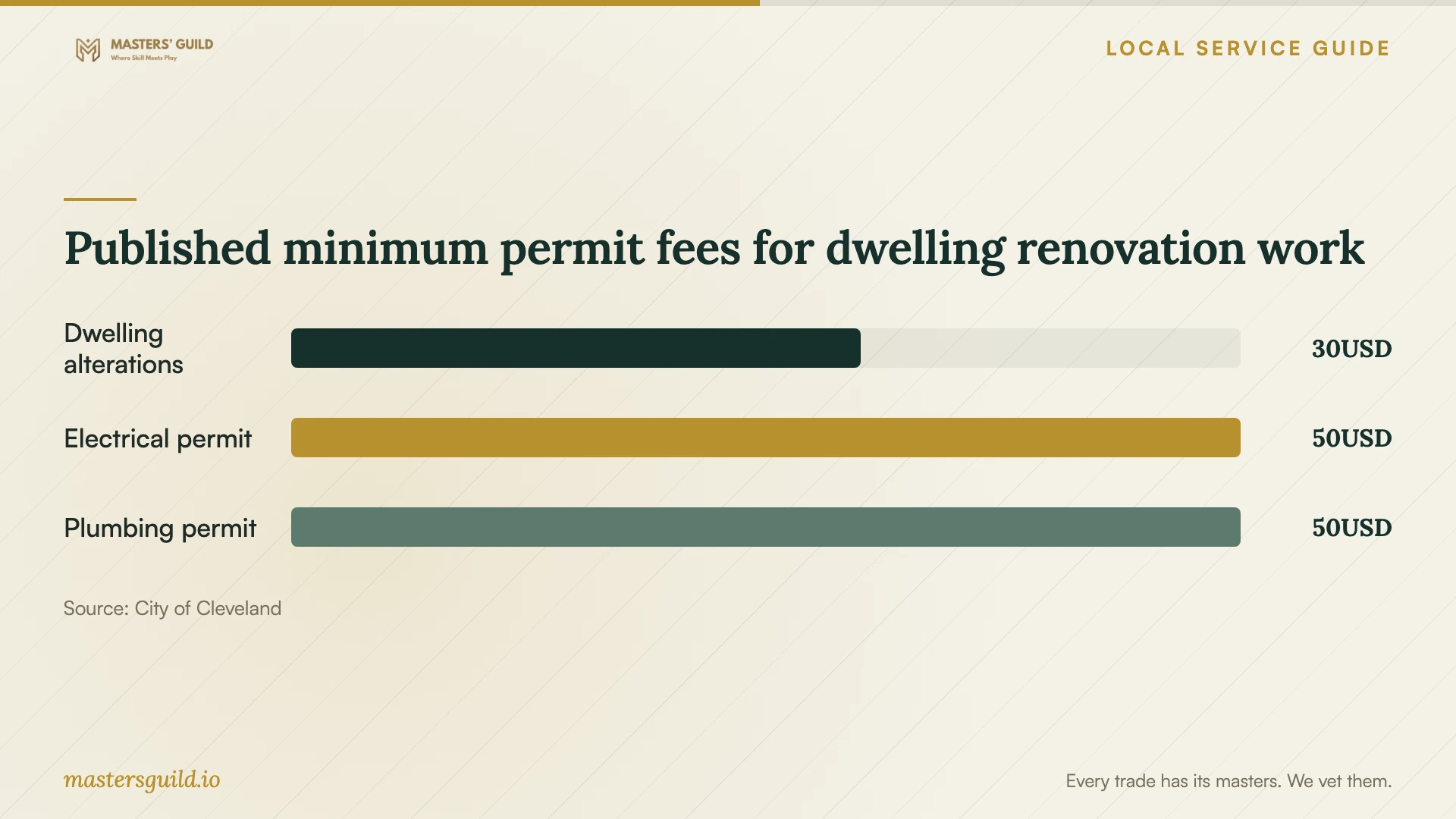
Use the published permit minimums below as budget references. Cleveland’s fee page labels its schedule effective January 2, 2014. It lists dwelling alteration fees based on estimated work cost, with separate plan-examination charges, applicable zoning fees, and a state surcharge. Confirm the amount for your project with the city before treating a minimum as your permit budget. [5]
Set an approval limit for substitutions and additional purchases. Have the designer show total committed spending before each order, including delivery and installation. Agree on how you will approve construction changes and how the team will record their cost.
Check the construction team and painted surfaces
Cleveland says contractors who build or rehabilitate homes must be bonded, insured, and registered; electricians and plumbers must also be licensed. The city directs homeowners to call 216.664.2910 to verify contractor registration and obtain copies of permits before work begins. It also tells homeowners to wait for final inspection before accepting the work. [2]
EPA says paid firms that disturb paint in pre-1978 housing generally need RRP certification. Its guidance covers remodeling, painting preparation, carpentry, and other renovation activities, with specified exceptions. Within housing covered by the rule, window replacement and demolition of painted surfaces do not qualify for the minor-work square-footage exemption. Have the firm explain its certification and work practices before approving painted-trim removal or demolition. [4]
For a rental unit, check Cleveland’s Lead Safe Certification requirements as a separate planning step. The city requires owners of rental units built before 1978 to obtain certification or an exemption. It exempts owner-occupied properties from certification and provides an exemption affidavit. That city exemption does not establish an exemption from EPA’s rules for paid paint-disturbing renovation. [3] [4]
Published minimum permit fees for dwelling renovation work
Local details that affect your job
A partition change needs an approval plan
Cleveland includes adding or removing non-load-bearing walls in its permit requirements. If your designer proposes opening a kitchen to an adjoining room, assign responsibility for drawings and Project approval before applying for the building permit. You can check permit status without an account or being the applicant. [1]
Schedule inspection before concealing renovation work
Cleveland assigns inspection scheduling to contractors and do-it-yourselfers. Its home-rehab guidance calls for rough-in inspection before concealing work and inspection upon completion. Have the contractor account for those inspections before closing walls or arranging final finish installation. [2]
Review rental lead documentation before selecting finishes
For a pre-1978 rental, review the lead risk assessment with the renovation team before approving work on painted surfaces. Cleveland describes the report as identifying hazards, recommended repairs, and clearance requirements. The city lets you search certification status without an account and recommends using the parcel number. [3]
Match the proposed work to the hiring scope
| Your project | Scope to request | Next step |
|---|---|---|
| Furniture and color advice | Consultation with written recommendations | List the decisions you want resolved and items you will keep. |
| Room layout and purchasing | Measured plan, specifications, and purchasing terms | Assign measurement checks, order approval, and delivery handling. |
| Adding or removing partitions | Renovation design with a drawing and permit handoff | Confirm Cleveland Project approval and building-permit responsibilities. |
| Relocating plumbing or wiring | Design coordination with the relevant trade contractors | Confirm permits and drawing requirements, including any applicable plan-approval exceptions. |
| Disturbing paint in pre-1978 housing | Renovation scope with lead-work review | Ask the firm about RRP certification and any applicable exemption. |
Your hiring checklist
- Prepare room photos, available dimensions, a list of furniture to keep, and a total spending limit.
- Request written deliverables and identify who checks measurements before ordering.
- Agree on meetings, revisions, additional fees, and approval deadlines.
- Document purchasing markups, delivery responsibilities, returns, and damage claims.
- Assign responsibility for permit submissions, drawings, review comments, and inspections.
- Confirm permit requirements and any plan-approval exceptions with the city for the proposed work.
- Request contractor registration, insurance, permit copies, and applicable lead-work credentials.
- Approve a layout and itemized spending plan before placing orders or starting demolition.
Frequently Asked Questions
Does removing a non-load-bearing wall require a permit?
Yes. Cleveland lists adding or removing non-load-bearing walls as interior alterations requiring permits. Its drawing requirements also cover cutting away or removing a wall or partition. Resolve drawings and application responsibility before demolition. [1]
Does my home renovation need architect-sealed drawings?
Cleveland recommends sealed drawings for one-, two-, and three-family dwellings but does not require a professional seal; it allows design calculations as a substitute. The seal exception does not remove applicable drawing requirements. Confirm the requirements for your building and proposed work with the city. [1]
How should I compare interior designer fees?
Have designers quote the same deliverables and identify additional charges. Compare design work, revisions, purchasing terms, site visits, and construction coordination. Keep furniture and construction allowances separate so you can see what each designer’s fee includes.
Does the owner-occupied lead certification exemption cover renovation?
Cleveland exempts owner-occupied properties from its Lead Safe Certification requirement. EPA addresses paid paint-disturbing renovation in pre-1978 housing through the RRP rule. Ask your renovation firm about certification and the exceptions relevant to your work. [3] [4]
Sources and scope
This guide combines the sources below with practical planning guidance. Figures apply to the stated geography and period; request a written quote for your property.