
Local service guide
Plan gardening in Cleveland: Quotes and Cleanup
Arrange gardening in Cleveland by defining the beds, plants, and tasks, then comparing written quotes for labor, materials, disposal, and follow-up care. Agree on bagging or haul-away before a cleanup. Before approving foundation-bed digging or a rain garden, discuss suspected soil hazards and assign responsibility for any application documents.
Define the work and compare itemized quotes
Choose a one-time cleanup, planting project, or recurring maintenance arrangement. Mark the beds and describe the result you want. For cleanup, identify unwanted plants and material to remove. For planting, approve a plant list before purchase. For recurring care, name the tasks for each visit and agree on how you will authorize extras.
Send photographs and approximate bed dimensions. Include gate width, steps, parking access, and a usable water supply. Label plants you want to preserve. Have the gardener check uncertain plants with you before removal, and identify areas where you want hand weeding rather than another proposed treatment.
Request separate amounts for labor, plants, soil or mulch, delivery, and disposal. For hourly work, obtain an estimated total and a spending cap that requires your approval to exceed. For a fixed quote, get a written description of the finished work. Compare the same scope across bidders, including cleanup and care after planting.
Settle disposal before a cleanup
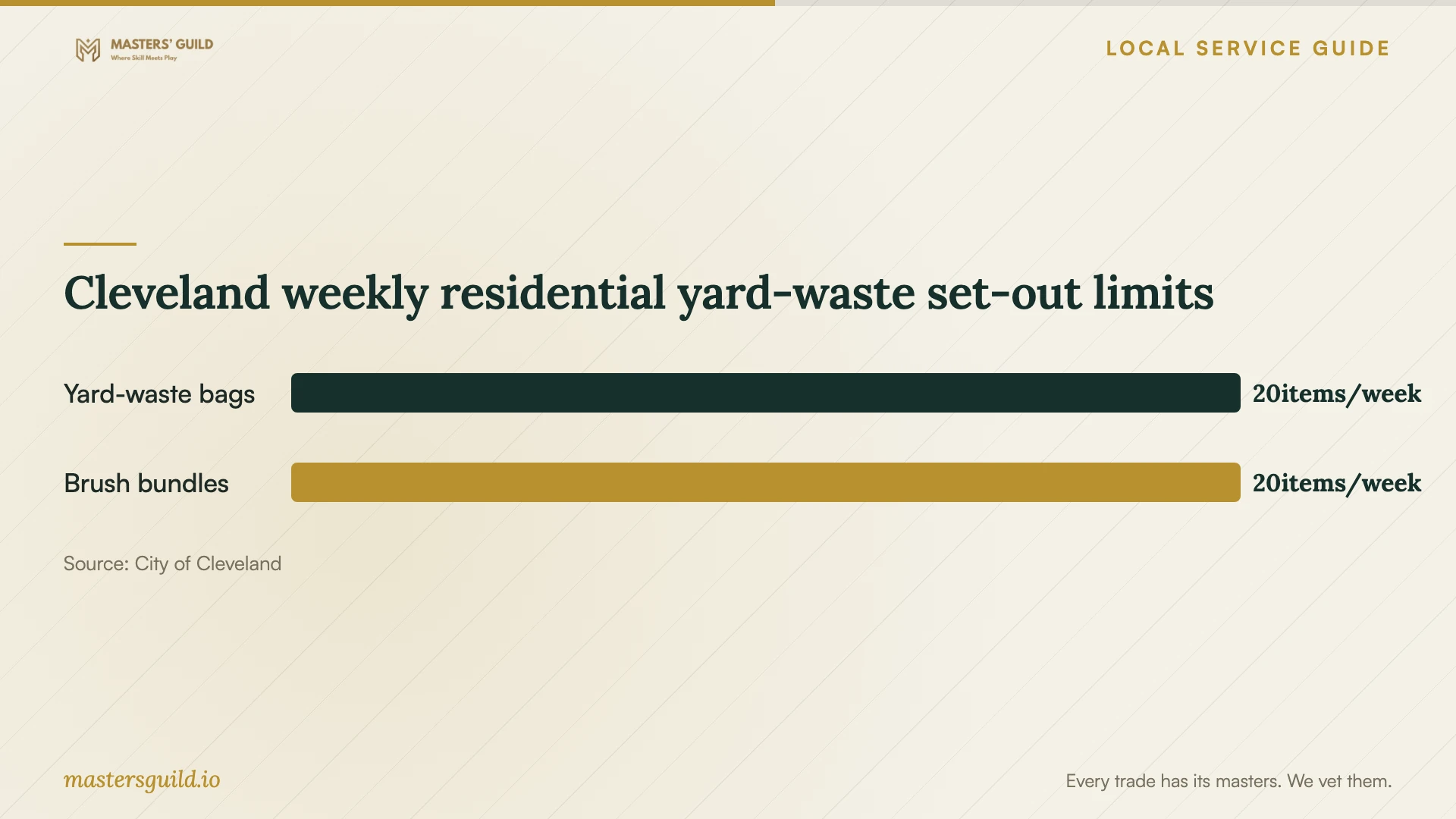
Cleveland's residential guidelines allow residents to set out up to 20 yard-waste bags and 20 brush or tree-branch bundles each week. The city warns that larger, uncontained set-outs could result in fines. Have the gardener estimate both bags and bundles, then price haul-away if you want removal beyond the collection limits. [1]
The city directs residents to place carts curbside the night before collection or by 6:00 AM on collection day. It also directs residents to keep yard waste away from cart fronts and prohibits leaning material against carts. Confirm your collection schedule and agree on where the gardener will leave prepared waste. [1]
Write the disposal arrangement into the quote: bagging and bundling for resident set-out, removal from the property, or both. Specify who supplies bags, who moves material to the collection point, and whether haul-away includes loading and disposal. For material you plan to retain between collections, designate a storage area that keeps access clear.
Discuss exposed soil beside an older home
Cleveland's health department says homes built before 1978 may contain lead paint. It identifies uncovered soil as a lead-poisoning risk, notes exposed soil around foundation drip lines, and recommends mulch or plant cover. Before changing a foundation bed, share any existing assessment and discuss suspected hazards. [2]
Contact the city health department about assessment options if you have concerns before digging. Keep paint scraping and sanding outside the gardening scope: the city's guidance advises that a certified lead professional handle that work because it releases lead dust. [2]
Separate soil-cover work from hazard assessment or remediation in your request. Have the gardener describe the proposed mulch or planting work after you resolve the assessment question. Request documentation of any assessment rather than treating a finished garden bed as proof that someone evaluated the property's lead risk.
Include rain-garden documents and follow-up care
For a rain garden intended to support a stormwater fee credit application, review NEORSD's individual residential checklist before commissioning work. This regional utility requests a rain-garden design, completion of its homeowner manual and worksheet, photographs of each stormwater control measure, and a digitized property sketch showing those measures. [3]
Name the person responsible for each document in the quote. Confirm how the requirements apply to your account and project with NEORSD Customer Relations at 216-881-8247 before including a credit in your budget. Request the installer's proposed design and documentation deliverables before approving construction. [3]
Before planting, obtain written watering instructions and assign care between visits. Agree on rescheduling for unsuitable weather or ground conditions, approval for plant substitutions, and how you will review completed work. For recurring service, specify whether the gardener will check new plants and obtain approval before buying replacements.
Cleveland weekly residential yard-waste set-out limits
Local details that affect your job
Weekly residential limits change the disposal scope
Cleveland allows up to 20 yard-waste bags and 20 brush or tree-branch bundles per week for residential set-out. Request a waste estimate before choosing collection or haul-away. The city warns that larger, uncontained set-outs could result in fines, so do not approve an uncontained curbside pile as the cleanup plan. [1]
Foundation soil needs attention before bed changes
The city health department identifies uncovered soil at foundation drip lines as a lead-exposure concern and recommends mulch or plant material. Share existing assessment information and seek guidance on suspected hazards before digging. Define the gardener's soil-cover work separately from any hazard assessment. [2]
Regional rain-garden applications need named deliverables
NEORSD's individual residential checklist requests a rain-garden design, completed homeowner manual and worksheet, photographs, and a digitized property sketch. If you intend to apply through this regional utility, confirm applicability to your account and make document preparation a named part of the installation quote. [3]
Choose the scope before approving the quote
| Project | Include in the quote | Resolve before approval |
|---|---|---|
| Overgrown-bed cleanup | Removal list, preserved plants, and estimated bags and bundles | Collection within the city's weekly residential limits or haul-away |
| Recurring bed care | Tasks per visit and approval process for extras | Watering and care between visits |
| Foundation-bed changes | Exposed-soil areas and proposed cover work | Guidance on suspected lead hazards before digging |
| Rain-garden installation | Design, completed worksheet, photographs, and property sketch | NEORSD applicability and responsibility for application documents |
Your hiring checklist
- Photograph the beds and mark plants to preserve or remove.
- Describe the first visit and any recurring tasks.
- Provide dimensions, gate access, parking details, and water access.
- Request itemized labor, materials, delivery, and disposal amounts.
- Choose bagging and bundling, haul-away, or a combination.
- Share existing assessments and resolve suspected hazards before foundation-bed digging.
- Assign rain-garden design and application documents if you intend to seek a credit.
- Agree on watering, weather rescheduling, substitutions, and approval for extras.
Frequently Asked Questions
How should I compare gardening quotes?
Give each gardener the same photographs, dimensions, removal list, and planting requirements. Compare itemized totals, including disposal and follow-up care. Set a spending cap for hourly work and require approval for extra tasks or substitutions.
Can the gardener leave waste for city collection?
Agree on bagging and bundling first. Cleveland allows weekly residential set-out of up to 20 yard-waste bags and 20 brush or tree-branch bundles. Request a haul-away option if you expect more material or want to avoid storing the remainder. [1]
Should I flag lead concerns before foundation-bed work?
Yes. Share assessment information and identify exposed soil before digging. Cleveland's health department identifies uncovered soil as a lead-exposure concern and recommends mulch or plant cover. Seek guidance on suspected hazards before approving soil disturbance. [2]
What paperwork should I request for a rain garden?
NEORSD's residential checklist requests a design, completed homeowner manual and worksheet, photographs of each stormwater control measure, and a digitized property sketch. Confirm requirements for your account with the utility and identify which documents the installer will provide. [3]
Sources and scope
This guide combines the sources below with practical planning guidance. Figures apply to the stated geography and period; request a written quote for your property.