
Local service guide
Flooring Installation and Repair in Cleveland
Arrange Flooring Installation and Repair in Cleveland by requesting an inspection and a written scope before authorizing removal. Compare preparation and installation costs, verify contractor registration, and resolve permit questions for the complete job. Cleveland's floorboard exemption covers same-material replacement across no more than 10% of the floor area; ask the city about work beyond that limit. [1] [2]
Define the repair before choosing the finish
Start with an inspection request that leaves room for a repair. Show the contractor the damaged area, adjoining flooring, thresholds, and stairs. Explain whether you want to preserve the existing floor or replace it. Request separate proposals if you want to compare those options before committing.
Ask the contractor to separate the floor covering, the surface you walk on, from the subfloor and supports beneath it when describing proposed work. Cleveland lists changes to structural components and load-bearing supports among work requiring permits. Have the contractor identify any proposed structural repairs before you approve removal. [2]
Ask how the installer will assess moisture, flatness, and the condition beneath the covering. Agree on where they may open the floor and how you will approve discoveries. For a patch, request a sample or an explanation of the proposed match. For replacement, record the product name, installation method, and manufacturer's preparation instructions.
Check registration and the complete permit scope
Cleveland requires contractors who build or rehabilitate homes to hold bonding, insurance, and city registration. The city tells homeowners to verify registration at 216.664.2910. Give the city the contractor's legal business name and ask the contractor for current insurance documentation before signing. [1]
Cleveland lists same-material floorboard replacement across 10% or less of the floor area among minor repairs that need no building permit. This specific exemption does not establish a blanket exemption for flooring installation. Describe the material, affected area, and any work beneath the covering when asking the city about your project. [2]
For work requiring a building permit, Cleveland requires Project application approval before the building-permit application. The city also requires drawings for structural changes. Assign responsibility for applications and drawings before booking a crew for a project that includes support repairs. [2]
Resolve suspected asbestos before disturbing the floor
EPA says you cannot identify asbestos by appearance unless the material carries a label. If you suspect asbestos and plan work that would disturb it, arrange assessment by a trained and accredited asbestos professional. EPA recommends professional sampling and advises homeowners against taking samples themselves. [3]
EPA advises leaving undamaged asbestos-containing material alone when you will not disturb it. It advises against sanding or leveling asbestos flooring or its backing and recommends installing a new covering over asbestos flooring when possible. Ask the assessor whether retention, covering, repair, or removal suits the proposed renovation. [3]
EPA recommends using an assessor who has no connection to the firm performing asbestos repair or removal. Ask for a written evaluation and recommendations. Define specialist work apart from the flooring installation quote, and agree on who will confirm completion before the installer returns. [3]
Compare itemized quotes and approve changes
Give each bidder the same room measurements and product specification. Request separate amounts for materials, installation, removal, disposal, preparation, trim, stairs, and furniture handling where applicable. Ask bidders to identify allowances, exclusions, and the work they cannot price until they inspect beneath the existing floor.
Use a written change process: the contractor describes the discovery, proposes the additional work and price, and receives your approval before proceeding. Ask for photographs of concealed damage. Keep the repair decision separate from your original material choice so you can reconsider the scope before committing further money.
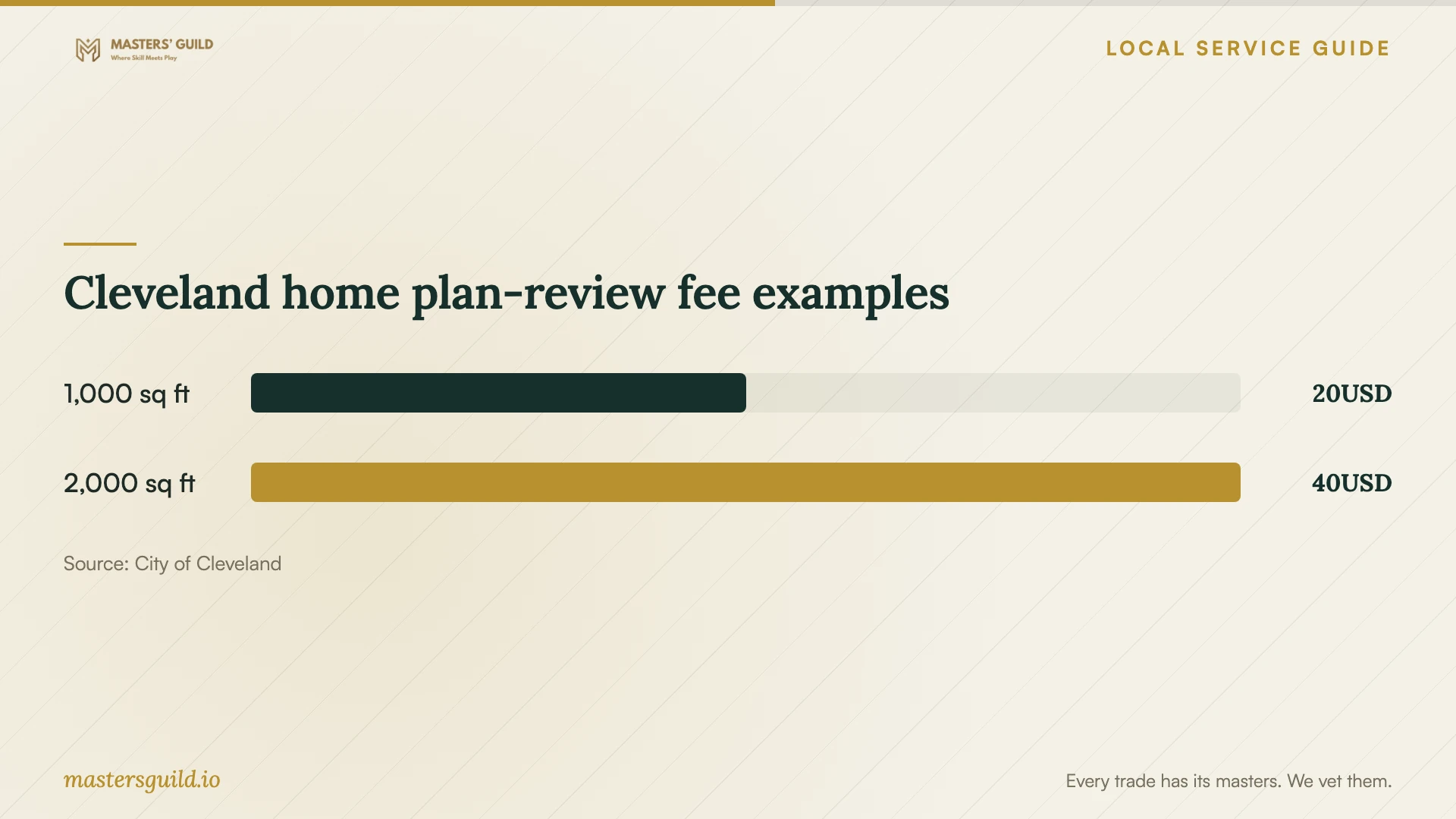
Cleveland publishes a home plan-review charge of $20 per 1,000 square feet of work, with a $20 minimum. The chart gives calculations from that rule, not flooring installation prices. Ask the city whether your scope requires plan review and which charges apply before adding an allowance to your budget. [1]
Arrange access, inspections, and completion
Before work starts, name the person who will order and receive materials, move furniture or appliances, and protect routes through the home. Ask the installer for product-specific indoor storage instructions. Agree on room access, working hours, and when you can walk on the floor or return furniture.
Cleveland makes contractors and do-it-yourselfers responsible for scheduling inspections. For permitted work, obtain permit copies before work begins and follow the city's direction not to accept the work before final inspection by a Building and Housing inspector. Anyone can look up a permit without a login. [1] [2]
At the handoff, walk through the agreed scope with the installer. Record unfinished items and who will address them. Obtain care instructions, workmanship warranty terms, and any remaining product information. Ask the contractor to leave spare material if you included it in the order.
Cleveland home plan-review fee examples
Local details that affect your job
Confirm the narrow floorboard exemption
Cleveland exempts replacement of floorboards with the same material across no more than 10% of the floor area from a building permit. Give the city the affected area and details of subfloor or support work before relying on that exemption. Ask the contractor to record the city's scope determination. [2]
Verify the contractor through city contacts
Call 216.664.2910 to verify contractor registration, as Cleveland directs homeowners. For bonding, insurance, registration, and license questions, the city lists 216.664.2884, weekdays from 8:00 am to 4:00 pm. Use the contractor's legal business name when making the inquiry. [1]
Assign applications and inspections
Cleveland requires Project application approval before the building-permit application and lets anyone look up permits without logging in. Contractors and do-it-yourselfers must schedule inspections. For permitted flooring rehabilitation, name the person handling approvals and inspections and obtain permit copies before the crew starts. [1] [2]
Choose the next step for your flooring project
| Proposed work | Next step | Question to resolve |
|---|---|---|
| A patch in one area | Request repair and replacement proposals. | How will you match the retained floor? |
| Same-material floorboards across 10% or less | Confirm the complete scope fits the city exemption. | Does the job include subfloor or support work? |
| Structural beam or load-bearing support changes | Resolve permit and drawing requirements before work. | Who handles applications and inspections? |
| Renovation that would disturb suspected asbestos | Arrange assessment by a trained and accredited professional. | Can you retain or cover the material? |
| Work requiring a building permit | Assign Project approval, permit, and inspection responsibilities. | Who obtains permit copies and schedules final inspection? |
Your hiring checklist
- 1. Photograph damage and identify the rooms, stairs, thresholds, and adjoining floors.
- 2. Request a repair or replacement scope and agree on any investigation beneath the covering.
- 3. Verify contractor registration and request insurance documentation.
- 4. Confirm permit requirements for the complete scope before scheduling removal.
- 5. Arrange professional assessment before disturbing suspected asbestos-containing material.
- 6. Compare matching products, measurements, itemized costs, allowances, and exclusions.
- 7. Agree on written change approvals, access, inspection responsibilities, and the completion handoff.
Frequently Asked Questions
Does replacing a floor require a Cleveland permit?
Cleveland lists an exemption for same-material floorboard replacement across 10% or less of the floor area. Describe the complete project to the city before treating larger replacement, a material change, or work beneath the covering as exempt. Structural changes also trigger the city's drawing requirements. [2]
Can I do flooring work in my own home?
Cleveland allows owner-occupants of one- or two-family homes to perform alterations without contractor registration. You must follow the permit, plan-examination, and inspection regulations that apply to contractors. Confirm the requirements for your proposed scope before starting. [1]
Should I remove flooring that may contain asbestos?
Leave suspected material undisturbed while arranging assessment. EPA advises leaving undamaged asbestos-containing material alone when you will not disturb it and recommends covering asbestos flooring when possible. Ask a trained and accredited professional to assess the proposed renovation and advise on repair or removal. [3]
How should I compare installation prices?
Request quotes for the same product and measured scope. Separate preparation, removal, disposal, installation, and finishing work. Ask each bidder to identify allowances and exclusions, then agree on the written approval process for discoveries and additional charges.
Sources and scope
This guide combines the sources below with practical planning guidance. Figures apply to the stated geography and period; request a written quote for your property.