
Local service guide
Duct and Vent Cleaning in Cleveland, OH
Arrange Duct and Vent Cleaning in Cleveland by asking providers to show the contamination and quote a written total for the components they will clean. EPA recommends cleaning as needed for substantial mold, pests, or excessive debris. If a provider proposes duct repairs, confirm Cleveland's permit arrangements and contractor requirements before approving the added work. [1] [3]
Ask for evidence before choosing a package
Ask the provider to show where cleaning would address your problem. EPA identifies substantial visible mold in hard-surface ducts or system components, pest infestation, and excessive dust or debris as reasons to consider cleaning. Ask how the provider inspected sections you cannot see and whether particles come from supply registers. [3]
Avoid choosing a provider on promises to cure allergies or reduce energy bills. EPA says duct cleaning has not been shown to prevent health problems and finds little evidence that cleaning ducts alone improves system efficiency. Discuss unexplained symptoms with your doctor. [3]
Describe the concern in your job request and include photographs you can take without opening equipment or disturbing insulation. Ask each bidder to explain whether you need cleaning, equipment diagnosis, moisture correction, or another specialist.
Compare the scope and total price
EPA advises getting written estimates from at least three providers and agreeing on scope and total cost before work begins. Its description of system cleaning includes supply and return ducts, registers, coils, drain pans, blower components, and air-handler housing. Ask each bidder to name included components and identify who will handle excluded equipment. [3]
Ask how the crew will collect debris and protect your home. EPA recommends vacuum equipment that exhausts outdoors or HEPA equipment when the vacuum exhausts indoors. It also calls for methods suited to the duct material and sealing and reinsulating access holes used during cleaning. [3]
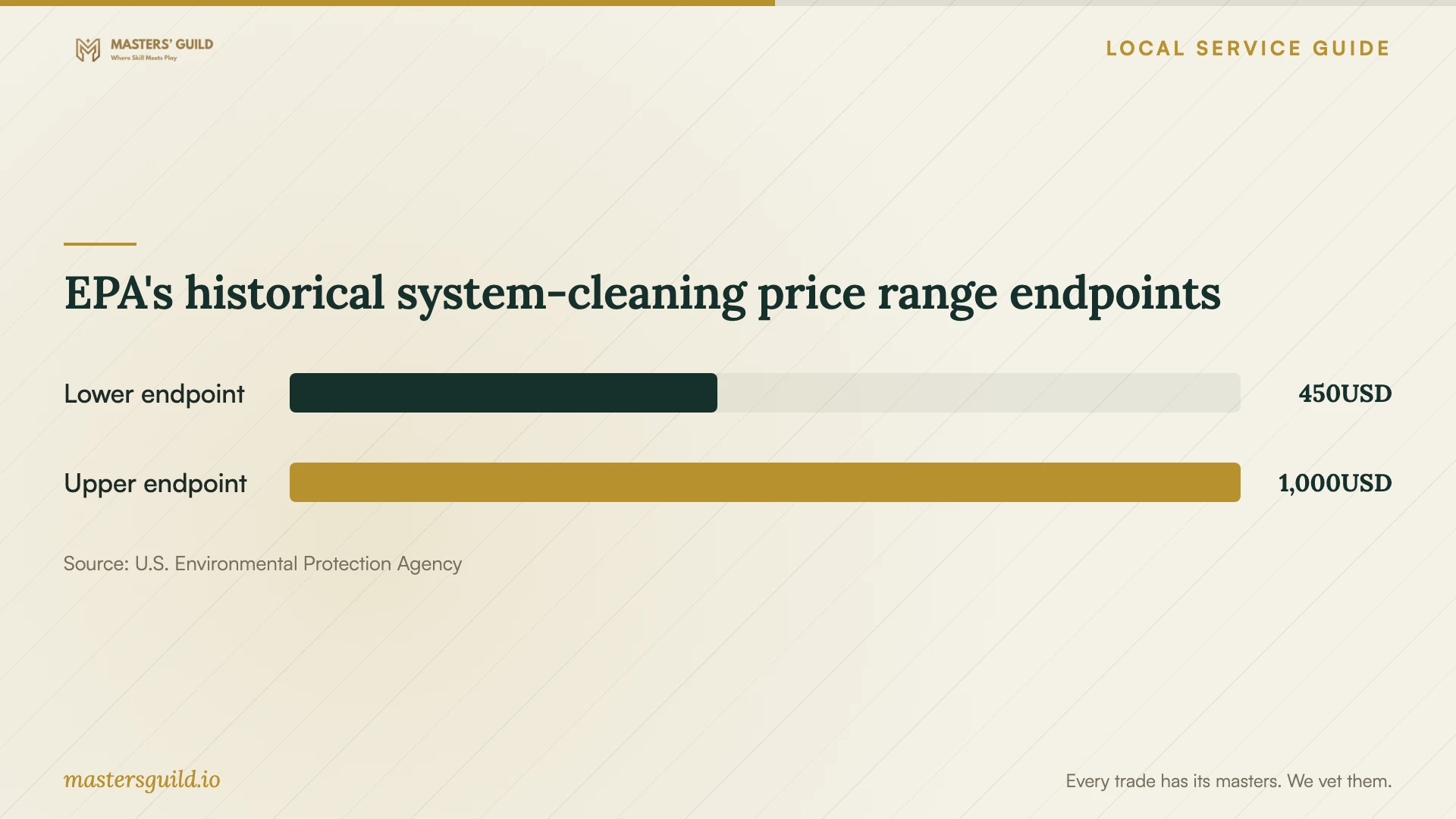
EPA's national guidance gives a typical range of $450 to $1,000 per heating and cooling system. The publication dates to October 1997; the webpage lists a February 19, 2026 update. These figures do not establish current Cleveland prices. Request a property-specific total and ask bidders to itemize additional systems, access work, repairs, and treatments. [3]
Resolve moisture and material concerns
Ask anyone claiming to find mold to show the affected location. EPA says an expert must confirm whether a substance is mold and may need laboratory analysis. Correct the moisture source before cleaning or replacement. For wet or moldy duct insulation, arrange removal and replacement by a qualified heating and cooling contractor. [3]
The Cuyahoga County Board of Health explains that leaks, showers, and cooking can introduce moisture that supports mold. This is general health guidance, not evidence of contamination in your property. Ask the provider to identify your actual moisture source rather than assuming local weather caused the problem. [2]
Before anyone brushes or opens suspect insulation, ask how the crew will check for asbestos-containing materials. EPA says specially trained and equipped contractors must handle those materials. The county health board describes historical asbestos use in insulation and fire protection, but does not establish whether your home contains it. [2] [3]
Review chemical treatments before approving them
Require a separate explanation for any proposed biocide. EPA's supplied guidance states that no biocides are registered for fiberglass duct board or fiberglass-lined ducts. Ask the provider to identify your duct materials and show the product label and approved use before you consider treatment of bare sheet-metal ducts. [3]
EPA describes unresolved questions about chemical treatments and advises against routine use of sealants to encapsulate contaminants. Providers must not use sealants to cover wet liner, active mold, or debris. Ask why physical cleaning and moisture correction would not address the concern, and decline a proposal that leaves those conditions underneath a coating. [3]
Prepare access and inspect the completed work
Before booking, agree on expected heating or cooling downtime, equipment access, parking, hose routing, and pet arrangements. Identify who will move furniture blocking registers. Request a separate scope for dryer-vent work so you can compare that task without confusing it with forced-air system cleaning.
Ask the crew to show cleaned components or photographs from inaccessible sections. EPA recommends visual inspection, checking that registers are secure, confirming access openings are sealed, and verifying operation in heating and cooling modes. Record exclusions and ask the provider to correct incomplete work. [3]
Follow your equipment manufacturer's filter recommendations after cleaning. EPA advises regular filter changes, preventing air from bypassing filters, maintaining coils and drain pans, and correcting leaks or standing water to limit contamination. [3]
EPA's historical system-cleaning price range endpoints
Local details that affect your job
Arrange permits for added duct alterations
Cleveland's HVAC permit page requires a permit for new, extended, or repaired ductwork and directs applicants to its Contractor Package for an application. If your cleaner proposes those tasks, ask who will handle the application and confirm arrangements with Building and Housing before the alteration starts. The supplied page does not establish a cleaning-only permit rule. [1]
Verify credentials for the added HVAC work
For work covered by its HVAC permit page, Cleveland says contractors must be bonded, insured, licensed with the State of Ohio, and registered with the city. Ask the contractor performing proposed duct repairs or equipment replacement for credentials covering that work and verify city registration. Limit this check to the added HVAC scope rather than assuming this page establishes licensing requirements for cleaning alone. [1]
Choose the next step from the inspection
| Finding | Next step | Question before approval |
|---|---|---|
| Dust on return grilles | Clean accessible grilles and request evidence of deeper contamination. | Can you show deposits beyond the grille? |
| Excessive debris or pest infestation | Consider cleaning and correct the underlying cause. | How will you address the cause before cleaning? |
| Wet or moldy duct insulation | Correct moisture and arrange removal and replacement by a qualified HVAC contractor. | Which insulation needs replacement and who will perform it? |
| Duct repair or extension | Confirm Cleveland permit arrangements and contractor credentials. | Who will apply for the permit and perform the alteration? |
| Fuel-burning equipment needs seasonal service | Arrange inspection and service before the heating season. | Does the appointment include equipment service? |
Your hiring checklist
- Request photographs or an inspection walkthrough showing the contamination.
- Compare quotes listing the same ducts, registers, and equipment components.
- Ask about debris collection, duct materials, and furnishing protection.
- Agree on access, parking, pets, and expected equipment downtime.
- Separate cleaning, repairs, insulation replacement, dryer-vent work, and treatments.
- Confirm permit arrangements and credentials for added HVAC alterations.
- Request a completion walkthrough and record exclusions or unfinished work.
Frequently Asked Questions
Should I schedule duct cleaning every year?
EPA recommends cleaning as needed rather than on a routine schedule. Ask for evidence of substantial contamination. Continue filter changes and heating-equipment inspections regardless of whether you arrange cleaning. [3]
Does duct cleaning need a Cleveland permit?
The city's supplied HVAC page requires permits for new, extended, or repaired ductwork but does not answer the cleaning-only question. If the quote includes alterations, confirm requirements with Building and Housing and identify who will handle the permit. [1]
How should I compare a low advertised price?
Request a written total for your property with a component list and exclusions. Ask about access work and optional treatments. EPA recommends written estimates from at least three providers; compare equivalent scopes before choosing. [3]
Can cleaning replace a fall furnace inspection?
EPA recommends inspection and service of fuel-burning furnaces, stoves, and fireplaces before each heating season to protect against carbon monoxide poisoning. Ask the provider to specify which equipment inspections and service tasks the appointment includes. [3]
Sources and scope
This guide combines the sources below with practical planning guidance. Figures apply to the stated geography and period; request a written quote for your property.