
Local service guide
Business Plan Consulting in Cleveland, OH
Arrange Business Plan Consulting around your next decision: testing an idea, applying for financing or planning an expansion. Before commissioning a draft, consider CSU’s confidential, no-cost advising, which includes business plans, financial analysis and loan packaging. For paid help, agree on the recipient’s requirements, research scope, editable files and revision terms before work starts. [1]
Define the assignment before hiring
Name the person who will read your plan and the decision you want them to make. For internal planning, focus on demand, pricing and cash needs. For financing, obtain the lender’s document list and projection requirements. For an investor discussion, specify the funding request and ownership assumptions you want the consultant to explain.
Prepare a brief with your business stage, available records, deadline and unanswered questions. Distinguish facts you can document from assumptions you need to test. Ask the consultant which questions they will investigate, which figures you must supply and how they will handle gaps. Agree on those responsibilities before approving the assignment.
Compare advising, coursework and paid help
The Ohio SBDC at Cleveland State University offers confidential, no-cost individual advising and lists business-plan assistance, financial and cost analysis, secondary research and loan-package development among its services. Ask about appointment availability and your preparation tasks before deciding what paid work to commission. [1]
Tri-C’s Discovery Track addresses clarifying an idea or launching a business. Its Foundation Track addresses business processes, procedures and structure. The college teaches these tracks in person at Corporate College East in Warrensville Heights. Compare the cohort schedule with your submission deadline and ability to attend. [2]
For paid consulting, identify the work you want someone to complete: customer research, a financial workbook or a draft based on your records. Request a sample with confidential information removed. During the interview, ask the consultant to explain its assumptions, research sources and formulas. Use their answers to assess whether you could update the finished work yourself.
Specify research and financial deliverables
Request an editable narrative and a financial workbook with visible formulas. Agree on the projection period and reporting frequency with the intended recipient. Have the consultant document sales volumes, prices, staffing, expenses, equipment purchases and financing assumptions. Include a walkthrough so you can change those inputs after handoff.
Review projected profit alongside available cash. Ask the consultant to explain customer payment timing, inventory purchases and debt payments. Choose a downside scenario, such as a delayed opening or slower sales, and examine the cash needs. Reconcile the starting balances and existing obligations with your records before accepting the model.
Cleveland’s Economic Development department describes a planning tool that accepts industry and location information for performance, customer, supplier, competitor and demographic analysis. Confirm access before including it in the assignment. Ask your consultant to record the research date, inputs and customer area so you can judge whether the findings fit your sales assumptions. [4]
Confirm city financing fit before drafting
Cleveland describes its Working Capital Loan Program as assistance for small and medium businesses expanding within the city while creating or retaining jobs. The city publishes industry eligibility wording, but it does not clearly separate the manufacturing and technology-related terms. Ask Economic Development staff to confirm your business’s eligibility before commissioning program-specific work. [3]
The program addresses additional working capital beyond traditional credit lines for inventory and raw materials; the city lists inventory purchases as the use of proceeds. It publishes maximum assistance of $500,000 and 33.3% of total project cost, with at least 10% applicant equity. The city also identifies collateral requirements. Confirm current terms and funding availability before treating assistance as committed financing. [3]
After confirming program fit, ask the consultant to separate owner funds, proposed city financing and other financing in the project budget. Tie inventory spending to order assumptions and customer payment timing. Identify unconfirmed funding sources and review how you would cover cash needs if the amount or timing changes.
Compare quotes and arrange the handoff
Give each consultant the same brief. Compare research tasks, meetings, draft stages, revisions and final file formats. Specify whether responding to lender questions belongs in the assignment. Agree on charges for added work, confidentiality, ownership of deliverables and how late records affect delivery.
Set review dates for the assumptions and draft rather than waiting until submission. At handoff, have the consultant demonstrate how to update the workbook and related narrative. Record unresolved questions for the lender or program staff, and assign someone to obtain each answer before you submit.
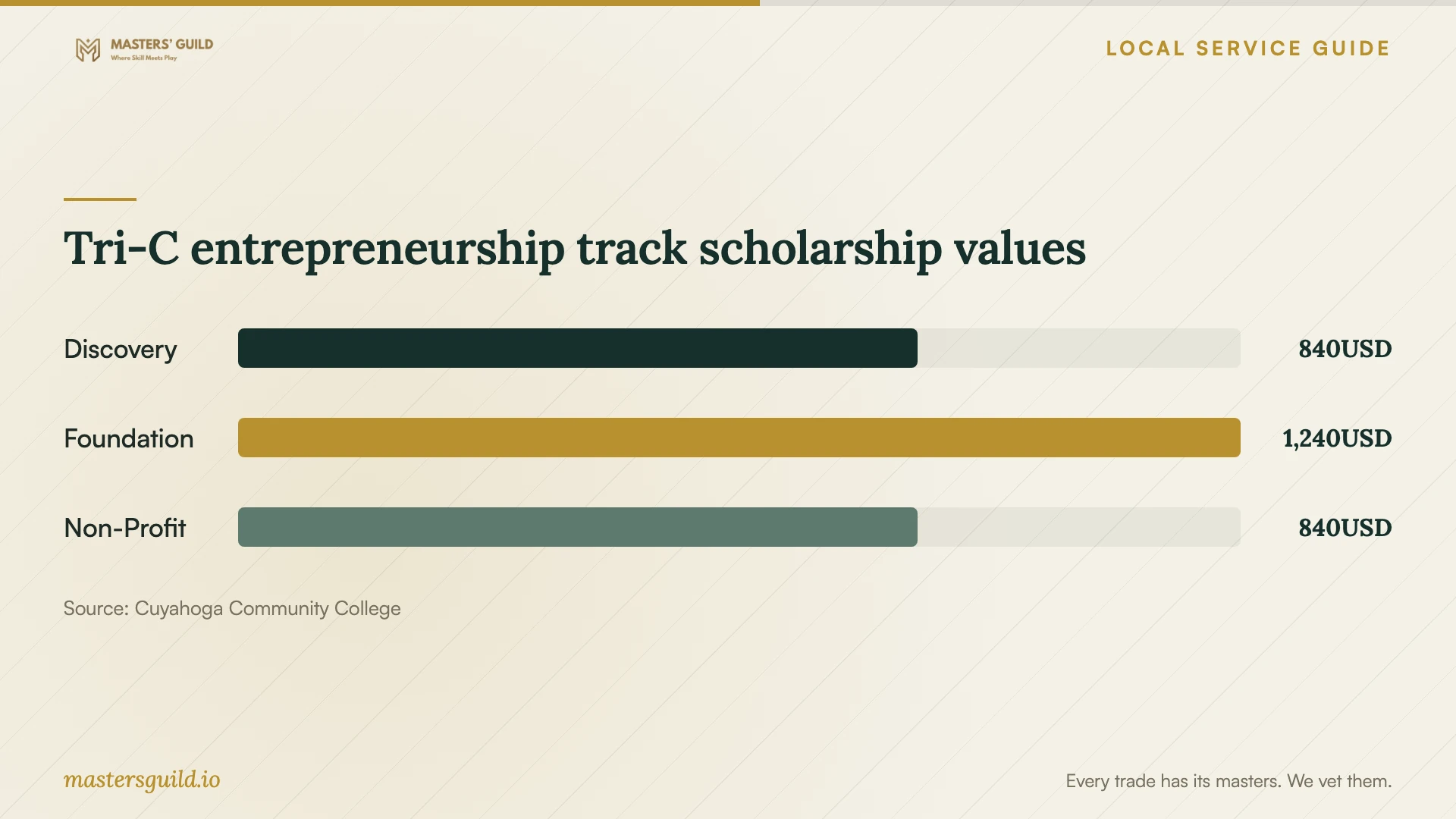
Tri-C entrepreneurship track scholarship values
Local details that affect your job
Arrange a CSU appointment before traveling
The SBDC lists its meeting location as 1860 E. 18th Street, Room 308, Cleveland, and requires appointments. Its appointment number is 216-687-6902. Ask about business-plan and loan-packaging assistance, available times and preparation requirements before deciding which tasks to include in a paid assignment. [1]
Check Tri-C registration and attendance conditions
Tri-C holds its entrepreneurship tracks at Corporate College East, 4400 Richmond Road, Warrensville Heights. Registration closes the Friday before a track starts. Discovery, Foundation and Nonprofit applicants obtain a student number and email their name, number, track and cohort start date to the program. Tri-C requires attendance at all classes for a certificate and limits scholarship eligibility to one per calendar year effective September 1, 2026. Confirm scholarship availability and a workable schedule before choosing coursework. [2]
Confirm city loan eligibility with program staff
Cleveland’s Working Capital Loan Program addresses expansion within the city, job creation or retention and inventory financing. Its published industry wording leaves the relationship between the manufacturing and technology-related terms unclear. Confirm your industry eligibility, project address, planned jobs and proposed spending with Economic Development staff at 216-664-2406 before paying for a program-specific plan. [3]
Choose help for your next decision
| Your situation | Route to consider | Confirm before committing |
|---|---|---|
| You need help shaping a plan or loan package | CSU SBDC no-cost individual advising | Fewer-than-500-employees condition, appointment availability and preparation tasks |
| You want to clarify an idea through coursework | Tri-C Discovery Track | Cohort dates, scholarship availability and full attendance |
| You want to improve business processes | Tri-C Foundation Track | Course content and fit with your schedule |
| You need a defined draft or financial workbook | A paid consulting assignment | Research scope, editable files and revision terms |
| You seek city-backed inventory financing | Check Cleveland Working Capital Loan Program fit | Ask staff to confirm industry eligibility, city expansion, jobs, spending, equity and financing limits |
Your hiring checklist
- Identify the intended reader and obtain their plan and projection requirements.
- Prepare your existing draft, financial records and proposed use-of-funds budget.
- Mark missing figures and list assumptions about customers, pricing and costs.
- Ask local advisers what assistance they can provide and what you must complete.
- Confirm financing-program eligibility before commissioning application-specific work.
- Define writing, research, modeling and submission support as separate scope items.
- Agree on editable files, revisions, confidentiality and ownership of deliverables.
- Schedule a walkthrough of the financial assumptions before submission.
Frequently Asked Questions
Can I get free business-plan help locally?
CSU’s SBDC offers confidential, no-cost individual advising and lists business plans, financial analysis and loan packaging among its services. It serves businesses that will or currently employ fewer than 500 people. Ask what assistance and appointment times fit your assignment. [1]
How much should I budget for a consultant?
Request a written quote for a defined assignment. Compare research, modeling, meetings and revisions across proposals, and ask how the consultant charges for additional work. Tri-C’s published scholarship values describe entrepreneurship training. Use those values when considering coursework, and request separate quotes for consulting deliverables. [2]
What should I bring to the first meeting?
Bring your concept or existing plan, the recipient’s requirements, available financial records and a draft project budget. Mark missing figures as assumptions. Ask which additional records the consultant needs to agree on scope and timing.
Should I commission a plan before checking city loan eligibility?
Confirm eligibility first. Cleveland’s Working Capital Loan Program addresses city expansion, job creation or retention and inventory financing. Its industry wording does not clearly separate the manufacturing and technology-related terms. Ask staff to confirm your eligibility and current funding availability before commissioning a program-specific plan. [3]
Sources and scope
This guide combines the sources below with practical planning guidance. Figures apply to the stated geography and period; request a written quote for your property.