
Local service guide
Bricklaying and Masonry in Cleveland, OH
For Bricklaying and Masonry in Cleveland, choose a contractor who provides a written repair scope and documentation of registration, bonding and insurance. Before signing, distinguish pointing from brick replacement or structural reconstruction. Cleveland exempts qualifying minor pointing from a building permit, but structural work and exterior changes on designated historic properties can require approval. [1] [2] [3] [4]
Define the work before requesting offers
Describe each repair location and what you can see: missing mortar beneath a window, damaged bricks beside steps, a chimney leak or a wall that appears to lean. Take overview photographs and close views from a safe position. Include when you first noticed the problem and photographs of earlier repairs.
Have the contractor separate mortar-joint work, brick replacement and reconstruction in the quote. For a chimney, identify whether the offer includes the cap, flashing or flue. For steps or a retaining wall, request a description of what the mason will retain, remove and rebuild. Agree on whether you need a structural assessment before choosing a repair.
Keep people away from loose overhead masonry or a leaning wall while you arrange an assessment. Avoid climbing to inspect a chimney or upper wall yourself. Give each contractor the same photographs and proposed repair locations so you can compare their recommendations.
Settle the permit classification
Cleveland lists pointing masonry among minor repairs that do not need a building permit. Code Enforcement adds same-material requirements for minor patching, pointing and replacement, with replacement limited to 10% of the wall or other component. Ask the city to classify a combined scope if the contractor proposes pointing alongside brick removal or rebuilding. [1] [2]
For work requiring a building permit, submit a Project application and obtain approval before applying for the permit. Cleveland reviews projects through relevant bodies such as Zoning, Planning, Landmarks and Right of Way. The permitting page requires drawings for structural changes and cutting away or removing part of a wall. [1]
Assign responsibility for applications, drawings, fees and inspections in the contract. Obtain permit copies before work starts. For work requiring inspection, follow the city’s advice to wait for the final City Building and Housing inspection before accepting the work. You can look up permit status through the city portal without a login. [1] [3]
Resolve historic-property material choices
Cleveland’s landmark ordinance covers designated landmarks and properties in designated landmark districts. It allows ordinary exterior maintenance or repair that preserves design, material, color and outer appearance. For a proposed environmental change, the ordinance provides a certificate-of-appropriateness application route even when no building permit is required. [4]
Confirm your property’s designation before authorizing exterior changes. Discuss the scope with the Landmarks Commission and have your mason document the existing brick, mortar color and joint finish. Request a sample area and settle any approval requirements before ordering replacement materials. [4]
The Commission’s review standards favor repairing deteriorated historic features. Where deterioration requires replacement, they call for matching design, color, texture and other visual qualities, with matching materials where possible. They prohibit treatments that damage historic materials and call for the gentlest appropriate cleaning method. Ask the contractor to specify any proposed cleaning treatment in writing. [4]
Compare contractors and complete prices
Cleveland requires contractors building or rehabilitating homes to be bonded, insured and registered. The city directs homeowners hiring contractors for building, rehabilitation and repair to verify registration at 216.664.2910. Use the business name from the proposed contract when making that check. [3]
Request references and photographs from comparable masonry projects. Have the contractor identify the proposed mortar specification and explain the choice for your existing masonry. Include joint preparation, brick matching, finish and protection of windows, planting areas and walkways in the scope.
Build your budget from site-specific written offers. Compare the same measured repair area and replacement quantities, then review access equipment, debris removal, material allowances and exclusions. Agree on written approval for additional work and payment milestones before signing.
Plan protection, completion and notice deadlines
For an autumn or winter appointment, have the contractor explain the chosen mortar’s installation requirements, curing protection and conditions that would postpone work. Request separate estimates for active work and the period during which you must keep people off repaired steps or away from the work area.
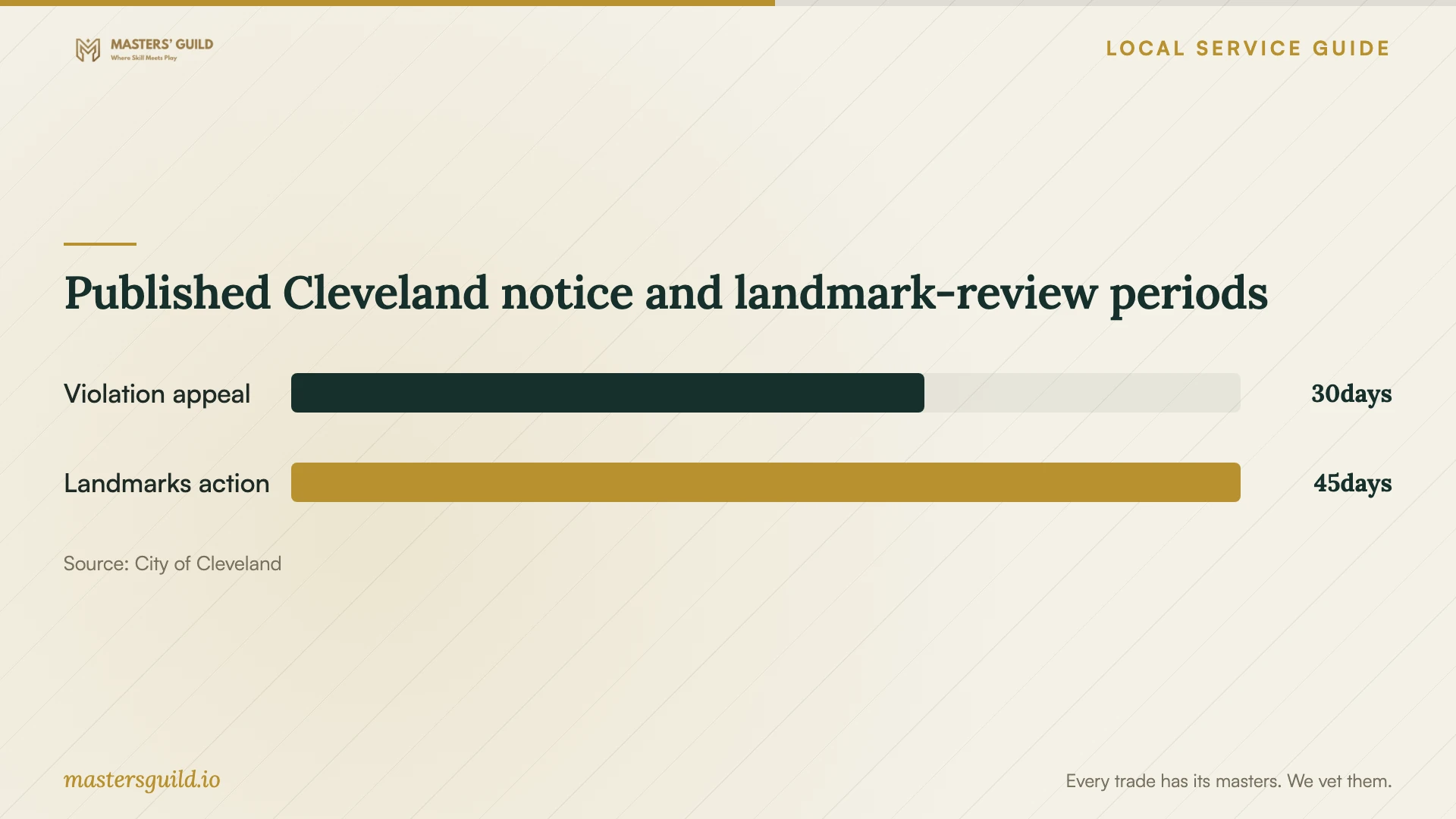
If you have a violation notice, share it with the contractor and contact the inspector named on it. Cleveland says most notices give owners 30 days to correct violations. Its guidance requires an appeal within that period if you need more time. Confirm your notice’s deadline before agreeing on a start date. [2]
Before final payment, review the agreed repair locations, cleanup and applicable inspection records. Keep completion photographs, material specifications and written warranty terms with your home records. Record who will address any unfinished item and the agreed completion date.
Published Cleveland notice and landmark-review periods
Local details that affect your job
Pointing and wall removal require different preparation
Cleveland lists minor pointing as permit-exempt, but requires drawings for structural changes or removal of part of a wall. Give the city the complete scope when the offer combines these activities. For permit-required work, obtain Project approval before applying for the building permit. [1] [2]
Landmark review can apply without a building permit
For designated properties, ordinary maintenance must preserve design, material, color and outer appearance to fit the ordinance’s exception. A certificate-of-appropriateness application can proceed without a building-permit application. Resolve proposed mortar-color or brick changes with Landmarks before approving materials. [4]
Verify the contracting business with the city
Cleveland publishes 216.664.2910 for homeowners to verify contractor registration. Check the business named in the contract and request its bonding and insurance documentation before signing. [3]
Choose the next step for the proposed work
| Proposed work | City guidance | Your next step |
|---|---|---|
| Minor pointing | The city lists pointing as permit-exempt minor repair and requires the same material. | Confirm that the entire scope fits the minor-repair category. |
| Brick replacement | Minor-repair guidance limits replacement to 10% of the component and requires the same material. | Give the city the quantity and complete scope if classification is unclear. |
| Structural wall work | Structural changes require permits; structural changes and wall removal require drawings. | Assign Project application, drawing and permit responsibilities. |
| Exterior change on designated property | Landmark approval can apply without a building permit; unchanged ordinary maintenance has an exception. | Confirm designation and discuss proposed materials and appearance with Landmarks. |
Your hiring checklist
- Photograph repair locations from a safe position and describe leaks or changes you have noticed.
- Separate pointing, brick replacement and reconstruction in the proposed scope.
- Confirm permit classification and any landmark review before approving materials.
- Verify contractor registration and request bonding and insurance documentation.
- Compare measured quantities, access equipment, cleanup and exclusions.
- Agree on material samples, weather protection, written change approval and payment milestones.
- Share any violation notice with the contractor and confirm its deadline with the inspector.
- Retain completion photographs, material details, warranty terms and applicable inspection records.
Frequently Asked Questions
Do I need a permit for repointing?
Cleveland lists pointing masonry among permit-exempt minor repairs. Code Enforcement requires the same material for minor pointing. Confirm the complete scope if the project includes replacement, wall removal or structural changes, and check landmark requirements for designated properties. [1] [2] [4]
How can I check a masonry contractor’s registration?
Call 216.664.2910, Cleveland’s published verification number for homeowners hiring contractors. Use the business name on your contract and request bonding and insurance documentation. [3]
Can I change mortar color on a designated historic property?
The ordinary-maintenance exception depends on preserving design, material, color and outer appearance. Discuss a proposed color change with the Landmarks Commission before approving a sample or authorizing work. [4]
How should I compare masonry repair prices?
Request written offers for the same repair locations and quantities. Review mortar specifications, brick matching, access equipment, protection and cleanup. Have each contractor identify exclusions and explain how you will approve additional work discovered after opening the repair area.
Sources and scope
This guide combines the sources below with practical planning guidance. Figures apply to the stated geography and period; request a written quote for your property.