
Local service guide
Interior Design in Cincinnati: Plan and Hire
For Interior Design in Cincinnati, hire a designer whose written proposal covers your rooms, deliverables and purchasing responsibilities. For a renovation, agree who prepares drawings, coordinates construction and handles approvals before committing to materials. Cincinnati lists alterations, including interior demolition, as work requiring permits and lists separate permits for electrical, plumbing and HVAC work. [1]
Choose the scope before choosing the designer
Write down the rooms you want to change, how you use them and what you want to keep. Include photographs, approximate measurements and a preferred completion date. Describe practical problems such as furniture blocking a doorway, missing storage or a dining area that must also accommodate work. Ask the designer to verify dimensions before you approve orders.
For furnishing work, request a layout, product dimensions, finish selections and a purchasing list. For renovation work, ask candidates to specify drawing preparation, contractor coordination and site visits. Identify who will check construction feasibility and resolve differences between the proposed design and conditions found on site.
Review a sample plan or specification alongside portfolio photographs. Ask the designer to explain a project with a similar scope, including how the client approved revisions. Request references and insurance information appropriate to the proposed work. Ask who will take over any task outside the designer’s agreed responsibilities.
Build a budget around written proposals
Request written proposals for your rooms and deliverables before setting the design budget. Give candidates the same brief and ask them to separate design fees, furniture, construction, delivery and installation. Set an overall spending limit and agree how the designer will seek approval before exceeding it.
Ask whether the fee covers a fixed scope, hours worked or another arrangement. Record the included revisions and the charge for additional work. For purchases, clarify markups, discounts, deposits, cancellation terms and returns. Name the person responsible for checking orders, arranging storage and resolving damaged or incorrect deliveries.
Request a schedule with separate dates for design approval, ordering and installation. Ask which decisions you must make before the next stage starts. If you need to occupy the rooms during construction, agree how the contractor will manage access and how you will approve changes when work reveals an unexpected condition.
Assign permit and contractor responsibilities
Cincinnati’s permit guide lists alterations, interior demolition and building repair among work requiring permits. It also lists separate permits for electrical, HVAC and plumbing work, including plumbing fixtures and appliances such as dishwashers. The city says these separate permits apply whether or not a building permit covers other work. [1]
Before approving construction, put responsibility for applications, drawings and inspection scheduling in writing. Ask the designer and contractor to review the same scope so you know who will handle each approval. Include a process for substitutions that affect the design, price or approved plans.
The city requires contractors working within Cincinnati to register before starting work, subject to its stated exceptions. Verify the contractor who will perform construction. Treat registration checks and portfolio review as separate hiring tasks. [2]
Confirm which jurisdiction governs your address before using Cincinnati’s process. For property outside city limits, ask the responsible building department about its requirements. Include the department and application responsibility in your project notes.
Plan painted-surface work before demolition
Confirm the home’s construction year and identify painted walls, trim or windows that the proposed work will disturb. The Cincinnati Health Department’s guidance for pre-1978 homes directs readers to certified contractors and protective renovation practices. Ask your proposed contractor to document relevant certification and explain which requirements apply to your scope. [3]
The department’s Childhood Lead Poisoning Prevention Program offers paint-chip testing. It also describes possible free or low-cost lead hazard reduction for qualifying households with a home built before 1978 and a child under six. Discuss testing and eligibility before assuming that assistance will fund any part of the project. [3]
Ask the designer to allow time for assessment before you approve removal or replacement of painted features. Agree with the contractor how workers will protect occupied rooms and manage cleanup. Keep testing, contractor selection and furnishing orders in the same project schedule.
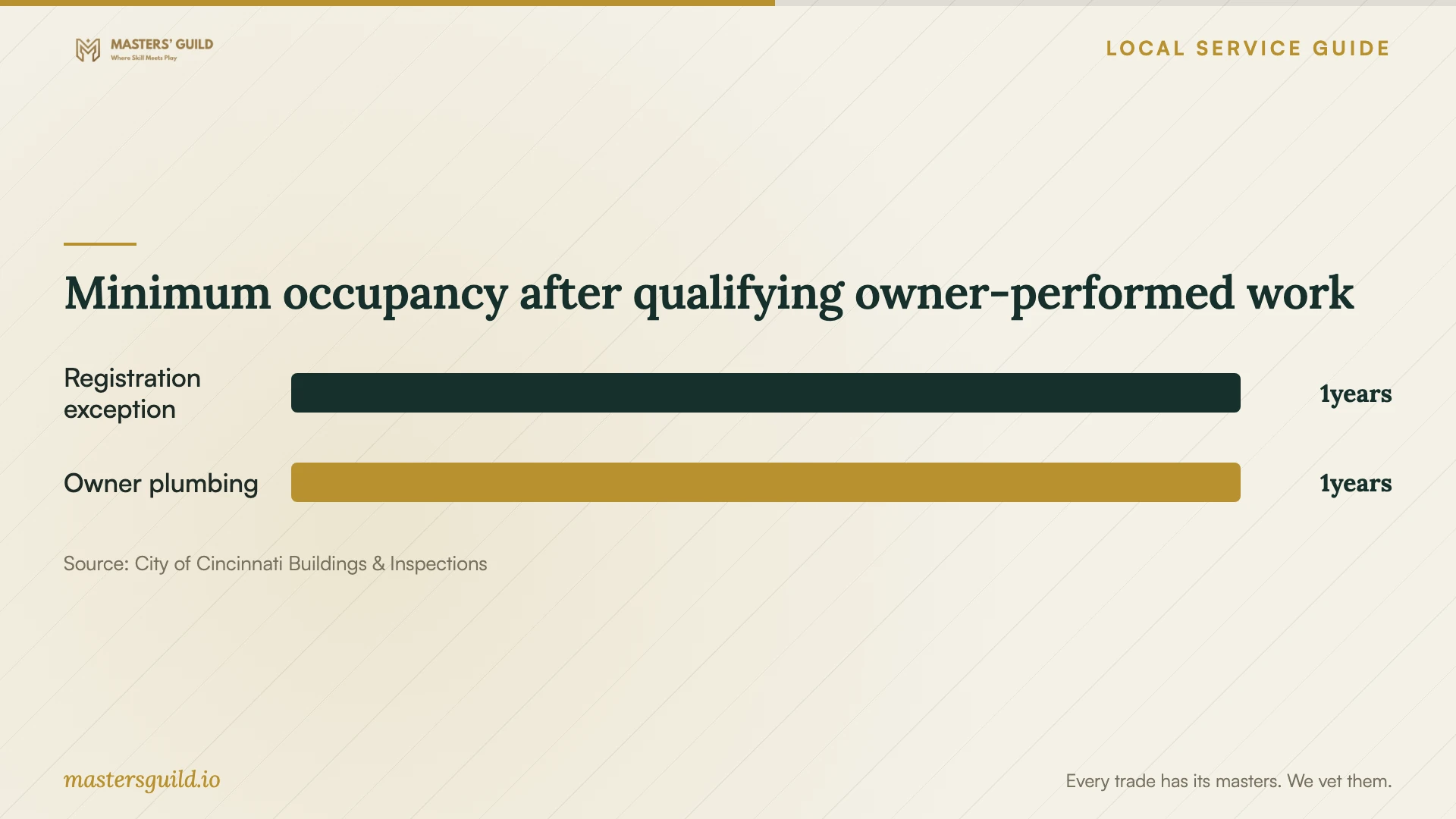
Minimum occupancy after qualifying owner-performed work
Local details that affect your job
Check historic review for the proposed scope
Cincinnati’s permit guide includes a historic-designation footnote alongside its listed permit exemptions for detached one-, two- and three-family dwellings. Ask the Urban Conservator whether your proposed work requires a Certificate of Appropriateness before approving demolition or replacements. The guide gives the contact number as 513-352-4848. [1]
Resolve a missing contractor registration
If your construction contractor does not appear in the city’s registered-contractor listing, the city directs you to the Contractor Registration Section at 513-352-3271, option 1. Resolve the listing before work starts. For plumbing work, ask about current credentials: the city states that plumbing registrations and licenses require annual renewal. [2]
Use the local paint-testing program
The Childhood Lead Poisoning Prevention Program gives 513-357-7420 for questions about its services and funding, including paint-chip testing. It also lends HEPA vacuums to Cincinnati residents for one-week periods, up to six times a year, with a refundable deposit and valid state identification. Discuss cleanup with the contractor before deciding whether a loan fits your needs. [3]
Match the agreement to the work
| Your project | Scope to request | Before committing |
|---|---|---|
| Furniture and finish selections | Layout, dimensions, selections and purchasing responsibilities | Review sample deliverables and order terms. |
| Interior demolition or alterations | Renovation planning and a named permit coordinator | Confirm city permit requirements before construction. |
| Electrical, plumbing or HVAC work | Coordination with the relevant contractors | Assign responsibility for separate trade permits. |
| Paint disturbance in a pre-1978 home | Assessment and contractor coordination | Discuss testing and applicable certification with the contractor. |
| Demolition or replacements at a historic property | A scope-specific historic review check | Ask the Urban Conservator about required approval. |
Your hiring checklist
- Name the rooms, intended uses and furnishings you want to keep.
- Prepare photographs, approximate measurements and a proposed spending limit.
- Compare written deliverables, revision allowances and additional-work fees.
- Agree who orders goods and handles returns, storage and damaged deliveries.
- Name the people responsible for drawings, approvals, construction and inspections.
- Discuss painted-surface assessment before approving removal or replacement.
- Record approval dates, ordering dates and who can authorize budget changes.
Frequently Asked Questions
Should I hire a designer before a renovation contractor?
Define who will develop the plan and who will check construction feasibility. Ask the designer and prospective contractor to review the same scope before approving materials. Name the person responsible for resolving design changes and coordinating approvals in your agreements.
Does the design agreement cover permit applications?
Ask the designer to specify that responsibility. Cincinnati lists permits for alterations including interior demolition, plus separate permits for electrical, plumbing and HVAC work. Identify who handles each application before authorizing construction. [1]
Can I perform construction work myself?
Cincinnati provides a contractor-registration exception for an owner of a detached one-, two- or three-family dwelling who performs the work and occupies the residence for at least one year after completion. Its owner-issued plumbing permit provision applies to a bona fide owner of a single-family dwelling under the same work and occupancy conditions. Confirm eligibility and required permits before relying on either provision. [2]
How do I compare design fees?
Give each candidate the same room brief and request the same deliverables. Compare included revisions, site visits and purchasing responsibilities alongside the fee. Ask how the designer charges for changes and who approves extra spending.
Sources and scope
This guide combines the sources below with practical planning guidance. Figures apply to the stated geography and period; request a written quote for your property.