
Local service guide
Flooring installation and repair in Cincinnati, OH
Flooring installation and repair in Cincinnati starts with a written scope: ask the installer to assess the existing floor, separate removal and preparation from installation, and explain how they will price hidden damage. Check the contractor’s current city registration before work within city limits. If the project includes structural repairs, confirm the permit requirements with Buildings & Inspections before approving that work. [1] [2]
Choose the repair scope before choosing a floor
Ask for an inspection of the problem area before committing to replacement. Show the installer loose boards, damaged edges, stains, movement, and any previous repairs. Request separate proposals for repairing the affected area and replacing the room, where the installer considers both options feasible. Ask what each proposal leaves unresolved.
For a patch repair, ask the installer to identify the existing product and explain how they would match its size, color, and finish. Request a sample or mockup before approving a visible repair. For replacement, specify the rooms, closets, thresholds, stairs, and trim in the written scope so you can compare offers for the same work.
If the installer proposes cutting or changing a structural beam or bearing support, contact Buildings & Inspections before proceeding. The city excludes that work from its minor-repair permit exception and identifies structural changes among work requiring permits. [2]
Compare complete written quotes
Request an itemized quote covering the named flooring product, measured area, removal, disposal, subfloor preparation, installation, transitions, and trim. Ask who moves furniture and appliances, whether the installer will remove and reset baseboards, and who handles door adjustments. Keep allowances and exclusions visible rather than accepting a single total with an undefined scope.
Set a change-order process before demolition. Ask the contractor to photograph hidden damage, explain the proposed correction, and obtain your written approval of its price and schedule before continuing. Have them state how they will charge for preparation beyond the original allowance.
Ask for a schedule that separates delivery, preparation, installation, and the date you can return furniture. Request the manufacturer’s installation and care instructions for the selected product, then ask the installer to explain the moisture checks, room conditions, and waiting periods that apply. Avoid treating a promised installation date as permission to resume normal use.
Verify the contractor and plan removal
Cincinnati requires contractors working within city limits to maintain current city registration. Use the registration feature identified in the city’s Buildings & Inspections FAQ to check the business you intend to hire. Ask for a current insurance certificate as part of your own hiring review; the city lists a current liability-insurance certificate among registration-renewal requirements. [1] [2]
Agree on a carrying route, debris storage, and disposal before the crew removes the old floor. Ask who protects adjoining rooms and who cleans the route at the end of each workday. If you share an entrance or hallway, arrange access with the other occupants and identify which rooms you need to keep usable.
If removal requires a dumpster in the public right-of-way, arrange the DOTE permit before delivery. Cincinnati lists this placement among activities requiring a permit. Assign responsibility for the permit and dumpster location in the quote rather than leaving the crew to choose a spot on arrival. [3]
Check laminate documentation before purchase
EPA recommends that consumers buying composite wood products or finished goods containing regulated composite wood look for TSCA Title VI compliant labeling. Ask the seller for the label and product documentation before ordering laminate, and retain them with your invoice. Ask the installer to record the exact product they plan to install. [4]
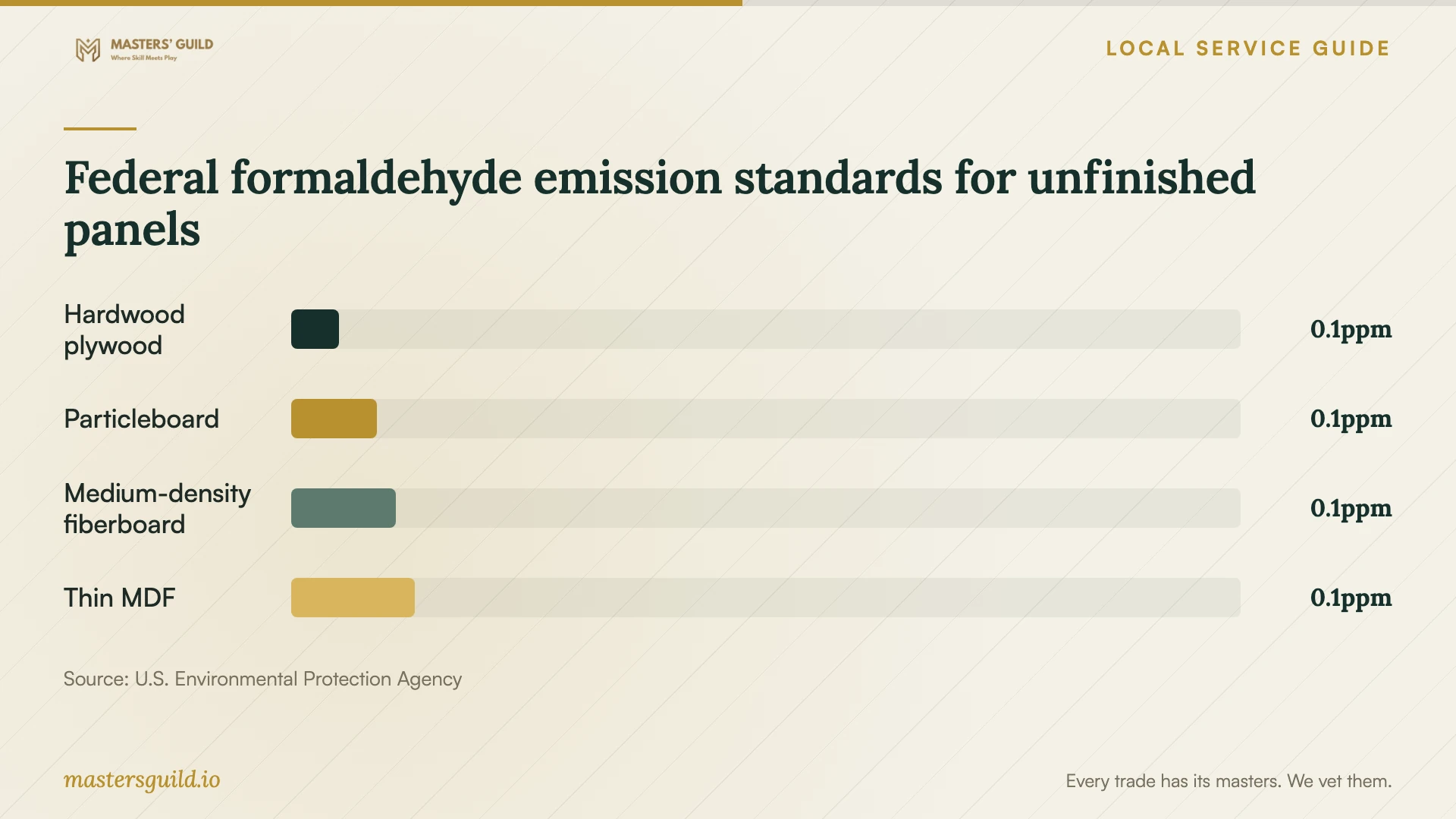
The chart provides EPA’s federal formaldehyde-emission standards for unfinished composite wood panels. Use it to understand the compliance documentation for composite wood components. EPA says these standards do not apply directly to finished laminate flooring, and product-emission test results cannot predict indoor air concentrations without significant additional calculations. [4]
If you develop symptoms that you suspect relate to new laminate flooring, EPA advises consulting a physician and your state or local health department. EPA has not verified the accuracy of home formaldehyde test kits or established a safe indoor-air level. Avoid using a product label or a panel-emission number to diagnose symptoms. [4]
Federal formaldehyde emission standards for unfinished panels
Local details that affect your job
Confirm which building department covers the address
Use the jurisdiction and zoning check described in Cincinnati’s Buildings & Inspections FAQ before applying city rules to your address. For a project inside city limits, discuss structural floor repairs with the Permit Center at 805 Central Avenue, Suite 500, or call 513-352-3271. Describe the proposed work, including any changes to supports, rather than asking only whether flooring needs a permit. [2]
Check registration before the start date
Cincinnati requires contractor registration before construction begins and says it cannot issue building permits until all applicable contractors have registered. Check the contractor’s current status during hiring. For registration questions, call 513-352-3271 and select option 1. [1] [2]
Arrange a street-side dumpster with DOTE
For a dumpster in the public right-of-way, contact the DOTE Permit & License Center at 513-352-3463. The office is at 801 Plum Street, Suite 425, and lists weekday hours of 8:00 a.m. to 4:00 p.m. Confirm who will obtain the permit before scheduling old-floor removal. [3]
Questions to resolve before approving the job
| Your situation | Next step | Include in the agreement |
|---|---|---|
| Damage affects one area | Ask the installer to assess a patch repair and show the proposed match. | Repair boundary, matching expectations, and sample approval. |
| You want room-wide replacement | Request an itemized scope for removal, preparation, and installation. | Exact product, rooms, trim, transitions, and exclusions. |
| The scope includes structural changes | Confirm permit requirements with Buildings & Inspections before proceeding. | Permit responsibility and approval of additional work. |
| The dumpster would occupy public right-of-way | Arrange the required DOTE permit before delivery. | Approved placement and responsibility for obtaining the permit. |
| You are buying composite-wood laminate | Ask the seller for TSCA Title VI compliant labeling. | Product identification and retained compliance documentation. |
Your hiring checklist
- Photograph damage and list the rooms, closets, stairs, and thresholds in the job scope.
- Request separate prices for repair and replacement when the installer considers both feasible.
- Check city registration using the city resource described above and request current insurance documentation.
- Identify the exact flooring product and collect its installation instructions before ordering.
- Itemize removal, disposal, preparation, trim, furniture moving, and appliance handling.
- Agree on written approval for hidden damage and changes to price or schedule.
- Confirm disposal placement, permit responsibilities, and access before demolition.
- Inspect the completed work with the installer and collect care instructions and warranty terms.
Frequently Asked Questions
Does replacing flooring require a Cincinnati building permit?
The city FAQ does not provide a blanket flooring-replacement exemption. It requires permits for major repairs and structural changes and describes an exception for minor repairs with limits. Describe your exact scope to the Permit Center, especially if the installer proposes changing supports or other building systems. [2]
How can I check a flooring contractor’s city registration?
Use the Contractor Registration feature identified in Cincinnati’s Buildings & Inspections FAQ. The city requires contractors to register before construction within city limits. For registration questions, call 513-352-3271 and select option 1. [1] [2]
How much should I budget for installation or repair?
Build your budget from written quotes for the inspected scope. Ask each contractor to separate materials, removal, disposal, preparation, installation, and finishing work. Require written approval before extra work. The sources supporting this page do not provide local flooring prices.
Does TSCA Title VI labeling establish a safe indoor-air level?
EPA recommends the label for regulated composite wood products, but it has not established a safe formaldehyde level for indoor air. Its panel-emission standards do not apply directly to finished laminate flooring. Use the label for purchasing documentation and consult a physician about suspected health symptoms. [4]
Sources and scope
This guide combines the sources below with practical planning guidance. Figures apply to the stated geography and period; request a written quote for your property.