
Local service guide
Duct and Vent Cleaning in Cincinnati, OH
Arrange Duct and Vent Cleaning by asking the cleaner to show the contamination, then compare written estimates for the same system components. EPA recommends cleaning as needed for substantial mold, vermin, or excessive debris. For work within Cincinnati city limits, confirm contractor registration applicability and clarify permit responsibility before approving equipment installation or replacement. [1] [2] [3]
Decide whether you need cleaning
Ask for an inspection before committing to a cleaning package. EPA identifies substantial visible mold inside hard-surface ducts or other HVAC components, vermin infestation, and excessive dust or debris as reasons to consider cleaning. Ask the provider to show the affected locations and explain the extent of the problem. [3]
Treat a mold diagnosis with care. EPA says an expert must identify suspected mold and may need laboratory analysis to confirm it. For wet or moldy insulation inside ducts, EPA recommends replacement because cleaning cannot resolve the condition. Have the contractor correct the moisture source before cleaning or replacement to prevent recurrence. [3]
Question promises that cleaning will prevent illness or lower energy bills. EPA says duct cleaning has not been shown to prevent health problems and finds little evidence that cleaning ducts alone improves system efficiency. Discuss unexplained symptoms with your doctor and ask an HVAC technician to investigate equipment problems. [3]
Compare scope before comparing prices
EPA advises getting written estimates from at least three providers and agreeing on total cost and scope before work starts. Ask each provider to quote the same system count and components. Record whether the price covers supply and return ducts, registers, grilles, coils, drain pans, fan housing, and the air-handler housing. [3]
Request exclusions and separate prices for proposed repairs or treatments. Have the provider explain how the crew will reach each part of the system and document inaccessible areas. For hourly work, request an estimated duration and ask whether the crew expects interruptions. [3]
This page provides no current local cleaning price. Obtain an inspection-based written quote for your home. Ask whether the total includes access work, cleanup, and the agreed component cleaning, and require your approval before the crew adds work.
Check methods and proposed treatments
Ask how the crew will collect loosened debris. EPA recommends vacuum equipment that exhausts outside or HEPA vacuum equipment when it exhausts indoors. The provider should protect furnishings and seal and re-insulate access holes after cleaning. Ask how the crew will avoid damaging your duct material. [3]
Identify sheet metal, flexible duct, fiberglass duct board, and internal fiberglass lining before agreeing to a method. EPA recommends soft-bristled brushes for fiberglass duct board and fiberglass-lined metal ducts. The provider should inspect for asbestos-containing materials before cleaning; specially trained and equipped contractors must handle those materials. [3]
Request a separate explanation for biocides or interior coatings. EPA's duct-cleaning publication dates to October 1997, although the agency last updated its webpage on February 19, 2026. That guidance reports unresolved questions about treatment effectiveness and health effects, and no registered biocides for fiberglass duct board or fiberglass-lined ducts. It does not establish registration status in October 2026. Before approving a treatment, ask the provider for the product label and confirmation that its permitted uses cover your duct material. [3]
Prepare the visit and check the result
Before the appointment, clear a route to the air handler and agreed access points. Tell the crew about locked rooms, pets, parking restrictions, and access arrangements with a building manager. Ask which rooms they need and how long they expect to interrupt heating or cooling.
Agree on completion evidence before work begins. EPA recommends a visual inspection and asking the cleaner to show each system component after cleaning. Request views of both supply and return areas, inspect the agreed components, and have the crew demonstrate system operation and secure registers and access covers. [3]
Continue filter and moisture maintenance afterward. EPA recommends regular filter changes, a filter that fits without bypass gaps, and correction of leaks or standing water. If you want a higher-efficiency filter, ask an HVAC technician which rating your fan and filter slot can accommodate. [3] [4]
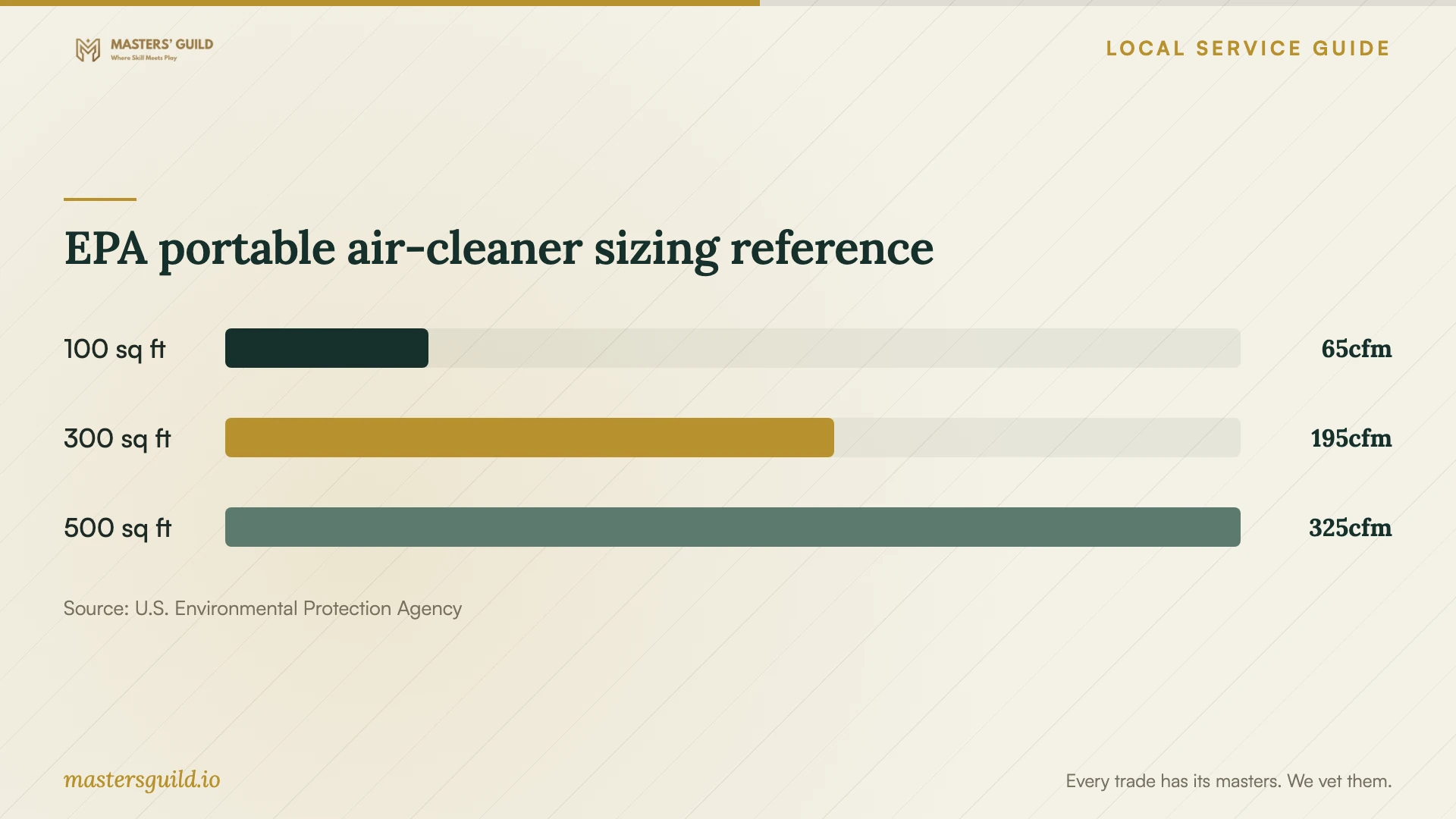
EPA portable air-cleaner sizing reference
Local details that affect your job
Verify registration for work inside city limits
Cincinnati says contractors performing work within city limits must maintain current city registration. Before booking, ask for the business name used for registration and clarify with the Contractor Registration Section how the rule applies to your cleaning scope. Call 513-352-3271, option 1. The city describes homeowner exemptions for owners who perform qualifying work themselves; do not assume that exemption covers a hired cleaner. [1]
Confirm permits before adding equipment work
Cincinnati requires permits for installation or replacement of heating, ventilating, air-conditioning, fuel-burning, and related devices. If a cleaning quote adds equipment installation or replacement, separate that work and establish who will obtain the permit. For duct alterations or repairs, ask Mechanical Inspections about the exact scope at 513-352-3275. The city's mechanical-inspection page addresses installation and replacement without specifying cleaning-only requirements. [2]
Choose your next step
| What you find | Next step | What to ask |
|---|---|---|
| Dust on a return grille | Clean the accessible grille and inspect before ordering whole-system cleaning. | Can you show contamination beyond the grille? |
| Excessive debris or particles leaving supply registers | Consider cleaning and investigate the underlying cause. | Which components need cleaning, and how will you collect debris? |
| Suspected mold or wet duct insulation | Confirm the condition and correct moisture; replace wet or moldy insulation. | Who will confirm the material and correct the water source? |
| Airborne particles without demonstrated duct contamination | Review pollutant sources, ventilation, and compatible filtration. | Which filter rating can my system accommodate? |
| Equipment installation or replacement added to the quote | Confirm Cincinnati permit responsibility before approving added work. | Who will obtain the permit and arrange inspections? |
Your hiring checklist
- Describe the problem and ask the provider to show the affected areas.
- Give each bidder the same system count and requested component list.
- Request a total written price, exclusions, and approval terms for extra work.
- Ask about duct materials, debris collection, and access-hole restoration.
- Check city registration applicability and permit responsibility for added work.
- Arrange equipment access and discuss parking, pets, and service interruption.
- Review completion photos or component views and check operation before accepting the work.
Frequently Asked Questions
Should I schedule duct cleaning every year?
EPA recommends cleaning as needed rather than on an annual schedule. Keep heating-equipment servicing separate: EPA recommends inspection and servicing of fuel-burning furnaces, stoves, and fireplaces before each heating season. [3]
Does Cincinnati require a permit for cleaning alone?
The city's mechanical-inspection page specifies permits for equipment installation or replacement but does not address cleaning alone. Describe proposed alterations or repairs to Mechanical Inspections at 513-352-3275 before approving the expanded scope. [2]
Can a cleaner claim EPA certification?
EPA says it does not certify, endorse, or approve duct-cleaning companies. Ask about experience with your duct materials, procedures, and references before hiring. [3]
Could an air cleaner help instead?
EPA says filtration can supplement pollutant-source control and ventilation. Size a portable cleaner for the room and check HVAC-filter compatibility before upgrading. Air cleaners do not correct the moisture source behind mold or musty odors. [4]
Sources and scope
This guide combines the sources below with practical planning guidance. Figures apply to the stated geography and period; request a written quote for your property.