
Local service guide
Data Recovery and Backup in Cincinnati
For Data Recovery and Backup in Cincinnati, choose help around the incident: ask a recovery specialist to assess damaged storage, an incident-response provider to handle suspected ransomware, or a backup provider to demonstrate a restore. Before authorizing work, agree on diagnostic charges, priority files, data access, and the approval point for further spending. CISA recommends isolating ransomware-affected systems and restoring critical services on a clean network. [3]
Choose the scope before choosing a provider
Describe the device, the symptoms, and the files you need first. Give the provider a short priority list, such as your accounting database, current customer orders, or project folders. Ask whether the provider will assess the device itself or send it to another laboratory, and identify who will hold your equipment at each stage.
For damaged storage, ask the specialist for handling instructions before trying another startup, repair utility, or recovery scan. Ask how the specialist will preserve the original device and whether you can review the proposed work before approving it. Treat a claim of guaranteed recovery as a reason to ask for written limits and exclusions.
For suspected ransomware, choose a provider with incident-response capability. CISA warns that ransomware can follow an earlier unresolved compromise and recommends identifying associated malware before rebuilding from backups. A proposal should address containment, investigation, clean rebuilding, and restoration. [3]
Compare written estimates and data-handling terms
Ask each provider to separate diagnosis, recovery work, return storage, transport, and system setup in the estimate. Request the charge if you decline after diagnosis, the terms for partial recovery, and any fee for priority handling. Agree on how the provider will contact you before exceeding the approved amount.
Define success around usable files. Ask for a recoverable-file list and a way to check your priority documents or database before accepting the result. Request separate dates for diagnosis, a recovery attempt, and a working-system handover. Avoid treating a promised assessment date as a promise that your business will resume operations that day.
Put security requirements in the contract. CISA recommends formalizing managed-provider security requirements and limiting third-party access to the devices and servers needed for their responsibilities. Ask who can view recovered data, which subcontractors may receive it, how the provider transfers it, and when the provider deletes retained copies. [3]
Buy a backup plan you can restore
CISA recommends maintaining offline, encrypted copies of critical data and testing backup procedures on a regular basis. The agency explains that ransomware variants may delete or encrypt accessible backups. Ask your provider to identify which copy remains protected if someone compromises your ordinary business account. [3]
Specify the systems and accounts you want covered, including shared files, business applications, and cloud services. Ask the provider to document the backup schedule, retention period, encryption-key ownership, failed-job alerts, and who responds to those alerts. Choose an acceptable amount of lost work and an acceptable restoration time, then request a proposal that addresses both.
Include a sample restore in the handover. Have the provider retrieve an older file version and demonstrate the steps needed to restore a priority application. CISA recommends keeping software and system-rebuilding resources available alongside offline backups and notes that system images may encounter hardware or platform compatibility problems. [3]
Plan for power interruptions without confusing protection with recovery
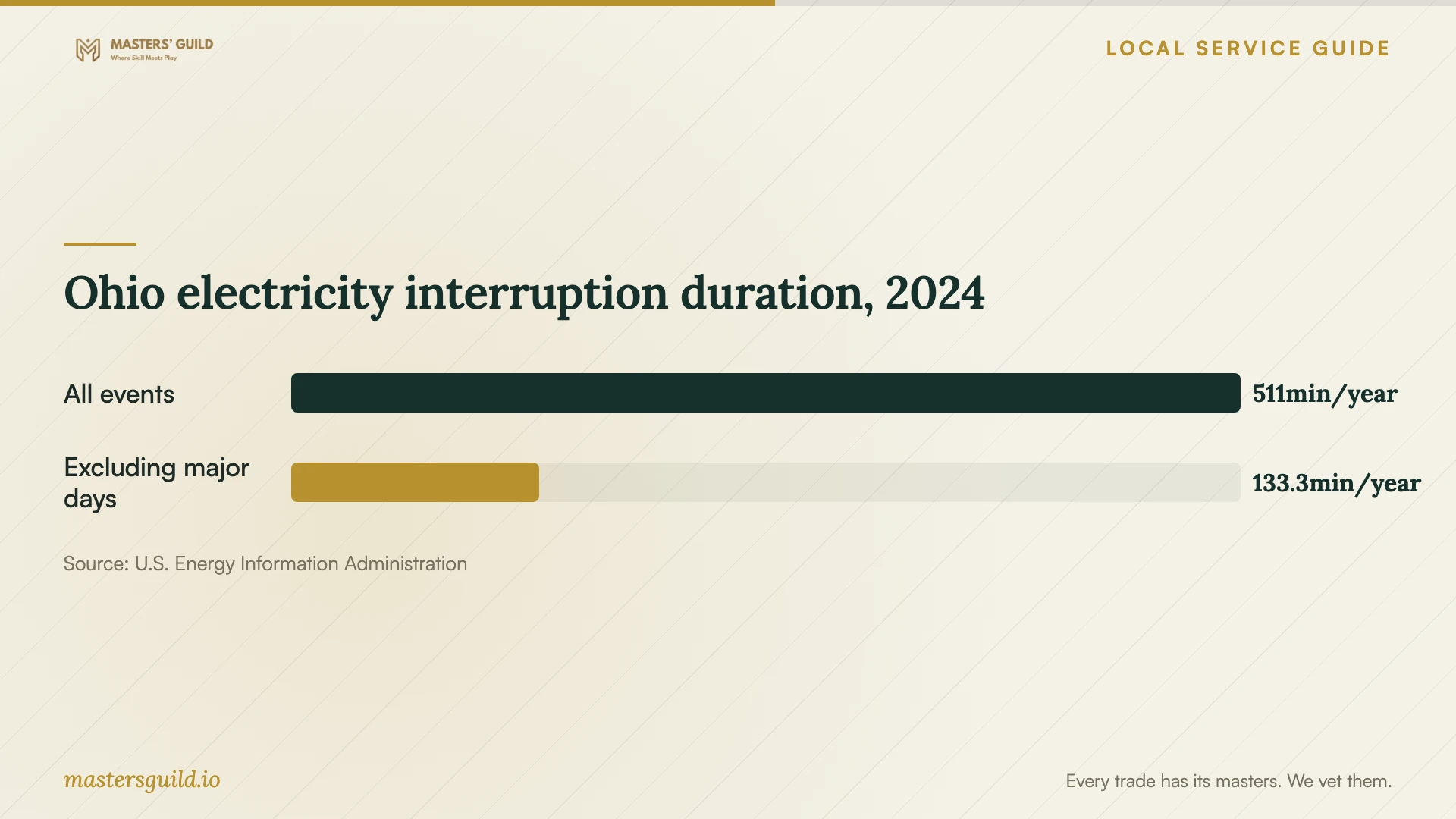
EIA reports 511 minutes of average non-momentary electricity interruptions for Ohio in 2024 when including major event days, compared with 133.3 minutes when excluding them. These statewide utility metrics provide regional planning context; they do not describe your premises or establish how often a drive will fail. [2]
Ask the provider to assess an uninterruptible power supply, controlled shutdown, and backup-job behavior after power returns. Specify which storage, computer, and network equipment you want included. Have the provider demonstrate the shutdown arrangement and explain how you will check that scheduled backups resumed.
Ohio electricity interruption duration, 2024
Local details that affect your job
Report sewer-related equipment damage through MSD
For a potential sewer backup, MSD accepts reports by telephone at (513) 352-4900 or through its online report. An online submission produces a five-digit Service Request Number; MSD says it will not send a confirmation email or call. Save that number with your equipment photographs and recovery estimate. During major rain events, MSD says crews may take several hours to several days to investigate, and crews do not inventory or estimate property damage. [1]
Keep the utility claim separate from your recovery contract
MSD requires a sewer-backup report before a damage claim and allows two years from the incident to submit a completed claim. The program excludes backups caused solely by private plumbing issues or overland flooding. Ask MSD and your insurer about eligibility before assuming they will pay a recovery invoice. The cited MSD page does not establish reimbursement for data-recovery charges; request an itemized estimate and retain your own damage records. [1]
Use Ohio outage data to shape the backup specification
EIA's 2024 Ohio reliability metrics cover an estimated 96.5 percent of customers. Use that statewide context to ask about power protection and restart procedures at your business. Do not size equipment from statewide interruption averages; ask the provider to assess your actual equipment and required shutdown time. [2]
Match the problem to the work you authorize
| Situation | Help to request | Approval question |
|---|---|---|
| Damaged storage with essential files | Specialist assessment and a scoped recovery attempt | How will you preserve the original and confirm which priority files are usable? |
| A backup exists and you need operations restored | Restore assistance and application checks | Can you demonstrate the restore and document any missing data? |
| Suspected ransomware | Incident response, isolation, investigation, and clean restoration | Who will confirm the environment is ready before reconnecting systems? |
| Sewer backup damaged equipment | Equipment assessment plus an MSD report and separate eligibility inquiry | Which records should I retain, and has anyone confirmed payment eligibility? |
| You need ongoing backup management | Offline encrypted backups, restore testing, and written security requirements | Who handles failed backups and proves that priority systems can be restored? |
Your hiring checklist
- List priority files, applications, and the most recent backup you can access.
- Record device models, symptoms, error messages, and actions already attempted.
- Ask the specialist for device-handling instructions before transport or further troubleshooting.
- Approve a diagnostic budget and require permission before additional spending.
- Document custody, subcontractors, data access, secure return, and deletion terms.
- Agree on how you will verify recovered files and application usability.
- Request a backup handover with a sample restore and named responsibility for failed-job alerts.
Frequently Asked Questions
How much should I budget for recovery?
Request a diagnostic quote followed by a written recovery scope. The supplied sources do not establish Cincinnati recovery prices. Compare the total authorized amount, diagnostic charges, partial-recovery terms, return storage, and system setup. Ask what you owe if you decline further work.
Should I shut down a computer showing a ransom message?
CISA recommends isolating affected systems from the network first. It recommends powering down only when you cannot disconnect them or take the network offline, because shutdown loses potential evidence in volatile memory. Involve your IT or incident-response provider and communicate through a separate channel, such as a phone call. [3]
Does cloud storage cover my backup needs?
Ask the provider to demonstrate recovery after account compromise or deletion. CISA recommends offline encrypted backups, discusses cloud-to-cloud backups, and advises considering version control and deletion protection. It also cautions that misconfigured immutable storage can impose significant costs. Require a written explanation of retention, access, and restore procedures. [3]
Will MSD pay to recover files from a water-damaged computer?
The cited MSD page does not confirm payment for data recovery. MSD offers reimbursement for eligible damages subject to program eligibility and requires you to report the sewer backup before filing a claim. Confirm the proposed expense with MSD and your insurer before relying on reimbursement. [1]
Sources and scope
This guide combines the sources below with practical planning guidance. Figures apply to the stated geography and period; request a written quote for your property.