
Local service guide
Commercial Building Cleaning in Cincinnati
Arrange Commercial Building Cleaning in Cincinnati by walking the premises with prospective cleaners and giving each one the same written scope: rooms, tasks, visit schedule, access arrangements and waste responsibilities. Before signing, identify the indoor mop-water disposal point and confirm who handles commercial waste collection. Cincinnati directs businesses to dispose of mop water through an inside drain, mop sink or sanitary line, and requires commercial entities to contract with a city-registered waste hauler. [1] [3]
Write a scope the cleaner can price
List the rooms you want cleaned and the work you expect in each. For an office, you might request restroom cleaning, break-room surfaces, vacuuming, hard-floor care and emptying designated bins. Identify desks, equipment, stockrooms and tenant spaces that the crew should leave alone. Ask the provider to confirm those boundaries in the quote.
Separate recurring work from occasional projects. Request individual prices for carpet extraction, floor refinishing, interior glass and a first deep clean if you want them. Give bidders the same floor-area measurements and access window. Ask each provider to explain any minimum charge, supply charge, additional visit fee and tax treatment rather than comparing totals with different inclusions.
Use a site visit to agree on the initial condition. Photograph existing floor damage and flag surfaces whose care instructions you can supply. If you occupy a leased unit, ask the property manager which shared areas, sinks and waste containers your cleaner may use.
Plan mop-water disposal during the walkthrough
Cincinnati’s Stormwater Management Utility tells businesses to put mop-bucket water down an inside drain, mop sink or sanitary line. It tells them to keep that water off parking lots and out of storm drains. Show bidders the intended disposal point and ask them to describe their route from the cleaning area to that point. [1]
If the job includes washing appliances or vehicles, the city calls for containment and capture of wash water and says it must not enter a storm drain. Ask the provider to explain the collection method before approving that work. Contact the utility if you need clarification about the proposed disposal arrangement. [1]
Assign trash handling and collection responsibilities
Cincinnati Public Services says commercial entities must contract with a city-registered waste hauler and provide proof of that contract upon request. Ask the property manager for the building’s collection arrangement, then write down which bins the cleaner empties, where the crew places the bags and who resolves an overflowing or inaccessible container. [3]
The city requires a franchise for commercial waste hauling and includes commercial construction and demolition debris in that requirement. If a post-renovation cleaning proposal includes debris collection and disposal, ask who will perform that work and confirm the hauling arrangement with the city’s program. Treat a promise to remove debris as a separate item to review. [2]
The program’s definition of commercial waste collection service also includes attendant container services such as cleaning and maintaining containers. If you want dumpster cleaning, ask the program about the proposed service before adding it to an ordinary cleaning contract. Keep infectious or hazardous waste out of the routine scope; the city excludes those materials from its definition of commercial waste. [2]
Specify any disinfection request
For COVID-19 surface disinfection, EPA’s List N identifies products that meet its criteria for use against SARS-CoV-2. The tool lets users search by registration number and filter by use site, surface type and contact time. EPA states that these products are for surfaces, not humans. [4]
Ask the cleaner to name the product and show you its directions for the proposed use. Have the provider explain how the crew will follow the preparation instructions and contact time while working around your staff. For other infection-control requests, ask for evidence specific to that request instead of treating List N as approval for every organism. [4]
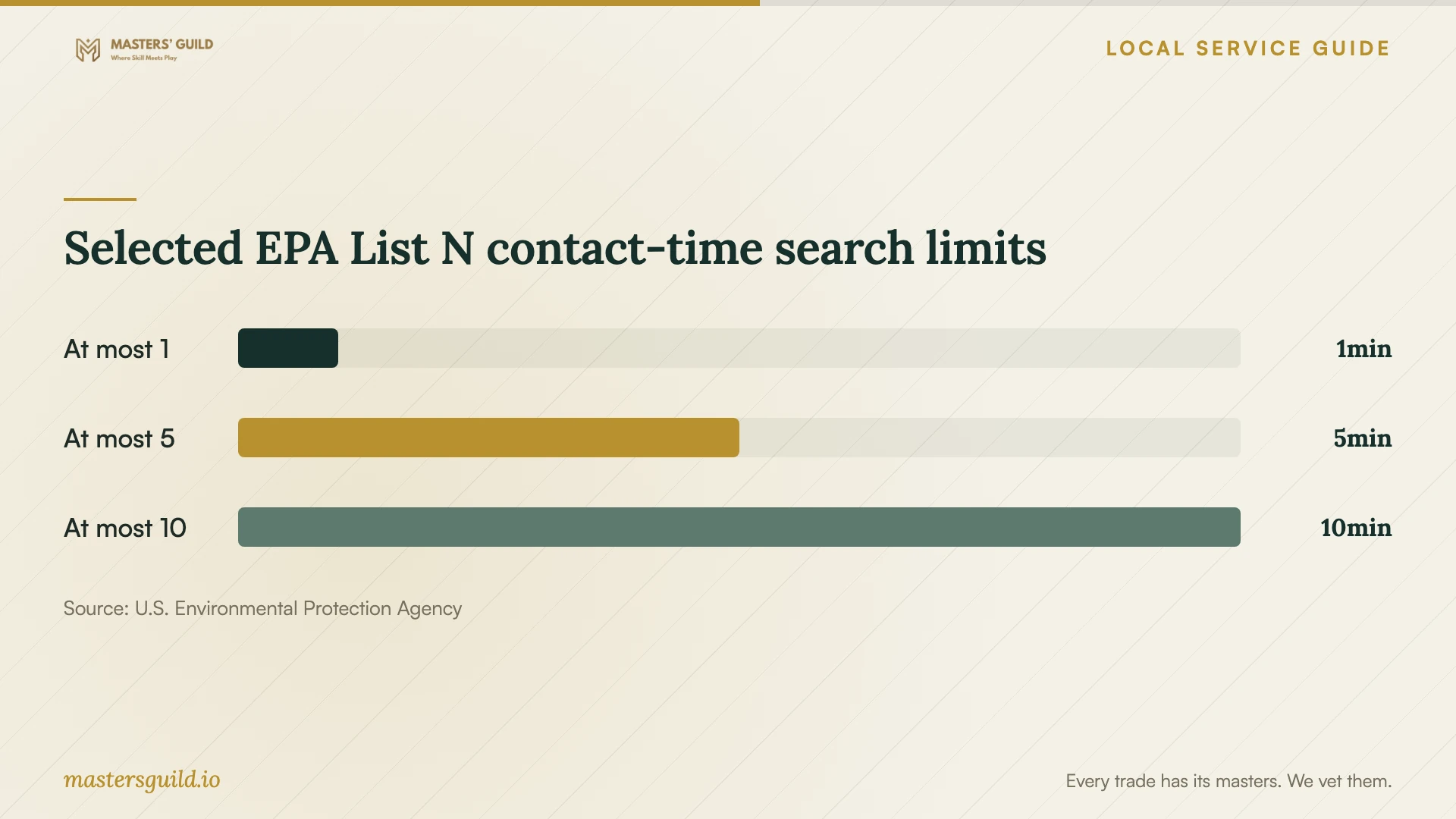
The chart below shows selected contact-time search limits from the EPA tool. Use it to understand the questions to ask about timing. Choose a product through its directions and intended use, rather than selecting a cleaning plan from these search limits. [4]
Agree on access and review the first visits
Give the crew an agreed arrival window, an access contact and instructions for locking up. Decide who issues keys or alarm credentials and how you will withdraw access when the contract ends. Ask about insurance documentation, supervision, staff substitution and the process for reporting damage or missed work.
Choose a review date after the first visits. Walk the same rooms with the supervisor, compare the work with your written scope and record any changes you request. Before signing, agree on the correction process, cancellation terms and approval procedure for extra work. Avoid asking the crew to add tasks through informal instructions from several employees.
Selected EPA List N contact-time search limits
Local details that affect your job
Indoor disposal access belongs in the scope
Show the cleaner the indoor drain, mop sink or sanitary-line disposal point during the site visit. Cincinnati’s business guidance prohibits pouring mop water onto a parking lot or into a storm drain. If you cannot identify a suitable arrangement, ask the Stormwater Management Utility for guidance before approving wet cleaning. [1]
Confirm the building’s registered waste hauler
Ask your landlord or facilities contact for the commercial waste collection contract. Cincinnati requires commercial entities to use a city-registered waste hauler and retain proof for a request from Public Services. Specify the cleaner’s bin-to-container duties alongside that existing collection arrangement. [3]
Review debris removal and dumpster cleaning
Cincinnati’s franchise program covers commercial construction and demolition debris and defines attendant container cleaning as part of commercial waste collection service. For either addition, ask the program how the proposed work fits its requirements and identify the responsible provider before accepting the quote. [2]
Match the cleaning request to the arrangement
| Your request | What to specify | What to confirm |
|---|---|---|
| Recurring office cleaning | Rooms, tasks, visit frequency and exclusions | Access contact and correction process |
| Wet floor cleaning | Indoor mop-water disposal point | No disposal onto parking lots or into storm drains |
| Routine bin emptying | Designated bins and destination container | Building’s city-registered waste-hauler contract |
| Post-renovation debris removal | Responsible collection and disposal provider | City franchise requirements for commercial debris hauling |
| COVID-19 surface disinfection | Product registration number and intended surfaces | List N use site, surface type and contact time |
Your hiring checklist
- Mark the rooms, floor areas and surfaces included in each visit.
- Give all bidders the same task list and access window.
- Identify the indoor mop-water disposal point with the crew.
- Confirm the building’s waste contract and the designated container.
- Review any debris removal or dumpster-cleaning proposal with the city’s waste program.
- Request product details and directions for any disinfection work.
- Agree on access control, damage reporting and missed-work corrections.
- Set a first-service review date and require approval for extra charges.
Frequently Asked Questions
How should I compare commercial cleaning quotes?
Give each bidder the same room list, tasks, visit frequency and access window. Ask for separate prices for occasional projects and written exclusions. Compare the full recurring charge, supplies, extra-work approval process and cancellation terms.
Can the cleaner pour mop water into an outdoor drain?
Cincinnati tells businesses to dispose of mop water through an inside drain, mop sink or sanitary line. It says to keep mop water out of parking lots and storm drains. Identify the disposal point before the crew starts. [1]
Does hiring a cleaner cover commercial trash collection?
Confirm both arrangements in writing. Cincinnati requires commercial entities to contract with a city-registered waste hauler. Ask the cleaner to specify its bin-emptying duties and identify the provider responsible for collection and disposal. [3]
Does EPA List N tell me how long a cleaning visit should take?
No. EPA offers contact-time filters for COVID-19 surface-disinfection products, alongside surface and use-site filters. Those search limits do not establish a whole-building cleaning duration. Ask the provider to explain its schedule and follow the selected product’s directions. [4]
Sources and scope
This guide combines the sources below with practical planning guidance. Figures apply to the stated geography and period; request a written quote for your property.