
Local service guide
Carpet cleaning in Cincinnati: Hiring and Planning
For carpet cleaning in Cincinnati, ask for a written quote that identifies the rooms, stairs, treatments, furniture moving and drying plan. Tell the cleaner about stains and any water intrusion before booking. If you suspect a sewer backup, contact the Metropolitan Sewer District of Greater Cincinnati at (513) 352-4900; MSD requires reporting within 48 hours of discovery for potential reimbursement consideration. [1]
Choose the service for the condition of your carpet
Describe the problem before asking for a price: ordinary tracked-in dirt, a named spill, pet odor, wet carpet or suspected sewage. Send photographs and identify the affected rooms. Ask the provider to explain which work they propose, which results they can promise and which problems need an inspection.
For water intrusion, establish the source of the water before using fans. EPA's carpet-drying guidance applies to clean-water damage; it advises consulting an experienced professional for contaminated-water situations and avoiding fans until you determine that the water is clean or sanitary. [3]
For a possible sewer backup, report the incident to MSD while arranging the appropriate assessment. MSD investigates possible backups and offers cleaning assistance for eligible properties. Ask MSD about the investigation and cleanup arrangements before committing to a private cleanup contract; keep a record of the discovery time and your report. [1]
Get a quote you can compare
Give each cleaner the same room list, approximate dimensions and stair count. Identify the carpet material if you know it, and share manufacturer care instructions. Ask whether the provider prices by room, area or visit, how they define a room and whether a minimum charge applies.
Request separate descriptions for the main cleaning, stain treatment, odor treatment and any optional protector. Ask which furniture the crew will move and which pieces you must move yourself. Have the provider state the total, applicable tax, exclusions and conditions that could change the quote after inspection.
Ask about liability insurance and training relevant to your job. For sewage work, ask about water-damage restoration qualifications and the proposed removal, disinfection and moisture-checking process. MSD states that its cleanup contractors carry insurance and IICRC water-damage restoration certification; that description applies to MSD's contractors, not every carpet cleaner. [2]
Arrange access and a drying plan
Tell the cleaner about stairs, parking restrictions, building access and any shared entrance. Ask where the crew needs to park and which doors they need to use. Agree on who will move small belongings, manage pets and provide access, including any return visits.
Ask your routine cleaner for a drying estimate for your carpet and method, plus instructions for walking on it and replacing furniture. Do not use water-damage timelines as a promise for an ordinary cleaning visit. Plan room use around the provider's instructions and ask whom to contact if the carpet remains damp beyond their estimate.
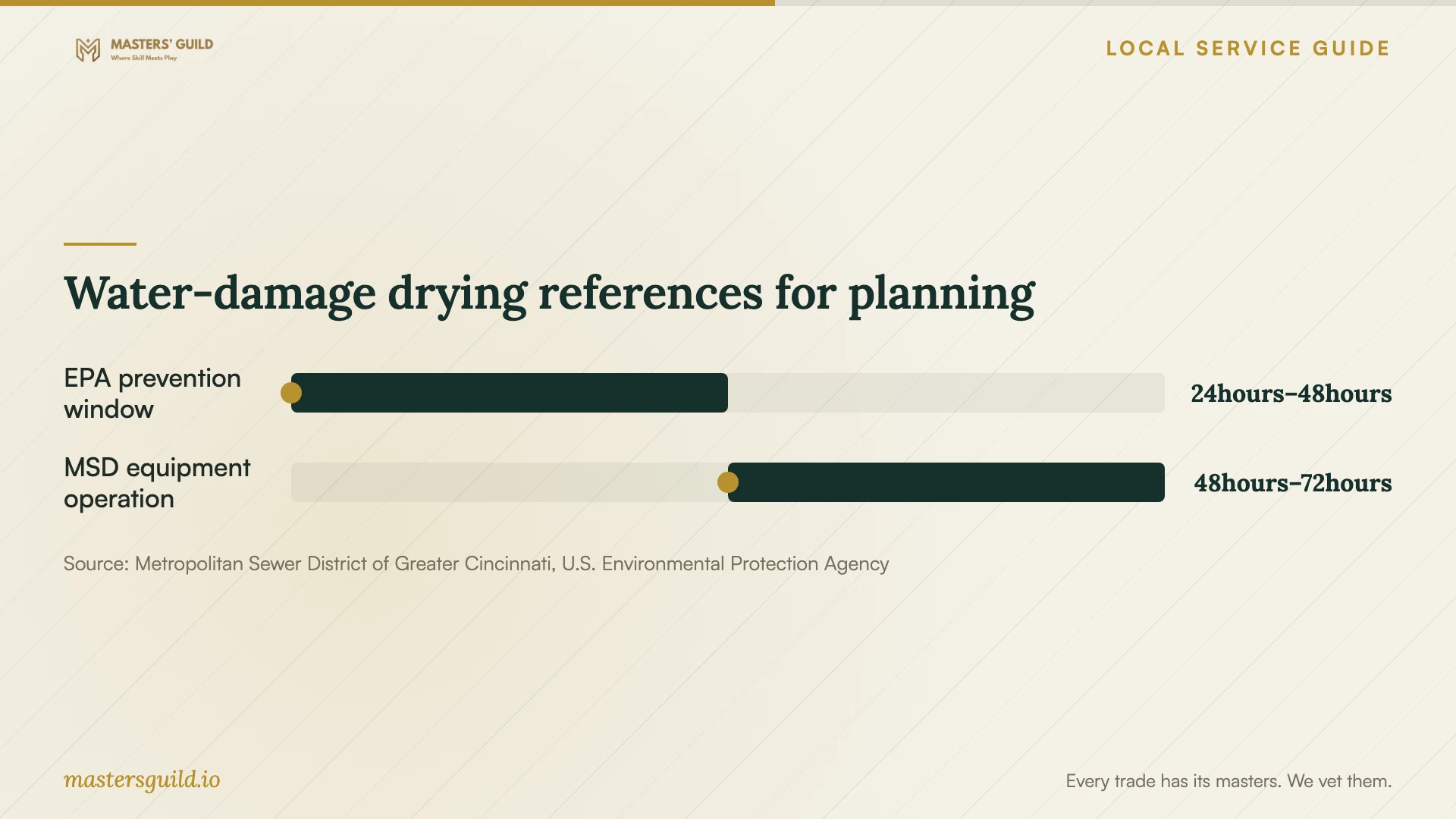
For eligible MSD basement cleanup, expect a separate drying stage after cleaning. MSD describes fans and dehumidifiers operating continuously for 2 to 3 days until moisture levels are satisfactory. Its technicians return for equipment checks and moisture readings, so arrange access and leave their equipment running as instructed. [2]
Review removal decisions and exclusions
During MSD cleanup, the contractor inspects damage and moisture, then works with you on lists of items to save and items to remove. Review those lists before signing. MSD's process can include removing wet carpeting, padding and other damaged flooring, so ask what will remain after cleanup and who will handle replacement. [2]
MSD excludes hazardous-waste removal and mold remediation from its cleanup assistance. Its examples of hazardous materials include asbestos floor tile, paints and solvents. Tell MSD and the contractor about suspected materials or existing mold, and ask what separate assessment or work you need before approving a broader restoration plan. [2]
Water-damage drying references for planning
Local details that affect your job
Public-sewer responsibility determines MSD eligibility
MSD assistance concerns eligible backups caused by its public sewer. The program excludes private-sewer backups and overland flooding. Property owners must keep the entire private building sewer clear of clogs, including portions beneath public sidewalks and streets. Report the incident and let MSD investigate the cause rather than assuming that basement water qualifies for assistance. [1]
MSD cleanup requires permission and follow-up access
For eligible cleanup, an MSD representative phones to schedule the appointment. The crew asks the owner or tenant to sign a Permission to Enter form before inspecting the flooded area. Read the form and retain your copy. Arrange access for later moisture checks and MSD's final inspection after drying and equipment removal. [2]
Choose your next step
| Situation | Next step | Question to resolve |
|---|---|---|
| Dry carpet with ordinary soil or a spill | Request a routine cleaning quote. | Which treatments and furniture moving does the total include? |
| Carpet wet from a known clean-water incident | Arrange prompt water-damage assessment and drying. | How will the contractor dry the carpet, padding and underlying floor? |
| Suspected sewer backup | Report to MSD within 48 hours of discovery for potential reimbursement consideration. | Does the investigation establish an eligible public-sewer cause? |
| Existing mold in the affected area | Request an assessment that addresses mold and the moisture source. | Who will handle mold remediation, which MSD cleanup assistance excludes? |
Your hiring checklist
- List the rooms, approximate dimensions, stairs and specific stains for each quote.
- Share carpet care instructions and disclose pet odor, moisture or suspected sewage.
- Request an itemized total and written approval rules for extra work.
- Confirm furniture moving, parking, entry arrangements and who will be present.
- Ask for drying instructions, room-use restrictions and a contact for unresolved dampness.
- For restoration work, agree on documentation, removal decisions and return access before signing.
Frequently Asked Questions
How much should I budget for the cleaning?
Get a written total for your room list and requested treatments. The cited sources do not establish Cincinnati market prices for routine carpet cleaning. Ask about minimum charges, stairs, furniture moving, optional treatments and applicable tax so you can compare equivalent scopes.
Will MSD pay for any basement flooding?
MSD limits assistance to eligible public-sewer backups; it excludes private-sewer backups and overland flooding. Owners and tenants may qualify, depending on the cause. Report within 48 hours of discovery for potential reimbursement consideration and ask MSD to explain eligibility for your incident. [1]
Can a cleaner save water-damaged carpet?
Ask for an assessment of contamination, carpet, backing, padding and underlying moisture before agreeing to salvage. EPA says wet vacuuming alone does not dry carpet and that porous materials with mold may need disposal. MSD's sewage cleanup process includes removing wet carpeting and padding. [2] [3]
Does the drying chart tell me when routine cleaning will be dry?
No. The chart compares EPA's clean-water damage prevention window with MSD's basement restoration equipment schedule. Ask your routine cleaner for an estimate specific to the method, carpet and conditions in your home. [2] [3]
Sources and scope
This guide combines the sources below with practical planning guidance. Figures apply to the stated geography and period; request a written quote for your property.