
Local service guide
car washing in Cincinnati: Choose and Plan Your Wash
For car washing in Cincinnati, choose a provider who can explain both the cleaning scope and the proposed wash location. Before booking mobile service, confirm how the operator will collect wash water: the city tells businesses washing vehicles to contain and capture it and keep it out of storm drains. Request a written total covering the areas you want cleaned, rinse and drying steps, and any optional work. [1]
Settle the mobile wash location first
Cincinnati’s Stormwater Management Utility tells businesses to use containment and capture methods when washing vehicles and to keep wash water out of storm drains. For a hired mobile wash, discuss the collection setup before reserving a driveway or parking space. Send a photo showing the work area, its slope, and nearby drains. [1]
Have the operator describe where they will collect the water and how they will dispose of it. Confirm whether they bring water and power or need your connections. For a shared lot or garage, obtain the property manager’s permission and tell the provider about access restrictions. If the operator cannot explain a workable setup, discuss another location or a fixed wash facility.
The city gives residents separate advice for washing their own cars: wash on the lawn instead of the driveway so the lawn can absorb water and filter soap and dirt. That household guidance does not establish a hired operator’s commercial collection plan. Use the business guidance when questioning a mobile provider about runoff. [1]
Include setup and cleanup in the written scope. Specify who supplies water, who provides access, and where the operator may work. Before authorizing the appointment, request evidence of applicable liability coverage and ask how the provider handles a damage concern.
Specify the cleaning after winter road treatment
Cincinnati Public Services uses salt or salt brine for anti-icing before winter precipitation and calcium chloride and salt for de-icing during storms. If you have driven on treated streets, tell the provider when requesting a quote. Discuss cleaning the lower panels, wheel wells, and underbody instead of relying on an exterior package name. [3]
Ask the operator to list the areas they will clean and explain any access limits. Identify vehicle care instructions, loose trim, a wrap, or an existing coating before they propose a method. For interior work, send photos of the mats, seats, or spill you want addressed and request a separate treatment description.
The city’s winter guidance describes road-treatment methods; it gives no recommended car-washing interval. Agree on a schedule based on your driving and vehicle care instructions rather than treating a recurring package as a city recommendation. Ask the provider how freezing conditions affect the appointment and when they would reschedule. [3]
Compare quotes using the same vehicle photos and task list. Request a total that identifies optional products, travel charges, taxes, and extra cleaning the operator might propose after inspection. Set an approval rule for additional charges, and confirm the arrival window, completion time, and any interior drying time.
Agree on rinse water, drying, and the final inspection
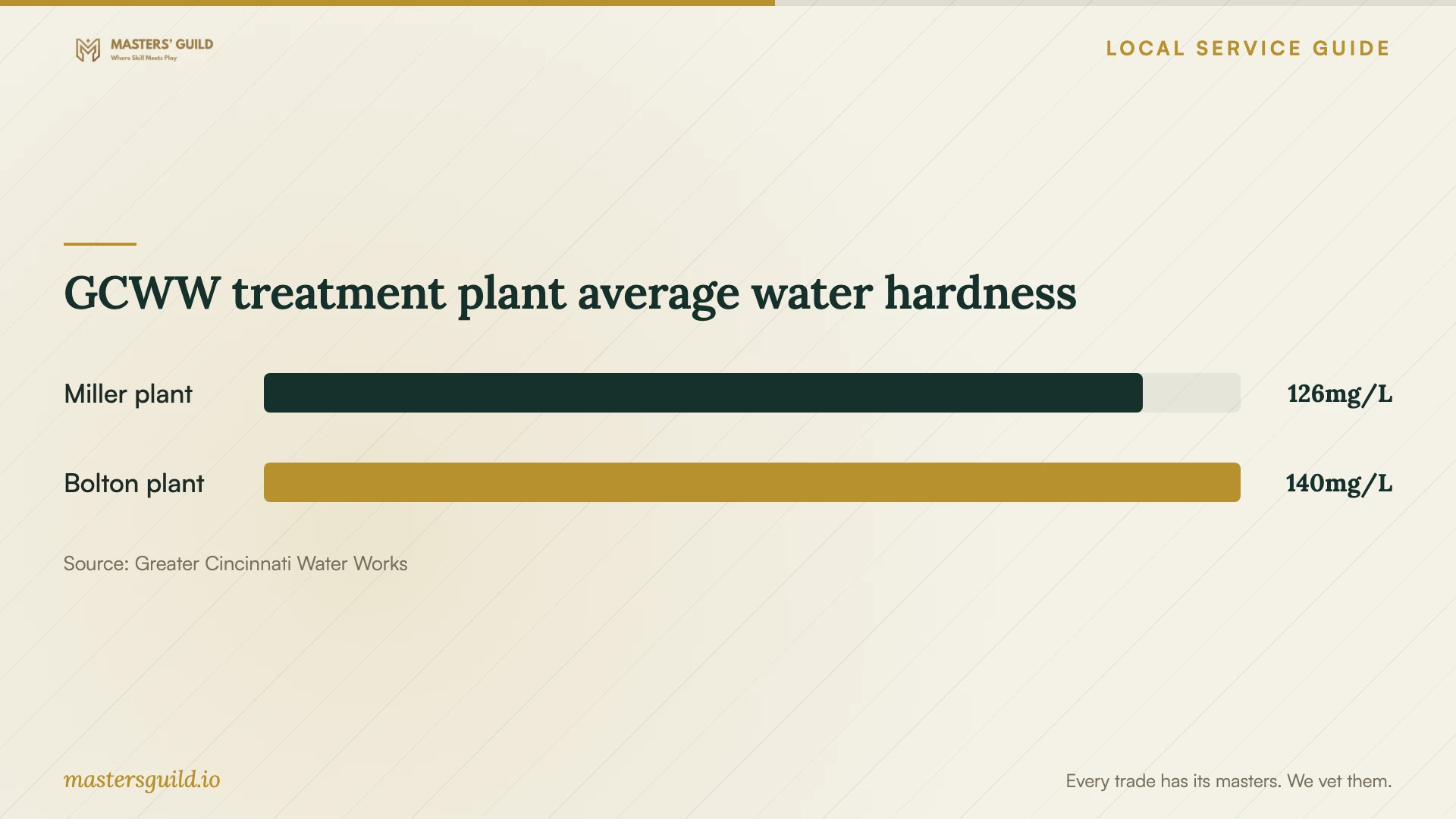
Greater Cincinnati Water Works reports average hardness of 126 mg per liter for water from its Richard Miller Plant and 140 mg per liter from its Charles M. Bolton Plant. GCWW describes hardness as mineral content, including calcium and magnesium. Use this local utility information to frame a question about rinse water and drying, rather than to predict the finish. [2]
Ask whether the provider uses your tap water, water brought to the site, or treated rinse water. Have them describe the drying step and include it in the quote. For an existing wax, coating, or wrap, share the care instructions and ask the operator to explain how the proposed wash follows them.
GCWW serves all of Cincinnati and a wider regional area. Its published plant averages are not measurements at your hose or tests of an individual wash provider. The utility figures do not establish spotting rates or justify ranking one car wash above another. [2]
Before the appointment, remove valuables and loose belongings and photograph existing damage. Confirm whether the operator needs keys or will move the vehicle. At completion, inspect the agreed areas together: glass, wheels, lower panels, and any interior problem you identified. Compare missed work with the written scope and raise concerns before closing out the job.
GCWW treatment plant average water hardness
Local details that affect your job
A storm drain changes the proposed work site
Cincinnati’s business guidance calls for vehicle wash-water containment and capture and says to keep wash water out of storm drains. Before booking a driveway wash, obtain the operator’s collection plan. For questions about the city’s guidance, contact the Stormwater Management Utility at 513-591-5050. [1]
Winter treatment changes the scope to discuss
City crews use salt or salt brine for anti-icing and calcium chloride and salt for de-icing. After travel on treated streets, request an explicit description of lower-panel, wheel-well, and underbody work. The road-treatment guidance does not prescribe a washing frequency. [3]
Plant hardness changes the rinse-water question
GCWW publishes average hardness of 126 mg per liter at Miller and 140 mg per liter at Bolton. Ask whether the operator will use your water or bring a separate supply, then agree on rinsing and drying. Neither plant average establishes the hardness at your property. [2]
Choose the booking discussion that fits your vehicle
| Your situation | Work to discuss | Question before booking |
|---|---|---|
| Mobile wash near a storm drain | On-site wash with containment and capture | Where will you collect the wash water and how will you dispose of it? |
| Driving on winter-treated streets | Specified lower-panel, wheel-well, and underbody cleaning | Which of these areas can you clean, and does the total include them? |
| Concern about the final finish | An agreed rinse and drying method | Will you use my tap water or bring water, and how will you dry the vehicle? |
| Interior spill or odor concern | Interior cleaning with a defined treatment plan | What result will you attempt, and what limits should I expect? |
Your hiring checklist
- Send vehicle photos, the vehicle type, and the areas you want cleaned.
- Provide a photo of the mobile work area and nearby drains; request a collection and disposal plan.
- Confirm parking permission, equipment space, water, power, and key access.
- Request a written scope covering any underbody work, interior treatment, rinsing, and drying.
- Agree on the total price and approval terms for additional work.
- Confirm timing and weather cancellation terms.
- Remove valuables, document existing damage, and inspect the completed work with the operator.
Frequently Asked Questions
Can I hire a mobile washer for my driveway?
Have the operator assess the site before booking. Cincinnati tells businesses washing vehicles to contain and capture wash water and keep it out of storm drains. Confirm the collection plan, permission to use the space, and the operator’s water and power needs. [1]
How often should I wash after winter driving?
Discuss your driving and vehicle care instructions with the provider. Cincinnati documents salt, salt brine, and calcium chloride in winter road treatment, but its guidance gives no car-washing interval. Specify any underbody cleaning you want in the quote. [3]
Do local hardness figures tell me which wash is better?
No. GCWW reports treatment-plant averages, not measurements of providers’ rinse water or finished work. Ask about water supply, rinsing, and drying, then inspect the result against your agreed scope. [2]
How should I compare prices?
Give providers the same photos and task list. Compare the total, included cleaning areas, drying, optional treatments, and travel charges. Require approval before the operator adds work or changes the price.
Sources and scope
This guide combines the sources below with practical planning guidance. Figures apply to the stated geography and period; request a written quote for your property.