
Local service guide
Bricklaying and Masonry in Cincinnati, OH
For Bricklaying and Masonry in Cincinnati, choose a contractor with current city registration, request a written repair scope, and settle permit and historic-review responsibilities before booking. Cincinnati requires contractors working within city limits to maintain registration. For exterior work on a locally designated historic property, check Certificate of Appropriateness requirements even if the repair does not need a building permit. [1] [2]
Describe the masonry work before requesting estimates
Prepare a short description of what you want repaired or built: mortar joints, individual bricks, steps, a chimney, a retaining wall or a new masonry feature. Photograph the whole area and close details from a safe position. Mark the locations you want each contractor to inspect, and explain whether you have noticed changes since your earlier photographs.
Ask each contractor to separate the proposed work into named tasks. For a mortar repair, request the joints they plan to remove and replace, their proposed mortar, and the finished joint appearance. For brick replacement, ask which units they include and how you will approve the match. Request a sample area before agreeing to work across a visible facade.
Verify registration and responsibility for approvals
Cincinnati requires contractors performing work within city limits to maintain current contractor registration. The city will not issue building permits until all applicable contractors have registered. Its FAQ directs owners to the website's Contractor Registration feature to check a contractor and lists a current liability insurance certificate among renewal requirements. [1] [4]
Ask for the business name that appears on the registration and compare it with your estimate and contract. Request insurance documentation for your records. Put the person responsible for permit applications, approval fees and inspections in the written agreement. Confirm that responsibility before you pay a deposit or accept a start date.
Confirm whether your repair needs a permit
The city's permit guide lists building repair among work requiring permits and identifies retaining walls as work requiring separate permits. Its FAQ says minor repairs may proceed without a permit, but excludes work involving cutting away walls or removing structural beams or bearing supports. Describe the proposed work to Buildings & Inspections rather than treating all masonry repairs as exempt. [3] [4]
Bring photographs and the contractor's scope when asking for a determination. State whether the contractor proposes removing part of a wall, changing an opening, rebuilding a support or constructing a retaining wall. Cincinnati charges an investigation fee equal to the regular permit fee, in addition to that fee, when someone starts work without a required permit. [3]
Plan exterior work on a historic property
Cincinnati requires a Certificate of Appropriateness application for projects that alter locally designated landmarks or properties in locally designated historic districts. Each district or landmark has its own conservation guidelines. Ask Historic Conservation staff about your address and proposed masonry work before choosing materials or authorizing removal. [2]
If your work requires a building permit, the city refers that application to Historic Conservation for review without an additional COA application form. If the work is exempt from a building permit but requires historic approval, submit a separate COA application. City Planning's current application notice directs applicants to submit and pay online through the CAGIS ezTrak Portal. [2] [5]
Compare the complete scope and budget
Request separate amounts for the masonry work, access equipment, debris removal and approval costs. Ask contractors to explain any allowance for replacement brick and how they will price additional work after opening the repair area. Require your approval of changes in writing. Keep the same requested scope when comparing offers.
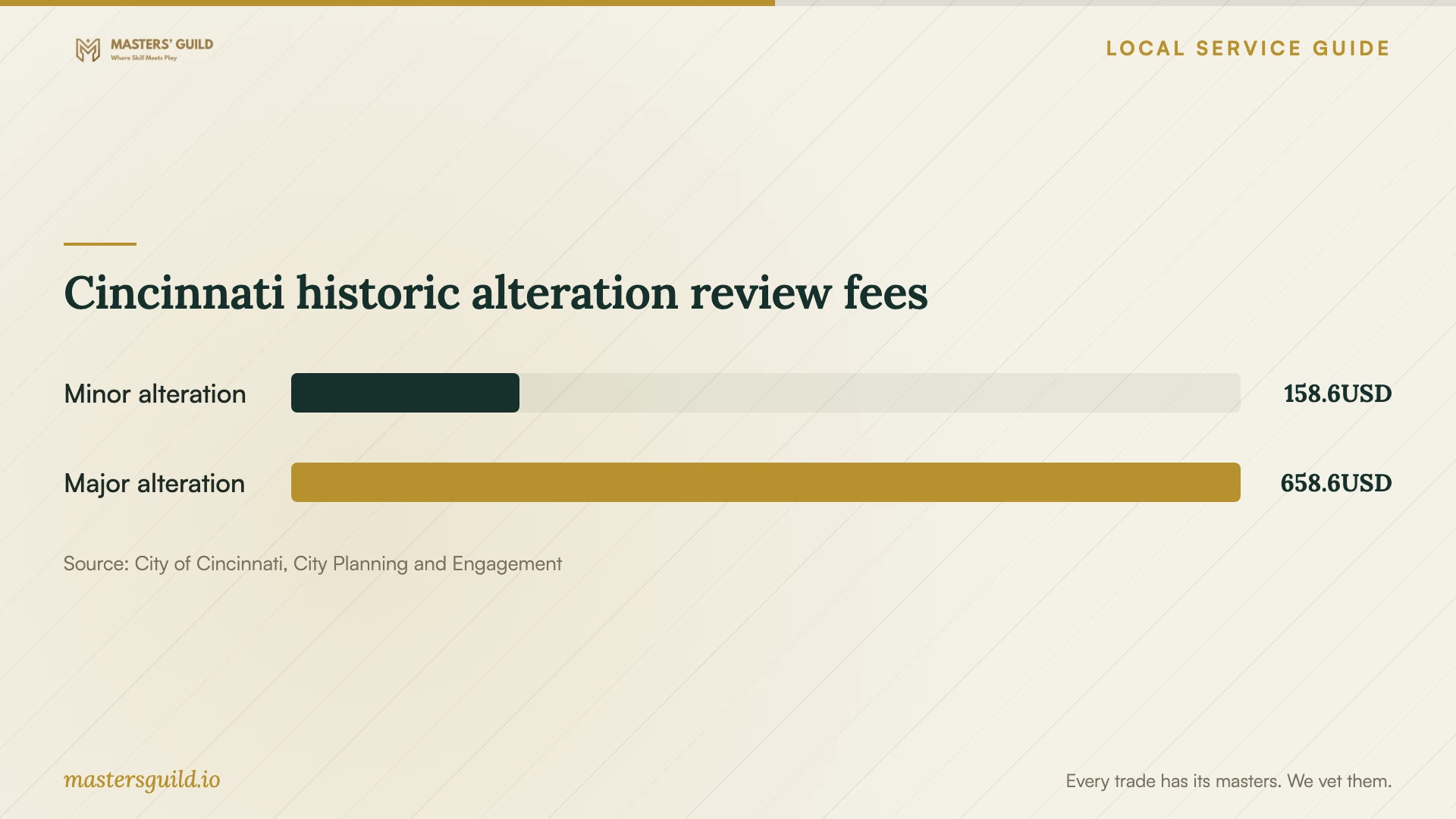
City Planning lists COA fees of $158.55 for a minor alteration and $658.55 for a major alteration. These are historic-review charges, not masonry repair prices. Its fee page also lists additional online payment processing charges. Confirm the review category with staff and ask your contractor which application and permit costs the estimate includes. [5]
Before scheduling, agree on access to the work area, protection of nearby surfaces, material storage and cleanup. Ask the contractor to explain their weather and curing plan and how they will communicate postponements. At completion, review the agreed repair locations together and collect any applicable approval and inspection records.
Cincinnati historic alteration review fees
Local details that affect your job
Check city jurisdiction before applying Cincinnati rules
Use the online zoning map referenced in the city's Buildings FAQ to check your property's jurisdiction. For a property within Cincinnati, contact Buildings & Inspections at 513-352-3271 about the proposed scope. The Permit Center address is 805 Central Avenue, Suite 500. Confirm the responsible authority before using these city requirements for your job. [4]
Resolve historic approval before the start date
For a locally designated landmark or historic-district property, ask Historic Conservation about exterior repair approval even if Buildings & Inspections exempts the work from a building permit. Contact Historic Conservation at 513-352-4848. Request guidance on the applicable conservation standards and whether staff or the Historic Conservation Board must review your proposal. [2] [5]
Choose the next step for your masonry project
| Proposed work | Approval issue | Next step |
|---|---|---|
| Limited repair described as minor | The city's FAQ limits the minor-repair exemption. | Give Buildings & Inspections the written scope before assuming an exemption. |
| Removal of wall sections or bearing supports | The FAQ excludes this work from minor repairs. | Ask about permits and required plans before authorizing removal. |
| Retaining wall | The permit guide lists a separate permit requirement. | Confirm the application requirements before agreeing to construction. |
| Exterior alteration on a locally designated historic property | COA requirements apply even when a building permit exemption applies. | Consult Historic Conservation before approving materials and methods. |
Your hiring checklist
- Photograph the full repair area and visible details from a safe location.
- Write a scope that distinguishes mortar repair, brick replacement and rebuilding.
- Check the contractor's registration and request insurance documentation.
- Confirm jurisdiction, permit requirements and local historic designation using the city resources described above.
- Name the person responsible for applications, fees and inspections in your contract.
- Request material samples and a written process for approving additional work.
- Agree on access, surface protection, cleanup and completion records.
Frequently Asked Questions
Does a masonry contractor need Cincinnati registration?
Yes. Cincinnati requires contractors working within city limits to maintain current registration. Use the city's Contractor Registration feature to check the business before work starts. [1] [4]
Does repointing need a building permit?
Do not assume repointing is exempt; ask Buildings & Inspections to assess your proposed work. The city allows certain minor repairs without a permit. Send photographs and a description of any proposed wall removal or rebuilding so staff can assess the scope. [2] [3] [4]
Can historic masonry work need approval without a permit?
Yes. Exterior alterations to locally designated landmarks and historic-district properties can require a COA even when the work is exempt from a building permit. Ask Historic Conservation staff about your property and scope before starting. [2]
How should I compare masonry estimates?
Ask each contractor to price the same locations and tasks. Compare material choices, sample approval, access equipment, cleanup, application responsibilities and the process for pricing additional work. Request clarification before accepting an unexplained lump sum.
Sources and scope
This guide combines the sources below with practical planning guidance. Figures apply to the stated geography and period; request a written quote for your property.