
Local service guide
Basement remodeling in Cincinnati, OH
For Basement remodeling in Cincinnati, hire a contractor after you define the rooms, investigate water problems, and check city registration. Cincinnati requires contractors to register before starting work, with specified exceptions. Request a measured layout and an itemized proposal that assigns responsibility for permits and trade work. For an independent apartment, confirm ADU eligibility before commissioning plans. [1] [3]
Define the rooms and the scope
Give each bidder the same room list: family room, office, guest space, bathroom, or independent dwelling. Mark equipment, shutoffs, drains, and storage that you need to reach after construction. Request a layout that shows room dimensions, stairs, ceiling obstructions, and access for future equipment service.
For sleeping space, have the designer confirm applicable escape-opening, ceiling-height, ventilation, and alarm requirements with the permitting authority. Ask the contractor to explain any proposed excavation or structural changes before you select flooring and fixtures. Keep optional features separate from the work you need to complete.
For an apartment, check the property with city Zoning before approving drawings. Cincinnati permits ADUs on properties that allow single-family residential use and contain a single-family dwelling. Its guidance excludes lots with multifamily buildings, including duplexes and triplexes, and permits one ADU per lot. [3]
Investigate water before installing finishes
Show bidders damp areas, stains, previous repairs, and records of leaks or backups. Request a written investigation scope and separate prices for repairs and interior finishing. Have the contractor explain what they will inspect, what they will leave unresolved, and how you will decide whether to proceed with walls and flooring.
MSD’s Prevention Program considers properties with two or more backups within five years caused by inadequate capacity in the MSD public sewer. Eligible owners may receive a prevention device at no cost. Start with the backup-history questionnaire; MSD determines eligibility and investigates qualifying properties. [2]
During the prevention process, MSD requires owners and tenants to keep personal property out of the affected area and prohibits installing carpeting, flooring, or drywall there. MSD reports an average process of six months to one year, with possible delays. If your property qualifies, settle that schedule before ordering finishes. [2]
Verify the contractor and assign approval duties
Check the contractor’s business name against the city’s registered-contractor information. Cincinnati requires registration before contractors start work. Its guidance exempts owner-performed maintenance described in Building Code 1101.17 and specified professionals acting exclusively within their licensed or registered profession. If you cannot find a company, call the Contractor Registration Section at 513-352-3271. [1]
For a bathroom addition, identify the plumbing contractor and check current credentials. Cincinnati describes separate plumbing registration and licensing requirements and requires annual renewal. Request the subcontractor’s name before accepting a proposal that includes an unnamed plumbing allowance. [1]
Put approval responsibilities in the contract. Name who will submit plans, respond to revisions, arrange inspections, and provide records at handover. Have the lead contractor confirm the approvals for your exact scope with the permitting authority. Include a process for approving changes before anyone performs extra work.
Compare the full budget and schedule
Compare proposals against one written scope. Request separate amounts for demolition, water repairs, framing, insulation, electrical work, plumbing, heating and ventilation, finishes, cleanup, and permits. Specify flooring and fixtures by product or allowance. Record exclusions and who pays if the contractor discovers concealed damage.
Cincinnati collects a nonrefundable application processing fee when applicants submit plans. Buildings & Inspections determines project valuation and uses it to set the permit fee. The city may charge additional fees for revisions and other services. Its permit-cost page identifies a fee schedule effective July 1, 2026 and lists surcharges. Request the basis of the contractor’s permit allowance. [4]
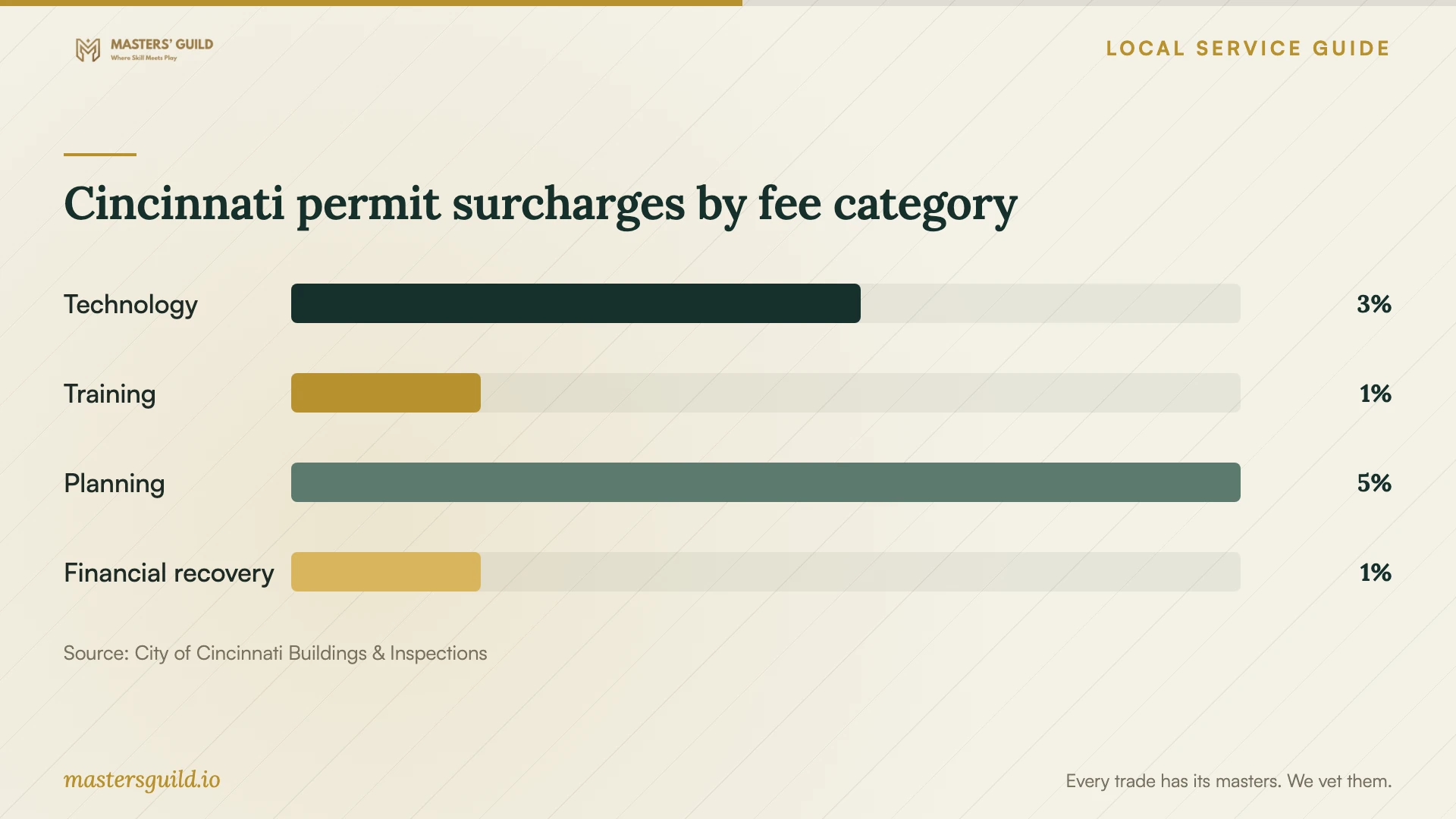
The surcharge chart separates charges with different scopes. Cincinnati applies the planning surcharge to construction, plumbing, and HVAC permits; its technology, training, and financial recovery surcharges apply to scheduled fees with an administrative-hearing exception. Use the chart to question an allowance, then obtain a project-specific fee calculation. [4]
Request dates for investigation, design, approvals, construction, and closeout. Identify dates that depend on outside decisions and deadlines for your material selections. Agree on payment milestones and the documents you will receive before final payment, including any inspection records, product information, and written warranty terms.
Cincinnati permit surcharges by fee category
Local details that affect your job
MSD assistance can change your finish schedule
Call the Prevention Program Office at 513-244-5100 for the eligibility questionnaire. The program addresses recurring backups caused by inadequate MSD public-sewer capacity. For a qualifying property, review the proposed solution and binding Covenant and Agreement before signing. MSD says the agreement applies to future owners and will be recorded on the deed. For devices that use electricity, owners must provide and pay for that electricity. [2]
Confirm ADU obligations before apartment design
Contact city Zoning at 513-352-2430 before commissioning apartment plans. Cincinnati requires a separate exterior entrance for a basement ADU, building and zoning compliance, permits, and registration with the Zoning Administrator. The owner or a designated responsible person must reside in either dwelling, and the owner must submit a restrictive covenant. Rental operation also requires the applicable residential or short-term rental registration. [3]
Choose your next planning step
| Plan or concern | Next step | Resolve before committing |
|---|---|---|
| Family room or office | Request a measured layout and itemized bids. | Room uses, equipment access, finishes, and approval responsibilities. |
| Bathroom addition | Identify the plumbing contractor and check city credentials. | Plumbing scope, fixture allowances, and exclusions. |
| Recurring sewer backups | Request MSD’s eligibility questionnaire. | Backup cause, qualifying history, and affected-area finishing restrictions. |
| Independent apartment | Confirm ADU eligibility with city Zoning. | Separate entrance, permits, registration, residency, and covenant obligations. |
| Unclear permit allowance | Request the valuation basis and applicable charges. | Processing fees, permit fees, surcharges, and possible revision fees. |
Your hiring checklist
- Give bidders the same room list, intended uses, and finish specifications.
- Gather photographs and records of leaks, backups, and previous repairs.
- Separate investigation and water repairs from interior finishing in the proposal.
- Record the lead contractor’s business name and proposed trade subcontractors.
- Assign plan submissions, approval revisions, inspections, and handover records in writing.
- Identify allowance amounts, exclusions, and responsibility for concealed damage.
- Agree on material-selection deadlines, payment milestones, and written change orders.
Frequently Asked Questions
How much should I budget?
Use site-specific, itemized proposals to set the construction budget. Separate water repairs, room finishing, and bathroom or apartment work. Cincinnati bases permit fees on department-determined project valuation and charges application processing and applicable additional fees. Have bidders identify allowances so you can compare the same scope. [4]
Can MSD pay for a backup prevention device?
You may qualify after two or more backups within five years caused by inadequate capacity in the MSD public sewer. MSD determines eligibility through its questionnaire and review. Qualifying owners may receive a device at no cost, subject to the program agreement and operating obligations. [2]
Can I turn the basement into a rental apartment?
Cincinnati permits basement ADUs on qualifying single-family properties when owners provide a separate exterior entrance and meet applicable requirements. Confirm eligibility, permits, ADU registration, residency obligations, and the restrictive covenant before paying for plans. Rental operation requires the applicable city rental registration. [3]
How do I check contractor registration?
Use the registered-contractor information referenced on the city’s contractor guidance page. If you cannot find the business, call 513-352-3271. For plumbing work, check the plumbing contractor’s credentials and renewal status as a separate step. [1]
Sources and scope
This guide combines the sources below with practical planning guidance. Figures apply to the stated geography and period; request a written quote for your property.