
Local service guide
Roof Cleaning and Repair in Chula Vista, CA
For Roof Cleaning and Repair in Chula Vista, ask bidders to separate cleaning from roof repairs, explain their method for your roof material, and describe how they will collect wash water. For repair work, check the bidder’s roofing classification against CSLB’s C-39 definition. Request an inspection before approving cleaning if you have a leak or visible damage. [2] [3]
Choose the scope before choosing a bidder
Describe your goal in the job request: remove debris, address staining, investigate a leak, or repair a specific damaged area. Send photographs taken from a safe position and explain when you first noticed the problem. Ask the bidder to identify which tasks they can assess from those photographs and which require an on-site inspection.
If you have water entering the home, request a roofing inspection before approving a cosmetic cleaning package. Ask the contractor to document the proposed repair location, materials, and any limits on the diagnosis. Keep cleaning and repairs as separate line items so you can approve the work you need.
For cleaning, request the product name, application method, and instructions supporting its use on your roof material. Ask how the crew will access the roof, protect nearby plants, and handle any damage they discover. Do not accept a method description that consists only of a label such as soft washing.
Match the repair contractor to the work
California’s Contractors State License Board defines C-39 roofing contractors as installers and repairers of surfaces that seal, waterproof, and weatherproof structures. The definition includes roof tile, shingles, metal roofing systems, and membrane materials. Ask repair bidders for their license number and classification, then check that information with CSLB. [3]
Ask for insurance documentation and the name of the business responsible for the crew. If one company cleans and another repairs, put each company’s responsibilities in writing. Include who documents existing damage, who approves additional repairs, and who handles a complaint after completion.
For a proposed repair, ask the bidder to identify any permit question and explain who will confirm the requirement with the city. Keep that answer tied to the actual scope. Do not treat a cleaning quote as approval for replacement or structural work.
Require a wash-water plan
Chula Vista’s June 2015 stormwater staff report describes city authority to prohibit pollutant dumping into storm drainage systems and require pollution prevention practices at residential properties. It also identifies San Diego Bay as the watershed’s ultimate receiving water body. Use this historical municipal context to ask how a cleaner will prevent chemicals and roof debris from reaching the street or drains. [1]
The County of San Diego’s power-washing guidance recommends containing, collecting, and disposing of wastewater. It lists wet vacuums, berms, portable containment areas, and weighted drain covers as collection or containment equipment. This is regional technical guidance; the County ordinance cited on that page does not establish Chula Vista’s current municipal requirements. [2]
Walk through the drainage plan with the bidder before work starts. Identify downspout outlets and nearby storm drains, then ask where the crew will intercept water and collect debris. Request a disposal destination and confirmation that the crew has permission to use it. A promise to rinse the driveway afterward leaves those questions unanswered.
Compare quotes and arrange the work
Ask each bidder to price the same scope. Specify the roof areas, cleaning method, repair locations, gutter work if requested, runoff collection, and cleanup. Request a written process for approving extra work after inspection, including photographs and a price before the crew proceeds.
Agree on access, water use, parking, and protection for outdoor belongings. Ask what forecast conditions would cause the crew to reschedule and how much notice they will give. For treatment or repair products, request the manufacturer’s weather and drying requirements rather than assuming a fixed completion time.
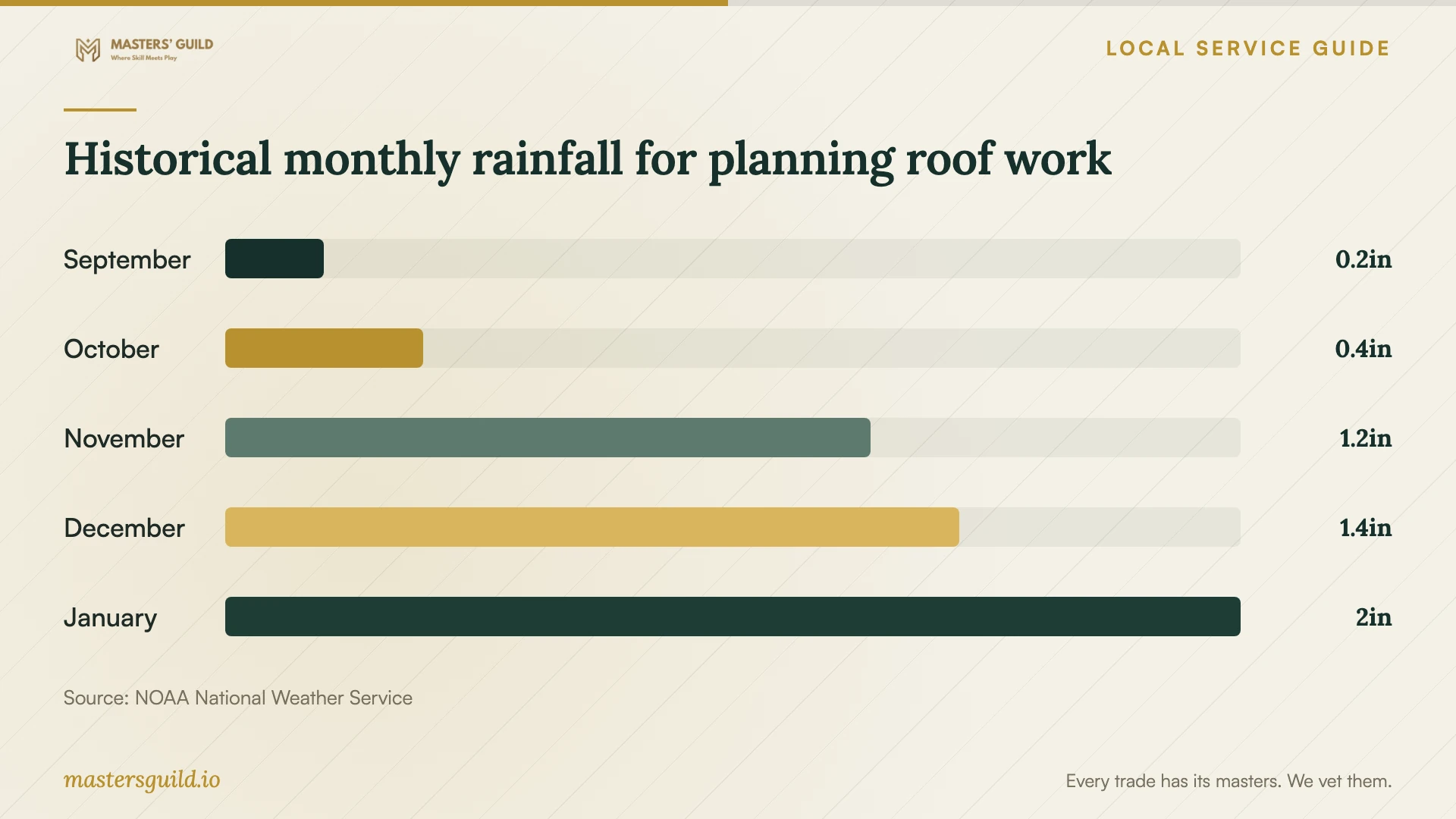
The National Weather Service’s historical San Diego climate page describes winter as the main rainfall season. Its Lindbergh Field precipitation table covers 1948 through 1990, not a Chula Vista station or a current forecast. Use that regional pattern to plan preventive inspections ahead of winter, then choose the workday using the forecast and the contractor’s product requirements. [4]
At completion, request photographs of the cleaned areas and repairs, a record of products used, and written follow-up instructions. Check the agreed cleanup areas from the ground. Keep the invoice and any warranty terms with the inspection photographs.
Historical monthly rainfall for planning roof work
Local details that affect your job
Municipal stormwater context changes the quote
Chula Vista’s June 2015 staff report describes pollution-control authority covering residential land uses and storm drainage systems. Ask bidders to include protection against pollutant discharge in their written scope, and ask them to confirm current city requirements for their proposed method. The historical report supports that planning question; it does not serve as a current disposal authorization. [1]
Locate drains before the crew washes
County of San Diego regional guidance tells operators to identify and protect storm drains near washing activities. Apply that advice here by showing bidders where your downspouts discharge and asking them to identify nearby street drains during the site visit. Require them to explain both containment and collection before agreeing to the job. [2]
Use regional rainfall for preventive scheduling
At San Diego Lindbergh Field, the historical monthly precipitation means were 0.19 inches in September and 1.24 inches in November for 1948 through 1990. For preventive work, ask about an inspection before the wetter winter period. These regional historical observations do not establish rainfall at your property or justify delaying an active leak inspection. [4]
Choose the next step for your roof
| Your situation | Next step | Ask the bidder |
|---|---|---|
| Staining or debris without a reported leak | Request a cleaning assessment | Which method and product instructions apply to my roof? |
| Water entering the home or visible damage | Request a roofing inspection before approving cleaning | Which areas will you inspect and document? |
| A bidder proposes waterproofing repairs | Check the classification against CSLB’s C-39 roofing definition | What license number and classification cover this scope? |
| Washing could reach downspouts or street drains | Request a containment and collection plan | Where will you intercept water and take the collected wastewater? |
| Preventive work before winter | Arrange an inspection and choose a suitable forecast window | What weather or product requirements would change the date? |
Your hiring checklist
- Describe the problem and send photographs taken from a safe position.
- Request separate cleaning, inspection, and repair line items.
- Ask repair bidders for their license number, classification, and insurance documentation.
- Request the cleaning product, application method, and roof-material instructions.
- Show the bidder downspout outlets and ask about nearby storm drains.
- Include wastewater containment, collection, and disposal in the written scope.
- Agree on weather rescheduling and approval of additional work.
- Request completion photographs and written follow-up terms.
Frequently Asked Questions
Should I arrange cleaning or repair first?
If you report a leak or see damage, request a roofing inspection first. Ask the contractor to explain the proposed repair and provide photographs before you approve a cleaning package. For appearance-focused work, request a cleaning assessment and a method suited to the roof material.
What roofing classification should I check?
CSLB’s C-39 definition covers installing and repairing surfaces that seal, waterproof, and weatherproof structures. Ask the bidder for a license number and classification, and verify that information with CSLB against the proposed repair scope. [3]
Does washing with water alone remove the runoff concern?
County of San Diego guidance says water-only power-washing runoff can still carry pollutants and should not enter storm drains. Use that regional guidance to request debris removal, water containment, and collection. Ask the cleaner to confirm the applicable Chula Vista requirements and an authorized disposal route. [2]
How should I budget for the job?
Request itemized quotes after the bidder reviews your roof and access. Separate cleaning, repairs, gutter work, wastewater handling, and cleanup. Ask how the contractor will price hidden damage and obtain approval. The evidence used here does not establish a local price range.
Sources and scope
This guide combines the sources below with practical planning guidance. Figures apply to the stated geography and period; request a written quote for your property.