
Local service guide
Flooring installation and repair in Chula Vista
Flooring installation and repair in Chula Vista starts with a written scope covering the existing floor, surface preparation, selected material, and removal plan. Ask contractors to separate repair and replacement options before you choose. California’s C-15 flooring classification includes surface preparation and wood-floor repair, but excludes ceramic tile. Before anyone disturbs suspected asbestos-containing flooring, arrange professional assessment and check the San Diego County Air Pollution Control District’s requirements for your property. [1] [2]
Choose a repair scope before buying replacement flooring
Show the contractor each damaged area and explain what happened: a spill, a leak, movement, or an unknown cause. Ask them to describe the work needed beneath the visible surface. Request separate proposals for a targeted repair and broader replacement, with an explanation of the appearance you should expect from each.
Have the contractor record the rooms, measured area, existing floor layers, and proposed installation method. Ask who will move furniture, remove the old floor, handle disposal, and reinstall trim. Include transitions at doorways and the treatment of stairs in the written scope. Keep sample approval separate from permission to begin removal.
Match the contractor to the work
The California Contractors State License Board defines C-15 work to include preparing surfaces and installing carpet, resilient sheet goods, resilient tile, and wood flooring. It also includes wood-floor finishing and repair. The classification excludes ceramic tile. For a ceramic-tile proposal, ask the contractor to identify the classification covering that work rather than relying on a C-15 credential alone. [2]
Ask for the contractor’s license number and the name that will appear on the agreement. Have them identify who will perform surface preparation and who will handle any work outside the flooring scope. Request insurance documentation and written workmanship terms. For an occupied home, agree on working hours, room access, and cleanup before signing.
Resolve suspect flooring before scheduling removal
The San Diego County Air Pollution Control District identifies flooring among materials that may contain asbestos. It says pre-1980 building materials contain asbestos more often, while materials in newer buildings can also contain it. Do not use the home’s age as clearance to scrape, sand, or remove a suspect floor. [1]
The district recommends that trained, accredited professionals take samples and advises homeowners against sampling themselves. Ask an inspector to identify which layers the proposed work will disturb and assess those materials. The district distinguishes inspectors, who assess and sample materials, from asbestos contractors, who repair or remove them. [1]
The district says asbestos-containing materials in good condition that remain undisturbed are unlikely to pose a health risk, and leaving them in place is generally best practice. Ask the inspector and flooring contractor whether your proposed installation can preserve those materials. Request a written plan before choosing removal or covering. [1]
Compare complete quotes and realistic schedules
Compare quotes using the same material and work scope. Ask each contractor to itemize flooring supply, removal, disposal, surface preparation, installation, trim, and transitions. Have them identify allowances and exclusions. For concealed damage, agree on how they will document the condition and obtain your approval for additional work.
Ask for a schedule that separates assessment, material delivery, preparation, installation, and room re-entry. Have the contractor use the selected manufacturer’s instructions to explain acclimation, substrate checks, and adhesive curing where applicable. Arrange furniture storage and a usable route through the home around that schedule. Avoid committing to a completion date before the removal scope is settled.
Check laminate labels and keep the product records
EPA recommends looking for TSCA Title VI compliant labels when buying composite wood products or finished goods containing regulated composite wood. Ask the supplier to identify the exact flooring product and provide its compliance label. Keep the label, receipt, and installation instructions with your agreement. [3]
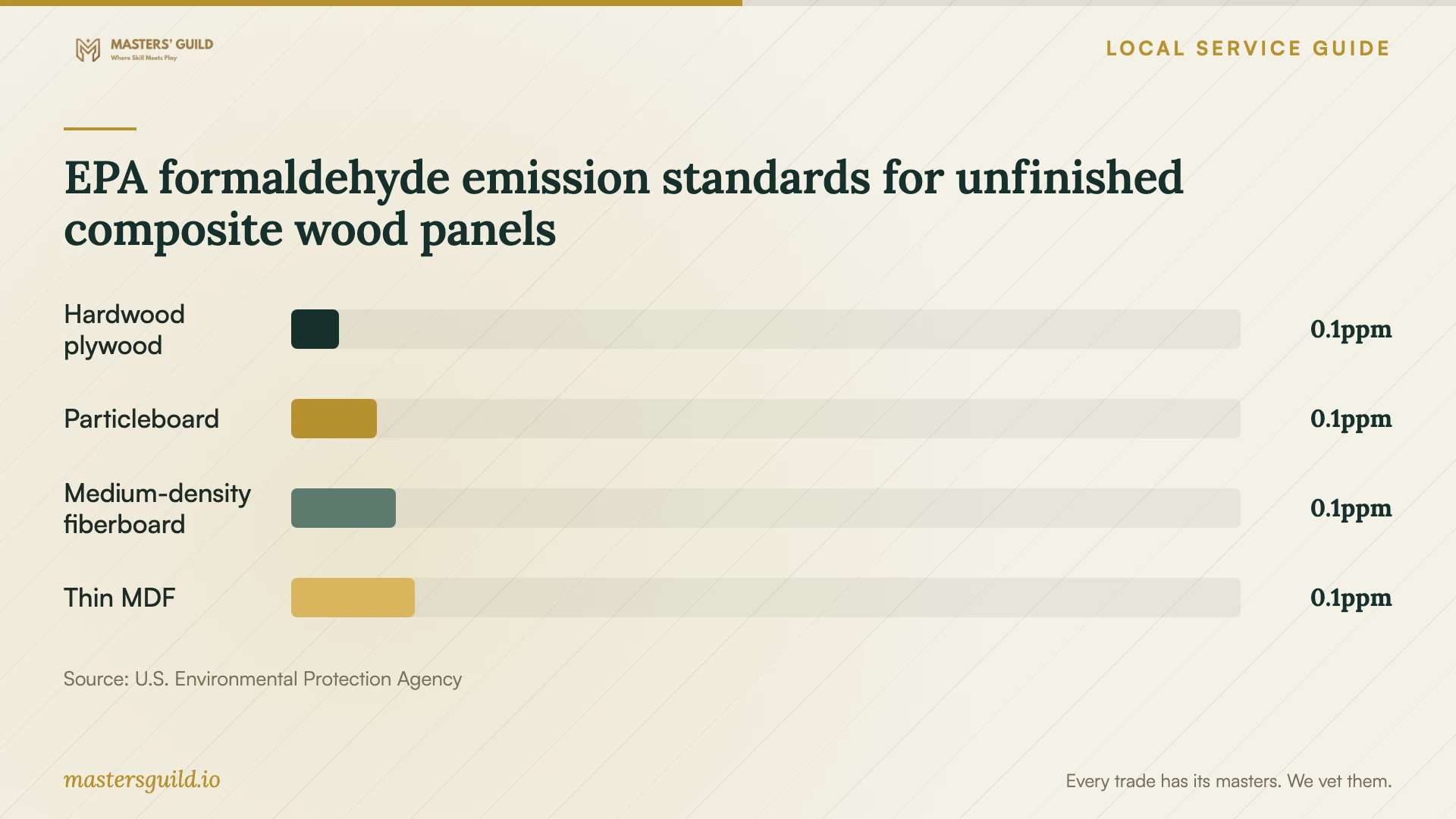
EPA publishes formaldehyde emission standards for unfinished composite wood panels. Those standards do not apply directly to a finished laminate floor, and product test results cannot predict indoor air concentrations without significant additional calculations. Use the chart as context for the compliance label, rather than as a home air-quality test or a ranking of finished flooring products. [3]
EPA formaldehyde emission standards for unfinished composite wood panels
Local details that affect your job
Confirm county facility status for condos and shared properties
For a Chula Vista project, ask the San Diego County Air Pollution Control District whether your property falls under Rule 1206 before scheduling removal. Its guidance identifies buildings with more than four dwelling units as regulated residential facilities. It also includes some groups of buildings under common management, even when each building has fewer than four units, and some coordinated projects across separate parcels. Tell the district about your HOA, detached residential structures, or coordinated renovation rather than assuming your individual unit determines the requirements. The district requires facility surveys before renovation or demolition regardless of building age. [1]
Build required asbestos notice time into the removal schedule
The county district requires a written notification ten working days before renovation removal involving at least 100 square feet or 20 cubic feet of regulated asbestos-containing material at a facility. Ask the asbestos professional to confirm applicability and who will submit the notice. The district defines the renovation start to include preparation that disturbs the regulated material, so do not schedule scraping or other disturbing preparation ahead of the notified start date. [1]
Choose the next step for your flooring project
| Situation | Next step | Reason |
|---|---|---|
| Localized damage | Request a repair assessment and replacement alternative. | C-15 includes wood-floor finishing and repair. |
| Ceramic tile proposal | Ask which classification covers the tile work. | C-15 excludes ceramic tile. |
| Suspected asbestos in existing flooring | Arrange accredited professional assessment before disturbing it. | The county district identifies flooring as a potential asbestos-containing material. |
| Condo or commonly managed property | Confirm facility status with the county district. | Some shared residential properties fall under Rule 1206. |
| New laminate with regulated composite wood | Request TSCA Title VI compliance labeling. | EPA recommends this label for covered composite wood products and finished goods. |
Your hiring checklist
- Photograph damage and describe any known leak or spill before the site visit.
- Request repair and replacement scopes before ordering material.
- Ask the contractor to identify the classification covering your selected floor.
- Resolve suspected asbestos and property-specific requirements before authorizing removal.
- Compare itemized quotes with matching materials, preparation, and disposal scope.
- Agree on written approval for concealed damage and added work.
- Confirm furniture handling, access, cleanup, and room re-entry.
- Keep product labels, installation instructions, receipts, and warranty terms.
Frequently Asked Questions
Does a C-15 flooring classification include ceramic tile?
No. CSLB excludes ceramic tile from C-15. Ask the contractor to identify the classification covering ceramic-tile work before accepting that part of the proposal. [2]
Must every homeowner test old flooring for asbestos?
The county district recommends professional sampling but lists Rule 1206 sampling exemptions for certain remodeling projects, including single-family homes without detached residential structures and condo units in structures with four or fewer units. Confirm your circumstances with the district because it also regulates some groups of residential buildings. An exemption does not establish that the flooring contains no asbestos. [1]
Can I take a flooring sample myself?
The county district advises against taking samples yourself. It says incorrect sampling can be more hazardous than leaving the material alone and recommends trained, accredited professionals. [1]
Do EPA’s panel emission limits establish a safe indoor air level?
No. EPA distinguishes unfinished-panel emission standards from finished-floor emissions and indoor air concentrations. EPA also says it has not established a safe level of formaldehyde for indoor air. [3]
Sources and scope
This guide combines the sources below with practical planning guidance. Figures apply to the stated geography and period; request a written quote for your property.