
Local service guide
Duct and Vent Cleaning in Chula Vista, CA
Consider Duct and Vent Cleaning in Chula Vista if inspection confirms substantial visible mold inside hard-surface ducts or on HVAC components, vermin infestation, or excessive duct dust and debris or particles coming from supply registers. Correct the underlying cause before cleaning. Compare written estimates for the affected system, and resolve suspect asbestos materials before anyone disturbs them. [1] [2]
Decide whether cleaning addresses the problem
Start with an inspection of the affected system. EPA identifies specific reasons to consider cleaning: substantial visible mold on hard duct surfaces or HVAC components, vermin infestation, and excessive dust or debris or particles released through supply registers. Request photographs or a view of the affected area before accepting a proposed cleaning package. [2]
You can vacuum or remove and clean dusty return registers. EPA explains that these grilles collect dust as air passes through them; that alone does not establish heavy deposits farther inside the ducts. Have the inspector trace particles coming from supply registers and identify the components involved. [2]
Resolve moisture problems or the cause of pest contamination before cleaning. EPA warns that contamination can recur unless you correct its underlying cause. A substance that resembles mold may require expert identification and laboratory analysis. Wet or moldy duct insulation needs replacement rather than cleaning. [2]
Compare inspected quotes and complete scopes
Get written estimates from at least three providers, as EPA recommends. Give each the same description of your concern. Request an inspected, written quote for your Chula Vista home, with cleaning, repairs and optional treatments priced separately. [2]
Compare coverage for supply and return ducts, registers, grilles, air-handler housing, blower, coils and condensate drain pans. EPA includes these components in its description of system cleaning and warns that leaving a contaminated component uncleaned can undermine the work. Require the provider to identify exclusions and inaccessible areas. [2]
Name any dryer exhaust or bathroom exhaust you want cleaned and request a separate scope for each. Agree on how you will approve extra charges. Before choosing a date, confirm crew access needs, expected duration and the time you will spend without heating or cooling.
Check cleaning methods and chemical proposals
Have the provider explain how the crew will collect debris and protect furnishings. EPA recommends vacuum equipment that exhausts outside the home, or HEPA vacuum equipment when the exhaust remains indoors. The crew should seal and re-insulate access holes after cleaning. [2]
Confirm whether your system contains sheet metal, flexible duct or fiberglass-lined sections. EPA recommends soft-bristled brushes for fiberglass duct board and fiberglass-lined metal ducts. Discuss replacement of damaged or wet insulation before agreeing to brushing or chemical treatment. [2]
Review sanitizing sprays and interior coatings as separate decisions. Request the product label, approved use and an explanation of why physical cleaning and moisture control would be insufficient. EPA's duct-cleaning guidance reports no registered biocides for fiberglass duct board or fiberglass-lined ducts and cautions against routine interior sealant use. [2]
Prepare access and inspect the finished work
Clear a route to registers, the air handler and agreed access hatches. Tell the provider about pets, restricted rooms and fragile furnishings. Settle who will move furniture and protect floors before the visit. Keep repair and treatment approvals separate from the cleaning agreement.
Agree on before-and-after photographs and a final walkthrough. EPA recommends visual inspection to verify cleanliness. Review the cleaned components, reattached registers and sealed access openings with the provider, then have the crew demonstrate heating and cooling operation. [2]
Maintain filtration without assuming cleaning benefits
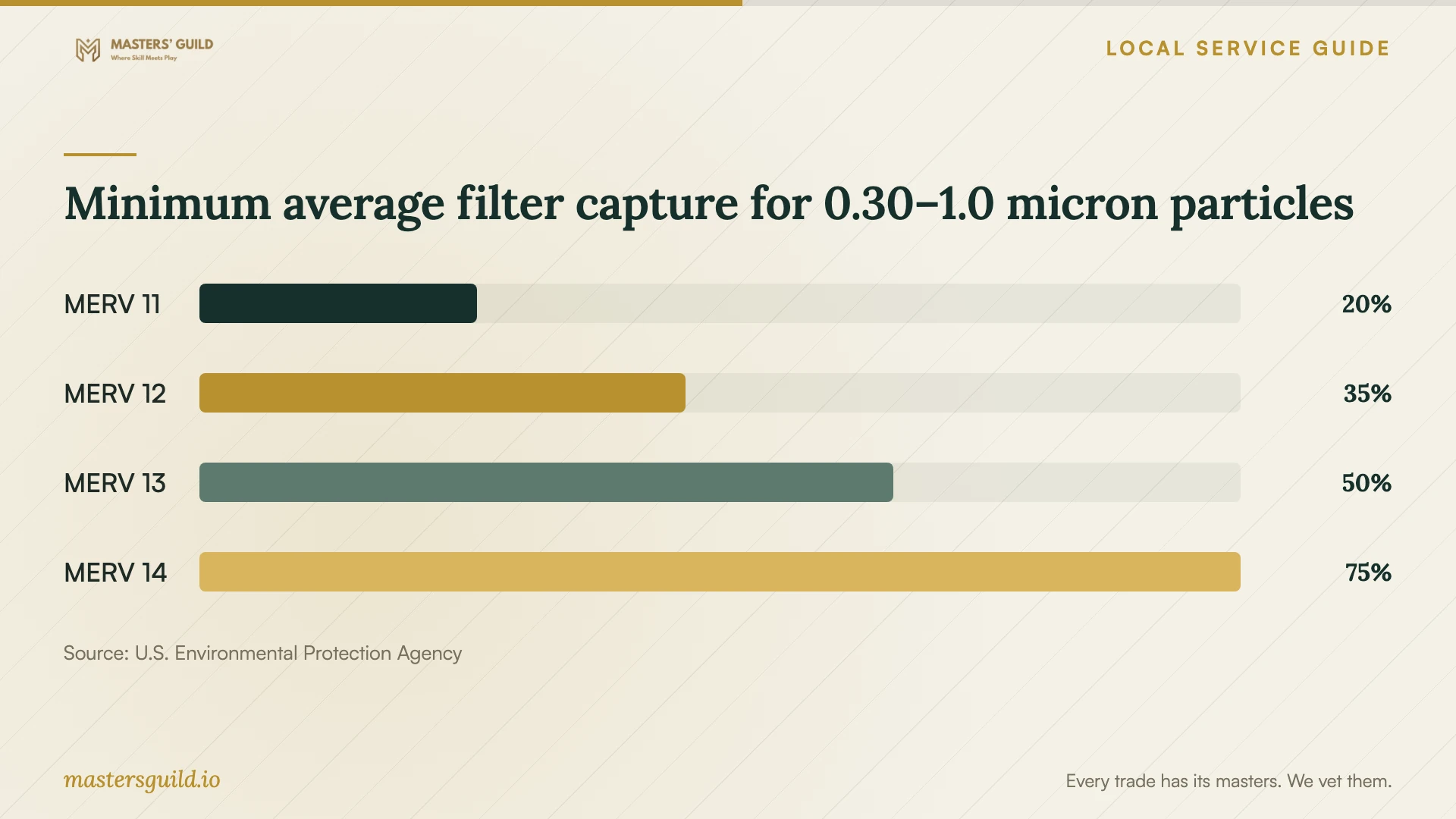
Have an HVAC technician check filter fit and the highest compatible efficiency. EPA recommends MERV 13 or the highest rating your fan and filter slot can accommodate when upgrading. Follow the manufacturer's replacement instructions and correct gaps that allow air to bypass the filter. [2] [3]
The filter chart compares particle capture under a reference test method. It does not measure duct-cleaning results. EPA's duct-cleaning guidance says cleaning has not been shown to prevent health problems and reports little evidence that cleaning ducts alone improves system efficiency. [2] [3]
Minimum average filter capture for 0.30–1.0 micron particles
Local details that affect your job
Assess suspect materials before intrusive cleaning
San Diego County Air Pollution Control District guidance identifies insulation, furnaces and air ducts as possible asbestos-containing materials. Materials used before 1980 have a higher likelihood of containing asbestos, but later construction can also contain it. For suspect wrapping or insulation in your home, pause proposed cutting, drilling or removal and arrange assessment by a trained, accredited asbestos professional. The District discourages homeowners from taking their own samples. [1]
Confirm property status and survey requirements before alteration
If the scope expands into duct replacement or renovation, establish the property's status under District Rule 1206 before approving alteration. The District includes residential buildings with more than four dwelling units and certain groups of commonly managed buildings among regulated facilities. Its facility guidance calls for surveys before renovation regardless of age, while its homeowner guidance lists sampling and testing exceptions for certain single-family homes, small condo structures and projects disturbing less than 100 square feet. These summaries require a project-specific reading. Give the District your property type, management arrangement and proposed disturbance, and confirm the applicable survey requirement with it before work begins. [1]
Choose the next step from the inspection
| Finding | Next step | Question for the provider |
|---|---|---|
| Dust on return grilles alone | Clean accessible grilles; this alone does not establish heavy duct contamination. | Can you show contamination beyond the grille? |
| Excessive duct debris or particles from supply registers | Consider cleaning after confirming the condition and correcting its cause. | Which components need cleaning, and how will you reach them? |
| Suspected mold or wet insulation | Confirm the condition, correct moisture and arrange replacement of wet or moldy insulation. | What caused the moisture, and which materials need replacement? |
| Vermin infestation | Correct the underlying cause before cleaning. | How will you address the cause of the infestation? |
| Suspect asbestos near proposed access work | Arrange professional assessment before disturbance. | Will your method cut, drill or disturb this material? |
Your hiring checklist
- Describe the concern and request inspection before choosing a cleaning package.
- Obtain photographs or a view of the condition the provider proposes to address.
- Agree on how to correct the underlying cause before cleaning.
- Compare written inclusions, exclusions, total prices and extra-charge approvals.
- Identify duct materials and arrange assessment of suspect insulation before disturbance.
- Confirm property status and applicable survey requirements with the District if work includes alteration.
- Settle access, furniture protection, expected duration and HVAC downtime.
- Review photographs and inspect completed work with the provider.
Frequently Asked Questions
How often should I arrange duct cleaning?
EPA recommends cleaning as needed rather than on a routine schedule. Consider it for the specific mold, vermin or excessive-debris conditions identified in its guidance, after confirming the condition and correcting its cause. Continue filter replacement according to manufacturer instructions. [2] [3]
Does EPA certify duct-cleaning companies?
EPA does not certify, endorse or approve duct-cleaning companies. Have the provider explain any claimed credential, supply references and describe experience with your duct materials. [2]
Does a newer condo avoid asbestos survey requirements?
Do not decide from building age alone. The District's regulated-facility guidance calls for surveys before renovation regardless of age, but its homeowner section also lists small-project and property-type exceptions. Establish the property's regulated status with your manager and confirm the applicable survey requirement with the District before duct alteration. [1]
Should I install MERV 13 after cleaning?
EPA recommends MERV 13 or the highest rating your system can accommodate when upgrading. Have an HVAC technician check your fan and filter slot before choosing a replacement. The recommendation concerns filtration, not a required step after duct cleaning. [3]
Sources and scope
This guide combines the sources below with practical planning guidance. Figures apply to the stated geography and period; request a written quote for your property.