
Local service guide
Chicago tile setting: Hiring and Project Planning
Arrange tile setting in Chicago by having bidders inspect the surface, agree on the layout, and price preparation before you choose an installer. Request a written scope covering removal, installation, finishing, and cleanup. If you plan to disturb older flooring or adhesive, follow Illinois EPA's recommendation for qualified asbestos inspection before renovation. [2]
Choose an installer for the work you need
Give bidders room dimensions, photographs, your selected tile size, and the proposed pattern. Identify exposed edges, thresholds, niches, steps, and fixtures. Ask each installer to visit the space and explain the preparation they propose before you accept a final price.
For a floor, ask how the installer will assess the supporting surface, address uneven areas, and manage the finished height at doors and adjoining rooms. For a shower, request the waterproofing approach and responsibility for drain connections or plumbing changes. For a backsplash, settle the stopping points and cuts around outlets.
Review photographs of comparable work with the person who will oversee your installation. Ask about corner alignment, fixture cuts, and transitions. Confirm who will work in your home, who will answer questions, and how you will report a defect after completion. Ask for a written description of any workmanship warranty.
Resolve older flooring before demolition
Illinois EPA identifies floor tiles and adhesives among materials that may contain asbestos. The agency says manufacturers commonly used asbestos in home building materials before the mid-1970s and occasionally until the late 1980s. Arrange a qualified inspection before renovation or demolition rather than removing suspect flooring to help a bidder measure. [2]
Illinois EPA says a licensed inspector may collect samples for laboratory analysis. The agency also advises that leaving asbestos-containing material in good condition in place can be the best option because disturbance may release fibers. Discuss the findings with the inspector before choosing removal or an installation plan that leaves the material undisturbed. [2]
Ask the tile installer which preparation tasks depend on the inspection findings. Put those tasks and their pricing assumptions in the proposal. If you choose a plan requiring asbestos removal, Illinois EPA recommends a licensed contractor for that work. Coordinate that specialist's work before committing to tile installation dates. [2]
Compare the full quote and room downtime
Set your budget from comparable written quotes after inspection. Request amounts for tile and delivery, removal and disposal, surface preparation, installation, trim, finishing materials, and cleanup. Specify whether you or the installer will purchase the tile, and agree on quantities before placing the order.
Ask bidders to identify allowances, exclusions, and preparation they cannot price until demolition. Agree on how the installer will document an unexpected condition and obtain your approval for added cost. Compare those assumptions alongside the total, especially when one bidder includes work that another leaves out.
Request crew dates and separate return-to-use dates for walking on the floor or using the shower. Ask the installer to base curing periods on the selected materials' instructions. If you have one bathroom, plan how you will manage the interruption before accepting the schedule.
In a condo or apartment, ask the owner or association about approvals, work hours, delivery access, and common-area protection. Identify who will confirm permit requirements with the Department of Buildings if the renovation includes changes beyond the tile finish. Record responsibility for applications, inspections, and related costs in the agreement.
Plan exposed tile around actual conditions
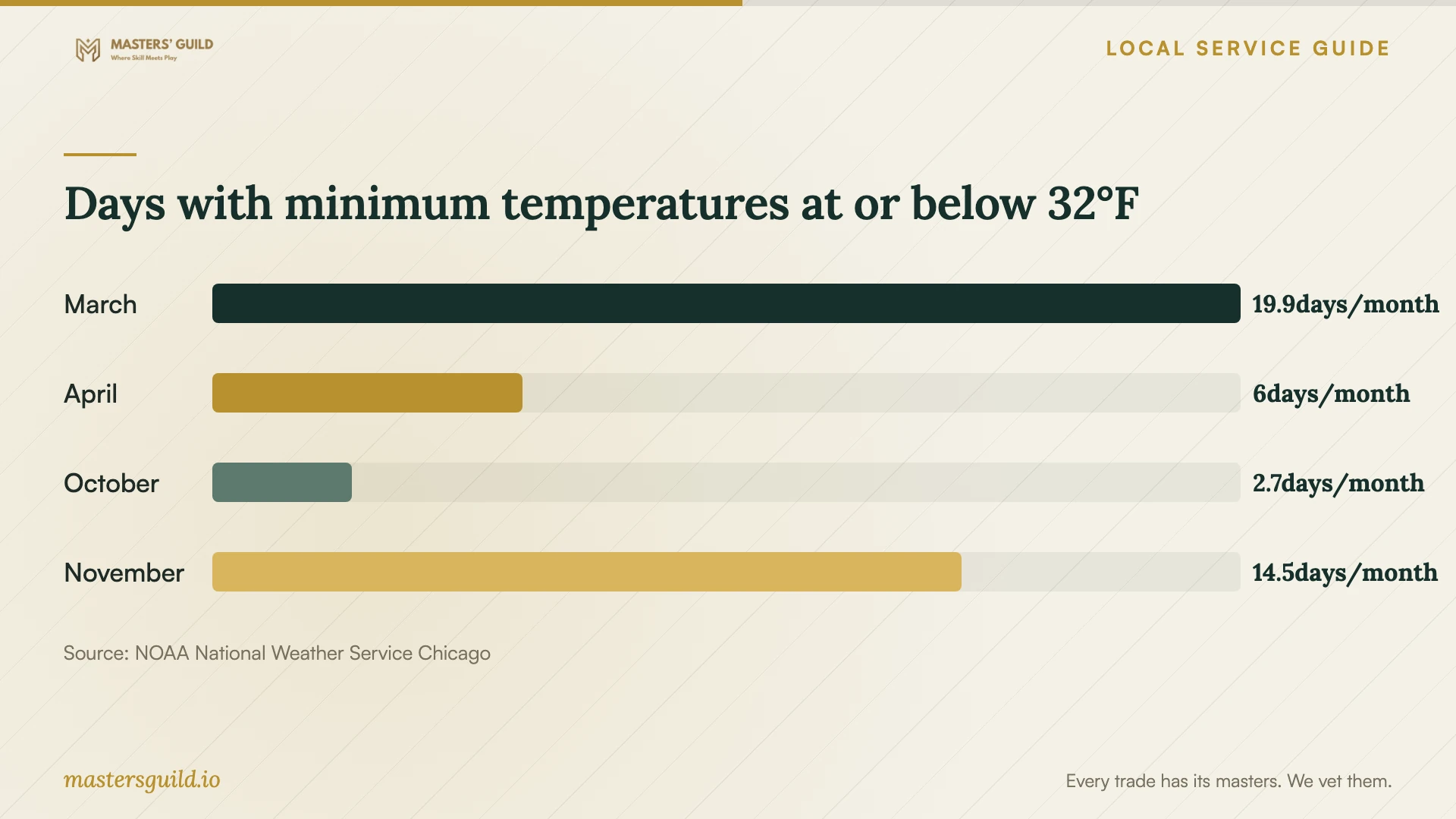
For a porch, balcony, or exposed step, request a proposal addressing drainage, freezing exposure, and installation conditions. NOAA's 1991–2020 normals for Chicago O'Hare report an average of 6.0 days in April and 14.5 days in November with minimum temperatures at or below 32°F. Use that history to discuss weather delays. [3]
Ask the contractor to identify tile and installation materials suitable for the proposed exposure, provide their temperature limits, and explain protection during curing. Have the installer assess the actual surface and forecast before starting. Discuss who will decide to postpone work and how a delay affects your access to the space.
Days with minimum temperatures at or below 32°F
Local details that affect your job
Match the renovation contractor to the city listing
Chicago's general contractor directory includes active and inactive contractors and fields for license number, license expiration, insurance expiration, and inactive status. If a general contractor oversees your renovation, match the proposal's business name and license number to a current listing. Ask about inactive status or an expiration before the planned completion date, and request current insurance documentation. A directory heading alone does not verify a particular business or policy. [1]
Tell the asbestos inspector the building's unit count and history
Illinois EPA's house-and-apartment fact sheet applies to privately owned homes and apartments with four or fewer units. The agency directs owners of buildings with former public or commercial uses to separate building guidance. Before planning flooring removal here, tell the inspector the unit count and former uses. Ask which requirements apply to your building rather than extending this residential fact sheet's exemptions to a larger apartment building. [2]
Match the proposal to your project
| Project | Detail to settle | Ask the bidder |
|---|---|---|
| Dry-area backsplash | Layout, exposed edges, and outlet cuts | Can we approve the stopping points before ordering trim? |
| Interior floor | Supporting surface and finished height | How will you assess preparation and the transition at each doorway? |
| Shower renovation | Waterproofing and related trade responsibilities | Who handles each stage, including the drain connection? |
| Porch or balcony | Exposure, installation conditions, and delay arrangements | Which product limits will you use to decide whether to proceed? |
Your hiring checklist
- Approve a layout showing visible cuts, edge finishes, and transitions before installation.
- Confirm the tile order, delivery date, storage location, and responsibility for damaged or missing pieces.
- Agree on a cutting area, dust control, and protection for the route through your home.
- Record how you will approve concealed-condition repairs and added costs.
- Arrange bathroom access and keep pets away from the work area.
- At handover, collect care instructions, leftover tile, warranty terms, and contact details for corrections.
Frequently Asked Questions
How should I compare tile installation prices?
Ask each bidder to inspect the same space and quote the same tile, pattern, and preparation scope. Compare included work, allowances, and exclusions alongside the total. Request clarification when a bidder leaves removal, trim, waterproofing, or disposal outside the price.
Can I buy the tile before choosing an installer?
Discuss the tile choice with the installer before placing the order. Ask them to confirm its suitability for your proposed use, the quantity, edge pieces, and delivery timing. Agree on who handles returns and what happens if you need additional matching tile.
Do I need a permit for my tile project?
Ask the contractor responsible for the renovation to confirm the requirements for your exact scope with the Department of Buildings before starting. Describe any plumbing, electrical, or structural changes when asking. Put permit responsibility and related costs in the written agreement.
How can I reduce disruption during installation?
Agree on delivery access, cutting space, work hours, and daily cleanup before the crew arrives. Ask for the dates you can resume using the room, including any curing period. Plan an alternative bathroom arrangement if the project interrupts your only shower or toilet.
Sources and scope
This guide combines the sources below with practical planning guidance. Figures apply to the stated geography and period; request a written quote for your property.