
Local service guide
Chicago office relocation and setup planning
For office relocation in Chicago, choose a commercial mover using a shared inventory, written setup requirements, and confirmed building access. Ask the transporting company to document the authority covering your shipment, including its route and any connection to a wider shipment. Assign a business contact to approve furniture placement and an IT lead to approve system restart before staff return.
Specify transport and setup as separate deliverables
Give bidders the same inventory and destination floor plan. List desks, chairs, storage, files, printers, monitors, and equipment needing special handling. Include dimensions for bulky furniture and photographs of the route from the loading area to the office. Mark items for reuse, storage, or disposal, and ask bidders to inspect anything you cannot describe with confidence.
Define what setup includes. Name the person responsible for disassembly, labeling parts, packing equipment, reassembly, placement, and packing removal. Ask whether the mover's equipment setup includes network configuration or only physical placement. Keep passwords and system administration with your designated IT contact. Record who accepts each deliverable and how you will handle unfinished work.
Check the company transporting your equipment
Illinois generally requires a Public Carrier Certificate for for-hire intrastate property transportation, subject to exemptions. Transportation between Illinois locations is generally intrastate, but a route through another state or a connection to transportation originating or terminating outside Illinois can change that classification. Ask the carrier to document the route, shipment context, and applicable authority or exemption. If classification remains uncertain, follow the ICC's advice to consult an Illinois attorney. [2]
Ask for the transporting entity's legal name and authority details, including any subcontracted carrier. Use the Motor Carrier Information System linked from ICC Transportation Services to inspect the record. That page distinguishes Public Carrier Certificates for property other than household goods from household-goods authority. These ICC pages explain one regulator's rules and lookup process; they do not independently corroborate a particular mover's suitability. [3]
Request insurance documentation and a written explanation of responsibility for damaged equipment, furniture, and building surfaces. Compare coverage limits, exclusions, claims procedures, and optional protection. Ask both property managers to review the documents they require before you confirm the crew's arrival.
Resolve access before fixing the schedule
Get moving instructions from both property managers. Ask about loading access, freight-elevator reservations, work hours, security check-in, floor protection, and the contact who can resolve an access problem. Give bidders those instructions with the inventory. Specify who reserves access and who pays for waiting time if the crew cannot enter.
Ask your destination contact to confirm readiness for the proposed business use and planned equipment. Review the local approval steps below before making a reopening commitment. Give the electrician and IT lead the floor plan, then coordinate their work with furniture delivery. Avoid placing desks where they obstruct work the contractor still needs to complete.
Compare quotes and approve the restart
Request an itemized quote for transport, packing, assembly, storage, equipment handling, and any after-hours work you request. Ask whether the price is fixed or time-based, what minimum charges apply, and how you approve extra work. Have bidders explain charges for access delays, additional trips, and inventory changes. Compare the same scope before comparing totals.
Choose a single move or a phased move by identifying which business functions must stay available. For each phase, list the equipment and files staff need, the person authorizing shutdown, and the restart conditions. Ask your IT lead to test internet access, logins, printing, phones, and business-critical systems before staff resume work.
Walk the destination with the crew lead and your floor plan. Check furniture placement, missing parts, damage, and packing removal. Record unfinished items with a responsible supplier and agreed completion date. Keep this acceptance check separate from your IT lead's approval of business systems.
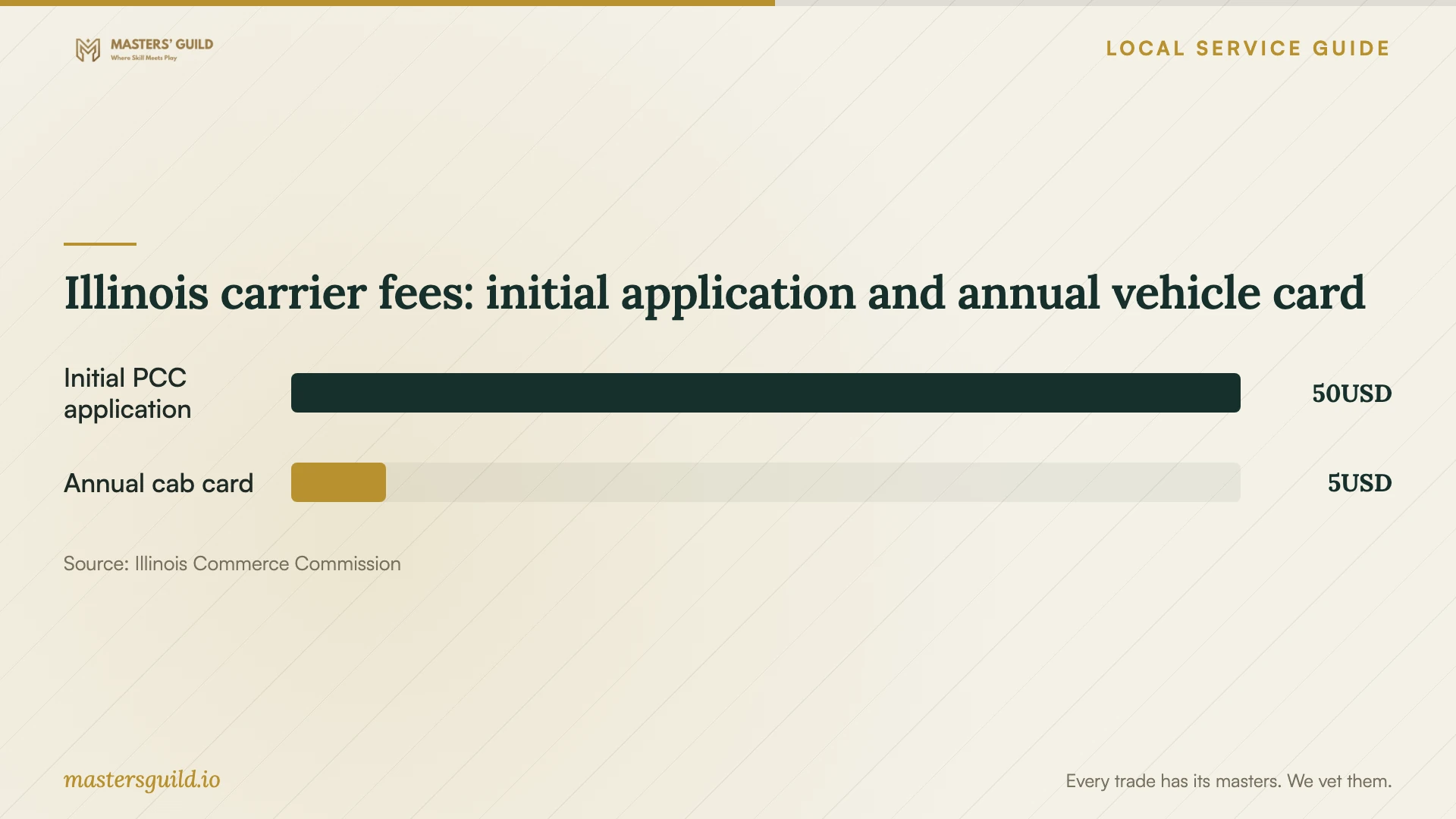
Illinois carrier fees: initial application and annual vehicle card
Local details that affect your job
Chicago electrical-only permit route
Chicago requires a permit before electrical equipment installation or alteration starts. For standalone electrical work, an authorized applicant uses the Dynamic Portal, selects Electric Wiring, and enters the job location and electrical details. The account must link to a valid electrical-contractor or expediter license. Work associated with construction under a separate building permit does not qualify for this standalone route. Ask your electrical contractor to identify the correct route before agreeing on an installation date. [1]
Destination checks before signing a lease
Chicago advises business owners to check zoning and current Municipal Code compliance before signing a lease or applying for a business license. The city cautions against assuming a previous owner's designation applies. Ask the destination representative to confirm your proposed use against current requirements before you commit to the premises or book transport. [4]
Match the move scope to your next step
| Situation | Next step | Written confirmation |
|---|---|---|
| Furniture and packed files | Request transport, placement, and required assembly | Inventory, access instructions, and assembly list |
| Business-critical equipment | Assign an IT lead to approve shutdown and restart | Packing responsibility, equipment custody, and restart tests |
| Electrical installation or alteration | Have the contractor obtain the Chicago permit before work starts | Permit route and installation schedule |
| Business functions must stay available | Plan phases around the functions you need to retain | Equipment and staff access needed during each phase |
Your hiring checklist
- Prepare one inventory, access description, and destination floor plan for bidders.
- Ask the transporting entity to document shipment classification and applicable authority.
- Resolve destination suitability and planned electrical work before committing to the schedule.
- Confirm access reservations and moving instructions with both property managers.
- Assign packing, assembly, equipment custody, and IT restart responsibilities.
- Record pricing terms, delay charges, insurance coverage, and claims procedures.
- Agree on acceptance checks and a process for unfinished work.
Frequently Asked Questions
Can federal carrier authority cover an Illinois intrastate move?
The ICC says federal motor-carrier authority does not replace a Public Carrier Certificate for Illinois intrastate for-hire property transportation. Ask the carrier to document classification and applicable authority or exemption. A route through another state or connection to a wider interstate shipment can change classification; consult an Illinois attorney if that question remains uncertain. [2]
How should I budget for the move?
Request quotes against the same inventory, access conditions, and setup deliverables. Compare the total alongside minimum charges, waiting time, extra trips, storage, and change approvals. The regulator fees shown below are carrier administration costs and do not establish a customer moving budget. [2]
Can I use one supplier for moving and setup?
Ask the supplier to name who handles furniture, equipment placement, electrical work, and IT configuration. Record each responsibility and acceptance test in the scope. If the supplier coordinates subcontractors, identify them before booking and keep one business contact responsible for approving the completed office.
Sources and scope
This guide combines the sources below with practical planning guidance. Figures apply to the stated geography and period; request a written quote for your property.