
Local service guide
Mold Removal in Chicago: Hiring and Cleanup Planning
For Mold Removal in Chicago, hire a professional for growth larger than 10 square feet and arrange repair of the moisture source alongside cleanup. Ask for a written scope covering affected materials, dust control, debris removal and drying. Illinois health officials advise that visible or smelled mold usually does not require testing before you address the moisture and damage. [2]
Decide whether you need cleanup, assessment or both
Measure the visible affected area without disturbing it. IDPH provides homeowner cleanup guidance for areas smaller than 10 square feet and recommends a professional remediator for areas larger than 10 square feet. Its small-area guidance includes protective clothing, gloves, eye protection and a fitted N95 or HEPA respirator. Treat the area threshold as a starting point for discussion, not permission to undertake demolition you cannot manage. [2]
You do not need to identify the mold species before arranging work on visible growth. IDPH does not recommend routine mold testing and says no standards or guidelines establish acceptable mold amounts. Testing also cannot determine whether health effects will occur. If a contractor proposes sampling, ask what question it will answer and how the result would change the work. [2]
For an unexplained odor or recurring damage, ask the person assessing the property to explain how they will investigate moisture and define the affected area. Request a separate assessment scope and fee if the cleanup scope remains uncertain. Avoid approving open-ended removal without a process for documenting additional damage and authorizing changes.
Check credentials without confusing certification and registration
Illinois enacted the Mold Remediation Registration Act, but IDPH's registration page retrieved October 13, 2026 says professionals do not yet need to register while rulemaking remains pending. The department says registration materials will follow adoption and gives no adoption timetable. Check the current implementation status when arranging work rather than assuming a contractor must already hold an IDPH registration. [1]
IDPH identifies third-party credentials you can check: ACAC Certified Microbial Remediators and Microbial Remediation Supervisors, IICRC Mold Remediation Specialists, and NORMI Certified Mold Remediators. Ask who will supervise your job and request that person's credential details. IDPH also states that it does not license mold assessors or recommend contractors. [2]
Request proof of current liability insurance, the business name that will appear on the contract and the names of any subcontractors. Ask who will repair the leak and who will replace removed finishes. Keep those responsibilities in writing so you can compare proposals and identify gaps before work starts.
Specify what the cleanup quote includes
Ask the contractor to identify materials they intend to clean and materials they intend to remove. IDPH advises discarding heavily damaged porous materials, such as carpet or drywall, that cannot be dried and cleaned. It recommends cleaning suitable surfaces with soap or detergent and drying them. A proposal that names only a chemical treatment leaves you without a clear account of material removal and cleaning. [2]
Request a plan for controlling dust and moving debris through your home. IDPH advises against dry scraping or sanding mold-contaminated surfaces, recommends sealing water-damaged debris in double bags, and describes HEPA vacuuming followed by wet cleaning. Its guidance also calls for temporary heating and cooling shutdown and sealed vents during cleanup. Ask how the contractor will manage these steps for your property. [2]
Agree on access, occupied rooms, equipment placement and the route workers will use to carry debris outside. Request separate prices for cleanup, drying, source repairs and reconstruction, along with exclusions and change-order terms. Ask what drying records and completion documentation you will receive before replacement drywall or flooring covers the work area.
Arrange water-source repairs before rebuilding
Describe where water first appeared when you request an inspection. MWRD distinguishes seepage through basement wall or floor cracks, sewer backups through floor drains or plumbing fixtures, and overland flooding through windows or doors. It also identifies plumbing leaks, roof leaks and malfunctioning sump pumps as possible sources. Tell the contractor what you observed rather than labeling all basement water a sewer problem. [3]
Document the damage and the timing of water entry before cleanup. IDPH advises drying wet areas within 24 to 48 hours to minimize potential mold growth. Ask the cleanup contractor and repair contractor to coordinate their work, and request a revised schedule if water continues to enter. Do not choose a start date based on an assumed seasonal discount. [2] [3]
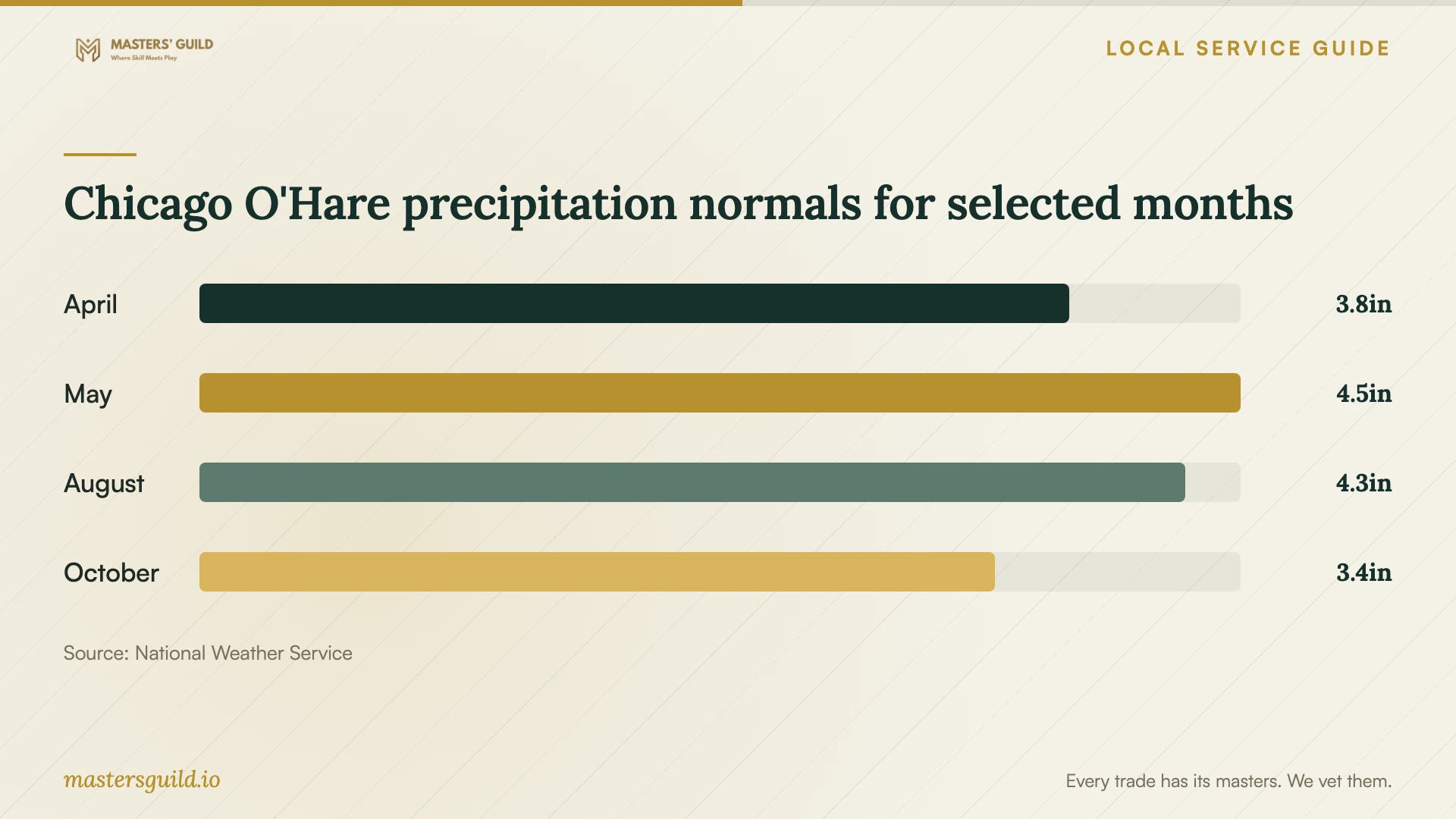
Chicago O'Hare precipitation normals for selected months
Local details that affect your job
Chicago flood reporting belongs with 311
For seepage, basement backups or overland flooding, MWRD directs Chicago residents to call 311 or use CHI311. The city operates the neighborhood sewers that connect to larger MWRD sewers. Report the location and type of flooding while arranging private-property cleanup; retain the report reference with your damage photographs. Suburban Cook County residents should contact their local public works department instead. [3]
Regional combined sewers affect repeat-backup planning
MWRD says most of the Chicago area carries rainwater and household wastewater through the same pipes. Excess inflow can cause street and basement backups. If your basement flooded during heavy rain, ask the repair professional to investigate the backup pathway alongside the cleanup. MWRD advises conserving water before, during and after storms, including delaying laundry and dishwasher use, and offers Overflow Action Alerts. [4]
Illinois registration is still pending in the fetched guidance
Do not reject a proposal solely because the contractor lacks an IDPH mold-remediation registration under the status published in the October 13, 2026 fetched page. IDPH says registration requirements take effect after rule adoption. Ask for verifiable third-party credentials and insurance now, and check the department's implementation status before signing. [1] [2]
Choose the next step from what you observe
| Situation | Next step | Question to resolve |
|---|---|---|
| Visible growth smaller than 10 square feet | Review IDPH's small-area cleanup precautions before deciding on DIY. | Can you address the moisture and follow the protective measures? |
| Growth larger than 10 square feet | Arrange professional remediation. | Which materials need cleaning or removal? |
| Visible or smelled mold with a testing proposal | Ask how testing would change cleanup; IDPH says testing is usually unnecessary. | What decision will the result support? |
| Water entering through a basement drain | Investigate a possible sewer backup and report flooding to Chicago 311. | Who will address the source alongside cleanup? |
| Water through wall cracks, windows or doors | Arrange an inspection for seepage or overland flooding and report it to 311. | Which water-entry pathway needs repair? |
Your hiring checklist
- Photograph visible damage and note when and where water entered.
- Describe the affected rooms, approximate area, odors and previous repairs.
- Request the supervisor's remediation credentials and proof of insurance.
- Identify who will fix the water source and who will handle rebuilding.
- Get a written plan for dust control, vents, debris handling and final cleaning.
- Compare itemized scopes, exclusions and written change-order terms.
- Agree on access, room use, equipment placement and completion documentation.
Frequently Asked Questions
How much should I budget for remediation?
Use property-specific written quotes. The supplied official sources do not establish Chicago remediation prices. Ask contractors to price the same affected area and separate cleanup, drying, water-source repairs and replacement finishes. Require written approval for additional removal.
Do I need a mold test before hiring?
IDPH generally advises against testing when you can see or smell mold. It says testing does not establish acceptable mold levels or predict health effects. Ask for a reason tied to a specific decision before paying for sampling. [2]
Can a contractor disinfect the area without removing visible growth?
IDPH says to clean visible mold with soap or detergent before applying a disinfectant. It advises replacing heavily damaged porous materials that cannot be dried and cleaned. Ask the contractor to explain the cleaning and removal steps in the proposal. [2]
Will IDPH inspect my home?
IDPH does not inspect residential environments for mold or test for mold. It provides health information and cleanup recommendations. For unresolved rental-property conditions, its guidance directs residents to local building or code enforcement officials. [2]
Sources and scope
This guide combines the sources below with practical planning guidance. Figures apply to the stated geography and period; request a written quote for your property.