
Local service guide
Lighting Installation in Chicago: Plan and Hire
For Lighting Installation in Chicago, check your proposed contractor in the city’s electrical contractor directory, have them confirm the permit route for your scope, and agree on fixtures, controls and finish repairs before booking. The city lists active and inactive electrical contractors and includes Electrical Work in its Express Permit Program. Describe whether you want to replace a fixture at its current location or add lighting at a new location so the contractor can assess the work. [1] [2]
Describe the work before requesting a quote
Make a room-by-room list of the lights you want to change. For each location, say whether you want to keep the existing position, move it or add a new light. Include photos of the room, ceiling and switch, plus the fixture model if you have chosen one. Have the contractor identify what they need to inspect before offering a firm price.
For pendants and chandeliers, share the fixture’s dimensions, weight and proposed hanging height. For recessed lights, mark your preferred positions on a room photo and have the contractor review them before you order. Establish who will assess the existing electrical box, support and wiring, and who will repair any openings after installation.
Separate your must-haves from optional changes. You might want to replace a dining-room fixture now and request a separate price for a dimmer or added lighting. Give each contractor the same list. That lets you compare the proposed work without guessing which quote includes your extras.
Check the Chicago contractor and permit route
Use the City of Chicago’s Electrical Contractors directory to check the business you plan to hire. The directory includes active and inactive contractors and fields for license type, license number, expiration date and inactive status. Match the proposed contractor’s business name and license number to the city record; do not treat a name appearing in the directory as confirmation of active status. [1]
The Department of Buildings says a building permit is required before most construction, demolition and repair work begins. Its permit overview includes Electrical Work under the Express Permit Program, but does not specify whether an individual fixture replacement requires a permit. Have the contractor confirm the requirement for your exact scope with the department before work starts. [2]
Have the contractor put permit responsibility in the quote: who applies, who pays the fee and who handles any required inspection. Chicago’s Express Permit interface allows customers to check application status, pay fees and view inspection results online. If your project uses that route, request the application or permit reference so you can follow its progress. [2]
Choose the light and controls together
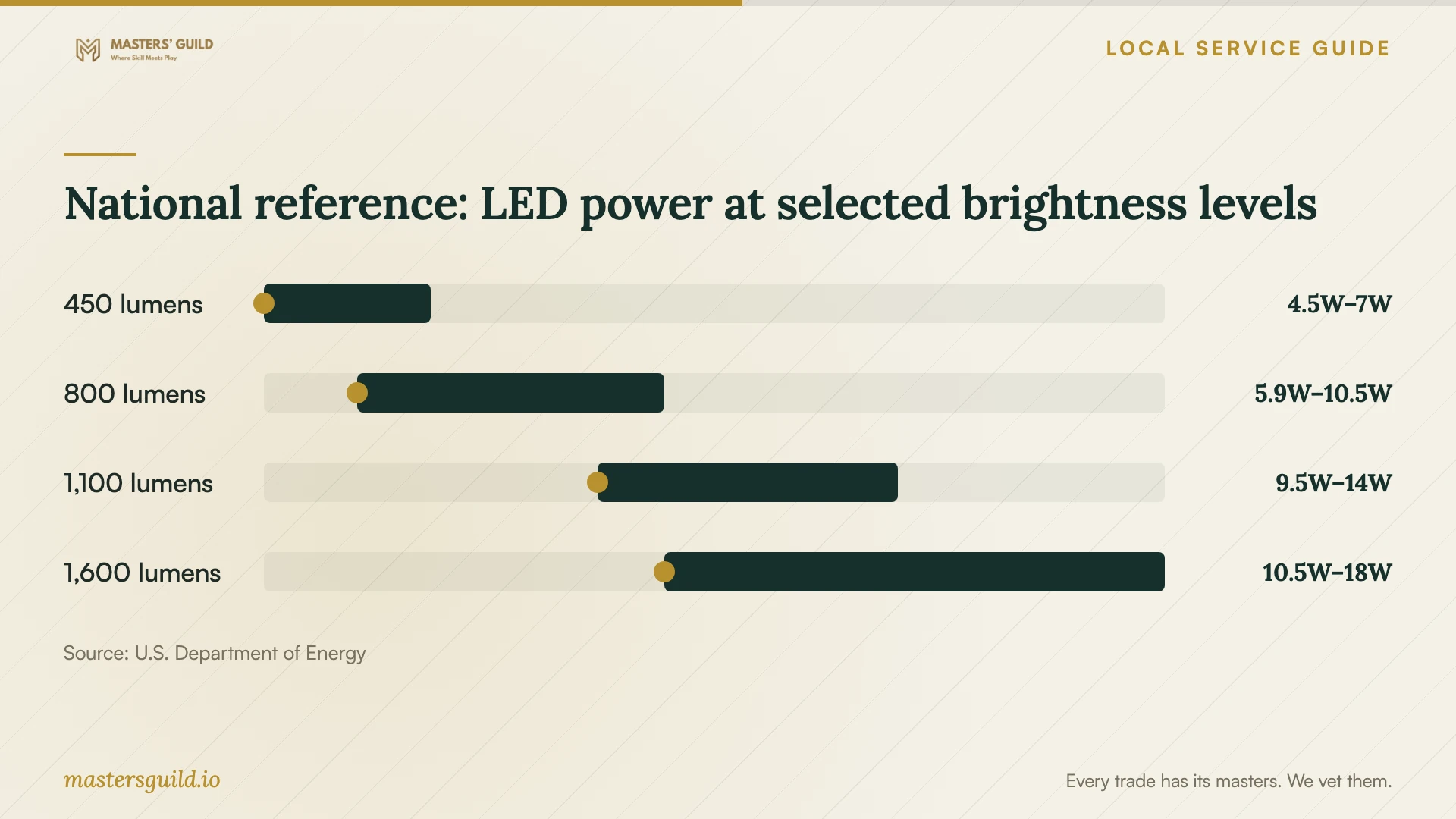
Compare bulb brightness in lumens. The Department of Energy distinguishes lumens, which measure visible light output, from watts, which measure power input. Its national reference table pairs 800 lumens with a 60-watt incandescent bulb and LED power requirements of 5.9 to 10.5 watts. Use that comparison to discuss brightness, rather than asking for an LED with the same wattage as your old bulb. [3]
Choose the light’s color appearance before ordering a full set. DOE’s guidance lists 2,700 K as warm and 3,000 K as soft, with homes among the applications for both. It also cautions that a large change in color temperature can cause dissatisfaction. Try a sample in the room and decide whether you want to match the existing light or change its appearance. [3]
Check the bulb and dimmer as a pair. DOE advises buyers to confirm that a lamp supports dimming and that the LED is compatible with the dimming system. For fully enclosed fixtures, check the packaging or technical specifications for suitability; DOE explains that trapped heat can affect LED performance and life. Also check physical fit, since some LEDs will not fit smaller fixtures. [3]
Agree on price, access and completion
Request a written total for the agreed scope, with separate entries for fixtures, installation, controls, permit handling and finish repairs where relevant. Ask how the contractor will price additional work after inspecting the wiring or opening the ceiling. Agree that they will explain the change and obtain your approval before proceeding.
Set an access plan before the visit. Tell the contractor about ceiling height, furniture below the work area and any building access arrangements. If you live in a condo or rental, ask your association or landlord what approval and scheduling arrangements they require. Confirm who supplies the fixtures and whether the contractor wants to review them before delivery.
Include a completion check that covers operating each light and control, reviewing the hanging positions and recording any unfinished repairs. Have the installer leave model information and instructions for the bulbs, fixtures and dimmers. For any permitted work, establish how you will receive the inspection result and what remains before the contractor considers the job complete.
National reference: LED power at selected brightness levels
Local details that affect your job
Chicago’s lookup includes inactive electrical contractors
The city directory covers both active and inactive electrical contractors. Before booking, check the proposed business’s license number, expiration date and inactive status. Have the contractor resolve any mismatch between their quote and the city record before you agree to a start date. [1]
Electrical Work has an Express Permit application route
Chicago lists Electrical Work within its Express Permit Program, whose online interface supports application-status checks, fee payments and inspection results. Ask whether your lighting scope belongs in that route and who will manage the application. The city’s permit overview does not specify whether an individual fixture replacement requires a permit, so confirm your exact scope with the Department of Buildings. [2]
Resolve these choices before booking
| Your project | Ask before agreeing | Confirm in the scope |
|---|---|---|
| Replace a light at its current location | What must you inspect before confirming the price and permit requirement? | Fixture model, installation and any box or wiring work |
| Add or move lighting | Which permit route applies, and who handles the application? | Locations, wiring assessment, permit responsibility and finish repairs |
| Add an LED dimmer | Does this lamp support dimming and match the proposed dimmer? | Lamp and dimmer models, plus operation testing |
| Use an enclosed fixture | Does the bulb manufacturer allow use in a fully enclosed fixture? | Suitable bulb specification and physical fit |
| Hire an electrical contractor | Do the city record’s name, number, expiration and inactive status match your information? | The contracting business and its license number |
Your hiring checklist
- Prepare room photos and a list of existing, moved and new fixture locations.
- Share fixture models, dimensions, weights and desired hanging positions.
- Match the contractor’s business name and license number to the city directory.
- Request a permit determination and identify who handles the application and fees.
- Confirm brightness, color appearance, bulb fit and control compatibility.
- Compare quotes with the same fixture, wiring and finish-repair scope.
- Agree on access, change approvals and the completion check.
Frequently Asked Questions
Does a replacement ceiling light need a Chicago permit?
Chicago’s permit overview says most construction, demolition and repair work requires a permit, but does not specify whether an individual fixture replacement requires one. Have the contractor confirm the requirement for your exact work with the Department of Buildings before starting. [2]
How should I compare installation quotes?
Give each contractor the same fixture list and photos. Ask each quote to identify fixture supply, installation, proposed wiring or support work, controls, permit handling and finish repairs. Request a clear approval process for any work outside the agreed scope.
Can I keep my existing dimmer with new LED bulbs?
Have the installer check the exact bulb and dimmer models. DOE advises confirming both that the lamp supports dimming and that the LED is compatible with the dimming system. Agree on an operation check before accepting the installation. [3]
How do I choose an LED with similar brightness to my old bulb?
Compare lumens. DOE’s national reference table lists 800 lumens for a 60-watt incandescent bulb and an LED range of 5.9 to 10.5 watts at that output. Check the selected product’s brightness, fit and fixture suitability before purchasing. [3]
Sources and scope
This guide combines the sources below with practical planning guidance. Figures apply to the stated geography and period; request a written quote for your property.