
Local service guide
Lawn mowing in Chicago: scheduling and quote guide
Arrange Lawn mowing in Chicago by agreeing on the areas to cut, the mowing height, a schedule that follows grass growth, and who handles clippings. Ask for a written price covering trimming, edging, cleanup, and any disposal. Illinois Extension recommends removing no more than one-third of the grass leaf per cut and avoiding wet-grass mowing. If you choose bagging, decide whether the contractor will haul the waste away or leave separate bags for city collection requested through 311. [1] [3]
Define the work before comparing prices
Give each provider the same description: front lawn, rear lawn, side strips, and any parkway area you want included. Send photos of the grass and access route. Identify narrow gates, steps, slopes, beds, exposed roots, and areas you want the crew to avoid. For a shared yard, confirm who can authorize the work and approve the bill.
Ask providers to itemize mowing, trimming around obstacles, edging along pavement, and clearing clippings from paths. State whether you want a single visit or recurring service. Ask them to identify any first-cut charge for tall grass, bagging charge, leaf cleanup, and haul-away fee before you accept the quote.
Compare the total for the same work and payment period. For a seasonal agreement, request the included visits, the treatment of skipped visits, and the cancellation terms. Keep fertilizer, weed treatment, aeration, and other optional work outside the mowing scope unless you choose to add them.
Choose a schedule that protects the grass
Illinois Extension advises mowing according to growth and removing no more than one-third of the grass leaf in a single cutting. It notes that spring growth can require more than one cut per week. Ask a recurring provider to explain how they adjust service when the grass outgrows the agreed interval. [3]
Consider biweekly service only when the grass can stay within that cutting rule between visits. Ask for a way to change frequency without starting a new contract. If the lawn has grown tall, ask how the crew will bring it down while respecting the one-third limit rather than requesting a short cut in one visit. [3]
Agree on a rain-delay policy. Illinois Extension advises against mowing wet grass and says mulching mowers perform poorly when grass is wet or too tall. Ask who sends the delay notice, when the crew will return, and whether a postponed visit changes your bill. [3]
Set a cutting height and clipping plan
For most home lawns, Illinois Extension suggests a mowing height of 2½ to 3 inches. Its species guidance includes 2 to 3 inches for Kentucky bluegrass and 2½ to 3½ inches for tall fescue. Tell the provider your grass type if you know it, and ask them to explain their proposed height. Extension also recommends sharp mower blades for clean cuts. [3]
You can choose to leave clippings on the lawn when the crew follows the one-third rule and mows as needed. Illinois Extension says those clippings decompose, recycle nutrients, and do not cause thatch. Ask the provider how they will handle clumps and keep clippings off paved areas. [3]
If you want clippings collected, specify the destination. Chicago’s 44th Ward guidance directs residents to bag yard waste apart from garbage and recycling, place it at the alley or curb, and request collection through 311. Ask whether the mowing price includes bags, placement, or contractor haul-away, and assign responsibility for the collection request. [1]
Arrange the last visits and check the result
For an October booking, ask for separate prices for mowing and leaf cleanup. Confirm whether the provider will return for more leaf removal after mowing ends. The 44th Ward office lists requested yard-waste collection from April through November, so agree on another disposal arrangement for work outside that listed period. [2]
Avoid choosing a final cut from the calendar alone. Illinois Extension says the first and last cuts can be slightly shorter, though that is not typically necessary, and warns against scalping or leaving grass excessively high at the end of fall. Agree on the final height with the provider. [3]
Before the first visit, remove toys and loose objects, pick up pet waste, unlock the agreed gate, and mark anything the crew should protect. Request evidence of insurance and a contact for damage or missed work. After the visit, check the agreed areas, trimming, pavement cleanup, and gate closure before approving the result.
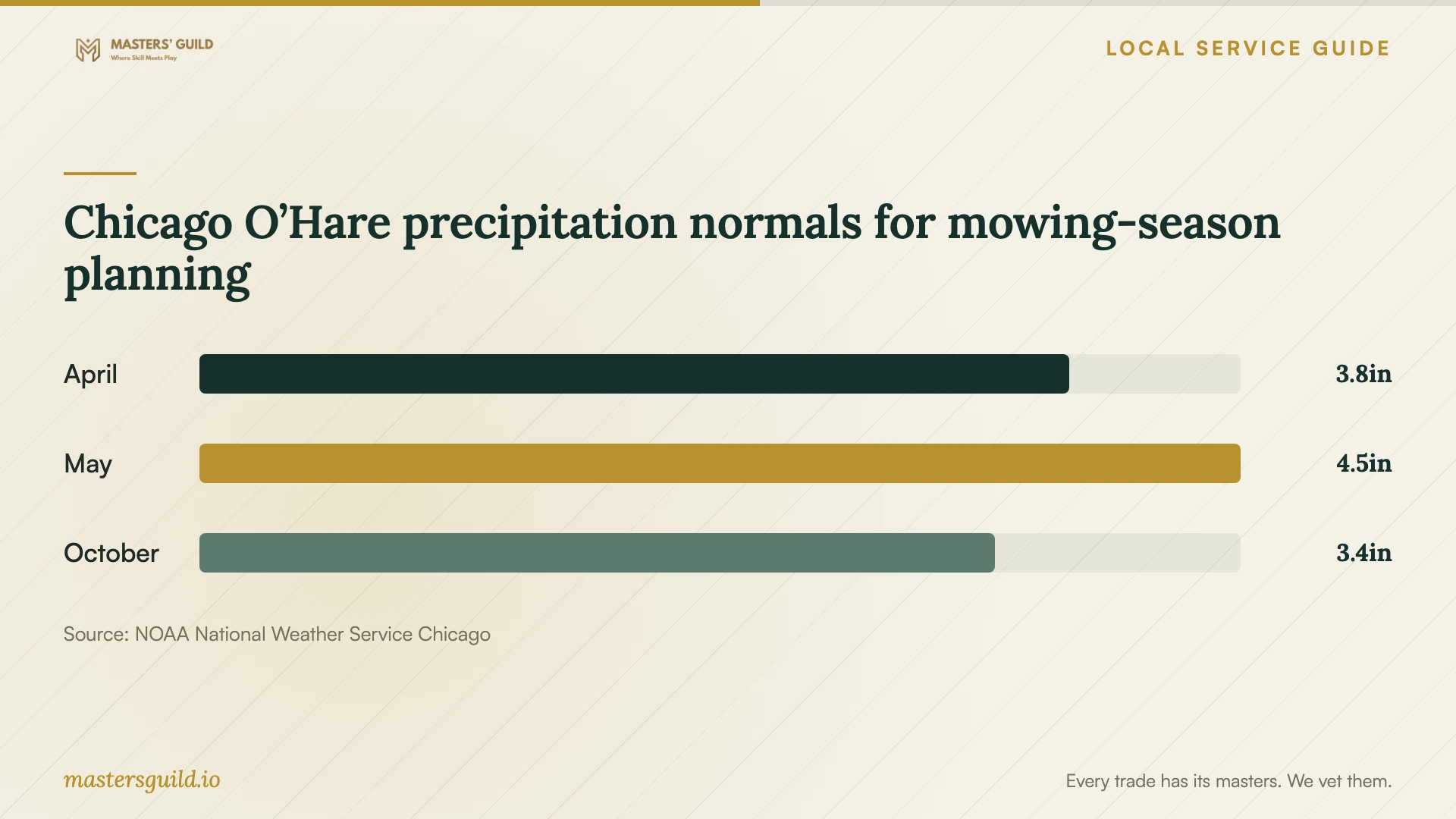
Chicago O’Hare precipitation normals for mowing-season planning
Local details that affect your job
Bagging does not arrange city pickup
The Chicago 44th Ward office explains that residents request separate yard-waste collection through 311. Grass clippings qualify as yard waste; dirt, rocks, and gravel do not. The office directs residents to leave separate bags at the alley or curb outside garbage and recycling carts. If you choose this route, have the provider stage the bags and agree who will request pickup. For a cleanup that includes soil or stones, ask for a separate disposal plan. [1]
Use the listed collection season when planning fall disposal
The 44th Ward office lists April through November for requested bagged yard-waste collection and encourages residents to clear debris from curb lanes and around storm drains. For late-season service, specify whether the crew will clear those areas and remove the debris. If the job falls outside the listed collection season, confirm disposal before accepting a bag-and-leave quote. [2]
Choose the service arrangement
| Your situation | Arrangement to discuss | Point to confirm |
|---|---|---|
| Grass grows fast between visits | A shorter interval or extra cuts | Keep each cut within Illinois Extension’s one-third rule. |
| Grass grows slowly | A longer interval with adjustment options | Check growth before committing to biweekly visits. |
| Grass is wet on the scheduled day | Postpone and agree on a return visit | Illinois Extension advises against mowing wet grass. |
| You want collected clippings | Contractor haul-away or separate bags for requested city pickup | Name who handles the 311 request and bag placement. |
| You need late-fall cleanup | Separate mowing, leaf removal, and disposal scope | The ward office lists April through November for requested yard-waste collection. |
Your hiring checklist
- Send photos and identify each lawn area you want cut.
- Confirm gate access, shared-yard authorization, and areas to protect.
- Get the price, included work, and extra-charge approval process in writing.
- Agree on cutting height and a way to adjust visit frequency.
- Confirm rain-delay notices, return visits, and skipped-visit billing.
- Choose clipping handling and assign pickup or haul-away responsibility.
- Request insurance evidence and a contact for missed work or damage.
Frequently Asked Questions
How much should I budget for mowing?
Get a property-specific written quote. Ask providers to use the same lawn areas, visit frequency, and clipping plan, then compare the total including trimming, edging, cleanup, and disposal. For recurring service, confirm how extra cuts and skipped visits affect the bill.
Should I choose weekly or biweekly service?
Choose an interval that lets the provider remove no more than one-third of the grass leaf per cut. Illinois Extension says spring growth can require mowing more than once a week. Ask to adjust frequency as growth changes instead of accepting one interval for the whole season. [3]
Can the contractor put grass clippings in my city carts?
Chicago’s 44th Ward guidance directs residents to keep yard waste apart from black garbage and blue recycling carts. For city collection, use separate bags at the alley or curb and request pickup through 311. Confirm whether the contractor will stage bags or haul them away. [1]
Should the last cut of the year be very short?
Avoid scalping. Illinois Extension says the last cut can be slightly shorter, though that is not typically necessary. It also warns against leaving grass excessively high at the end of fall. Ask the provider to agree on a final height suited to your lawn. [3]
Sources and scope
This guide combines the sources below with practical planning guidance. Figures apply to the stated geography and period; request a written quote for your property.