
Local service guide
Chicago duct cleaning: scope, quotes and planning
Arrange duct cleaning in Chicago by asking the contractor to show the contamination, inspect your duct materials and give you a written whole-system scope before you approve work. EPA recommends cleaning as needed for substantial mold, pests or excessive debris, rather than on a routine schedule. Compare at least three written estimates, and resolve moisture or pest problems before cleaning so the contamination does not return. [1]
Decide whether cleaning addresses your problem
Start with an inspection rather than a cleaning interval. EPA identifies substantial visible mold inside hard-surface ducts or HVAC components, pest infestations, and excessive debris or particles coming from supply registers as reasons to consider cleaning. Ask the contractor to show the affected area and explain how they distinguished it from ordinary dust. [1]
For a mold claim, ask for photographs and an explanation of the moisture source. EPA says an expert must identify mold and may need laboratory analysis. Wet or moldy duct insulation needs replacement because cleaning cannot treat it effectively. Have the underlying leak, drainage problem or other moisture source corrected before approving the cleaning. [1]
Avoid choosing a provider on promises of allergy relief or lower energy bills. EPA says duct cleaning has not been shown to prevent health problems, and evidence for efficiency improvements from cleaning ducts alone is limited. Discuss unexplained symptoms with your doctor and consider other indoor pollution sources. [1]
Compare the work included in each quote
Request a component-by-component scope. EPA describes system cleaning as potentially including supply and return ducts, registers, grilles, coils, drain pans, fan assemblies and the air-handling housing. Ask the provider to identify exclusions, inaccessible areas and any components that need an HVAC specialist. A quote for register cleaning does not describe the same work as a whole-system quote. [1]
Ask how the crew will collect loosened debris. EPA recommends vacuum equipment that exhausts outside, or HEPA equipment when the vacuum exhausts indoors. The contractor should protect furnishings, use methods suited to the duct material, and seal and re-insulate access holes after cleaning. Ask how they will demonstrate that the ducts and components are clean. [1]
Compare total prices for the same scope instead of comparing coupon headlines. Obtain the business name, insurance information, references, estimated work time and payment terms. Require your approval for extra work and put the price of each proposed addition in writing before the crew proceeds. [1] [3]
Request current written quotes for your Chicago property. Ask each bidder to state the number of systems, access limitations, contamination level and included services behind their quote. Keep dryer-exhaust cleaning on a separate line if you want that work, so you can see what you are purchasing.
Review chemicals and suspect materials before work
Do not approve a sanitizing treatment as an unexplained package addition. Ask for the product label, the intended use and the reason physical cleaning and moisture control are insufficient. EPA says no biocides are registered for fiberglass duct board or fiberglass-lined ducts. It also advises against routine coatings intended to encapsulate duct contaminants. [1]
Before the crew disturbs unfamiliar insulation or lining, arrange an assessment of suspect material. Illinois EPA says asbestos appeared in home building materials before the mid-1970s and sometimes through the late 1980s. Age alone does not identify asbestos. Its household guidance points homeowners toward licensed inspectors who can obtain samples for laboratory analysis. [2]
Prepare access and check the completed job
Give the bidder photographs of the furnace or air handler, accessible ducts and registers. Describe stairs, parking access, locked mechanical rooms and furniture that blocks vents. If you live in a condo or apartment, confirm with the association or owner which equipment serves your unit and who can authorize access or alterations.
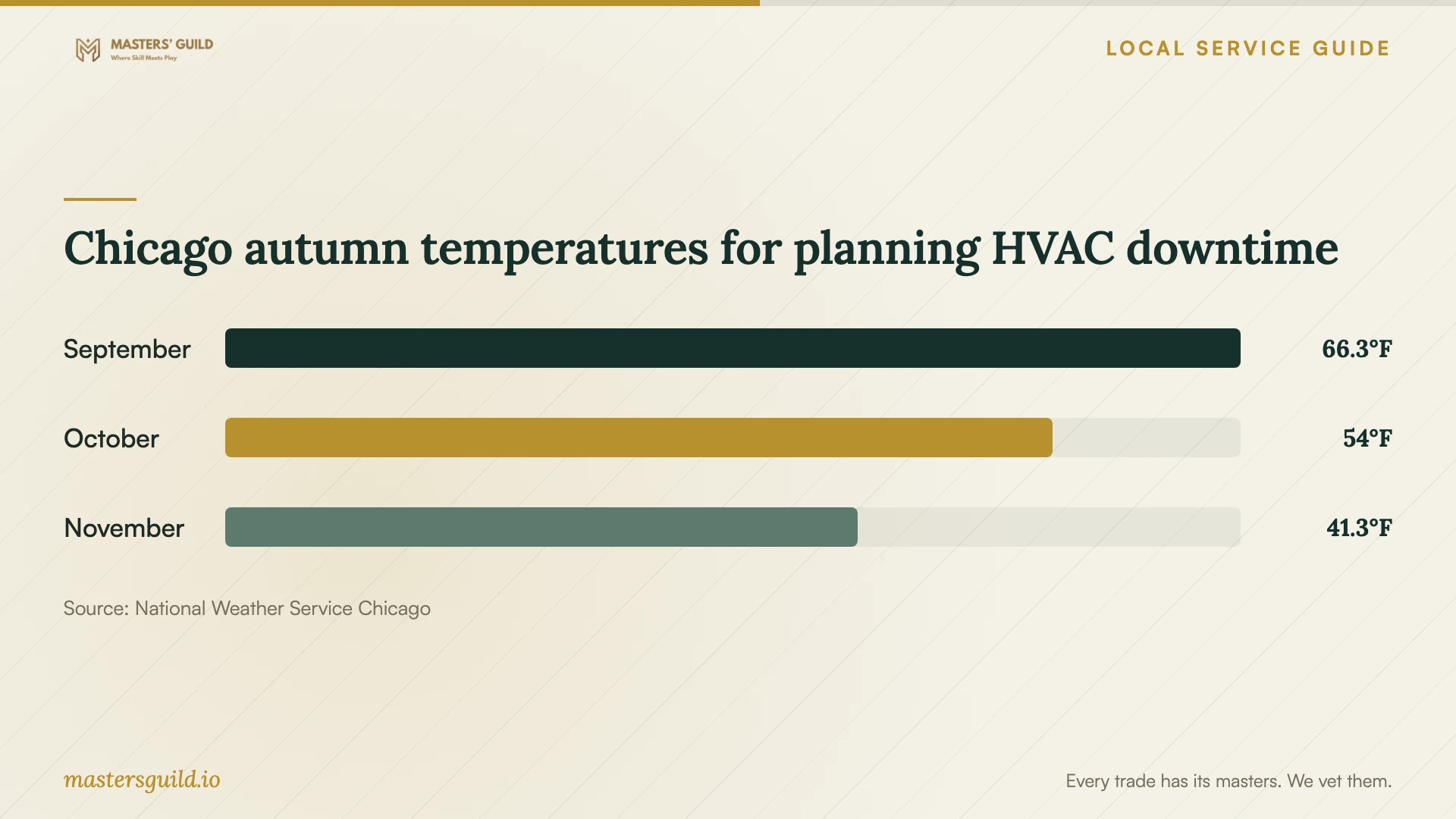
Agree on the expected HVAC shutdown and completion time before the appointment. For work during cold weather, ask how the crew will handle delays that leave you without heat. Keep fuel-burning equipment inspection and servicing on your maintenance plan: EPA recommends that work before each heating season, separate from the decision to clean ducts. [1]
Before final payment, review photographs or inspect accessible components with the contractor. EPA recommends checking for visible cleanliness, secure registers, sealed access openings and proper system operation after cleaning. Record unfinished areas or damage and agree on the correction. Then maintain filters and address water entry to reduce future contamination. [1]
Chicago autumn temperatures for planning HVAC downtime
Local details that affect your job
Illinois asbestos guidance has a building-size boundary
Illinois EPA's household asbestos fact sheet applies to privately owned homes and apartments with four or fewer units. It directs readers whose building once served public or commercial purposes to separate building guidance. For a larger Chicago building or a converted property, tell the inspector the unit count and former use before arranging work. Ask them to identify the applicable requirements instead of applying small-home guidance to the whole building. IDPH provides directories of licensed asbestos contractors and professionals for specialist checks. [2] [4]
Use Illinois repair protections when the scope expands
If a cleaning visit turns into a proposal for duct repair or remodeling, review the new scope as a separate purchase. The Illinois Attorney General says contractors should provide the Home Repair Consumer Rights document for work valued at $1,000 or more. Its repair guidance calls for a contract containing the work description, dates, total cost and payment schedule. Ask whether the proposed repair falls within those requirements; do not assume that a cleaning-only job has the same legal treatment. The office lists a Chicago consumer hotline at 1-800-386-5438 for concerns. [3]
Choose the next step from the inspection findings
| Finding | Next step | Question to ask |
|---|---|---|
| Dust on return grilles alone | Clean accessible grilles and review filters before buying whole-system cleaning. | Can you show contamination beyond the grille? |
| Excessive debris or particles from supply registers | Request a system inspection and written cleaning scope. | Which ducts and HVAC components need cleaning? |
| Suspected mold or wet insulation | Confirm the material and correct moisture; replace wet or moldy insulation. | Who will identify the growth and fix the moisture source? |
| Suspect asbestos lining or insulation | Arrange specialist assessment before disturbing it. | What inspection is needed before brushing or cutting access? |
| Cleaning quote expands into repairs | Review repair scope, price and applicable Illinois consumer documents. | Which charges and contract protections apply to this repair? |
Your hiring checklist
- Describe the reason for inspection and request photographs of any claimed contamination.
- Confirm who authorizes work on shared equipment and access to mechanical rooms.
- Ask the contractor to identify duct materials and flag suspect insulation before disturbance.
- Compare written quotes with the same system components and exclusions.
- Agree on debris collection, home protection, HVAC downtime and access-hole closure.
- Approve repairs, dryer-exhaust work and chemical treatments as separate written items.
- Review completed work and record any corrections before final payment.
Frequently Asked Questions
Should I schedule duct cleaning every year?
EPA recommends cleaning as needed, rather than as routine annual maintenance. Base your decision on inspection findings. Continue filter changes and heating-equipment inspections, and ask your HVAC provider about coil and drain-pan maintenance. [1]
Does an EPA-certified cleaner offer extra assurance?
EPA does not certify, endorse or approve duct-cleaning companies. Ask about experience with your duct materials, references, insurance and the cleaning standards the crew follows. Ask who will perform the work and how they will document completion. [1] [3]
Can I clean the ducts myself?
EPA says homeowners can vacuum or remove and clean dusty registers. Whole-system cleaning involves specialist tools and vacuum collection. Leave suspect asbestos materials undisturbed and arrange assessment before attempting work around them. [1] [2]
How long should I reserve for the appointment?
Ask the contractor for an estimate based on your system and access conditions. EPA recommends obtaining the expected hours or days and asking about interruptions when a provider charges by the hour. Agree on HVAC shutdown time and a plan for delays before booking. [1]
Sources and scope
This guide combines the sources below with practical planning guidance. Figures apply to the stated geography and period; request a written quote for your property.