
Local service guide
Courier Services in Chicago: Plan the Delivery
Choose Courier Services in Chicago by matching your shipment, delivery deadline and recipient requirements to a written quote. Set the pickup time, delivery entrance, authorized recipient and failed-delivery plan before booking. For a downtown handoff, check the courier’s vehicle eligibility for commercial loading zones and agree on who pays loading expenses. [1]
Specify the deadline and shipment
Send both addresses, suite numbers, pickup ready time and latest acceptable delivery time. Ask whether the provider commits to your deadline or offers an arrival estimate. Request the delay notification procedure and any written remedy for a missed commitment.
Describe the packed shipment: piece count, dimensions, weight, contents and value. Include fragile contents, upright handling needs, stairs or lifting assistance. For a bulky item, settle the vehicle and delivery endpoint before authorizing pickup. Specify whether the driver must reach a reception desk, loading dock or particular room.
Choose the completion record you need, such as a recipient name, handoff time, signature or photograph. Name anyone who may accept the delivery and decide whether you authorize an unattended drop. Obtain written acceptance and handling instructions for medical, temperature-sensitive or restricted contents before handing them over.
Compare shipment-specific quotes
Request quotes for the same addresses, shipment and deadline. Ask each provider to separate delivery charges from waiting, additional stops, parking, tolls, after-hours service and return trips. Set the point when waiting charges begin and name the person who may authorize an added expense.
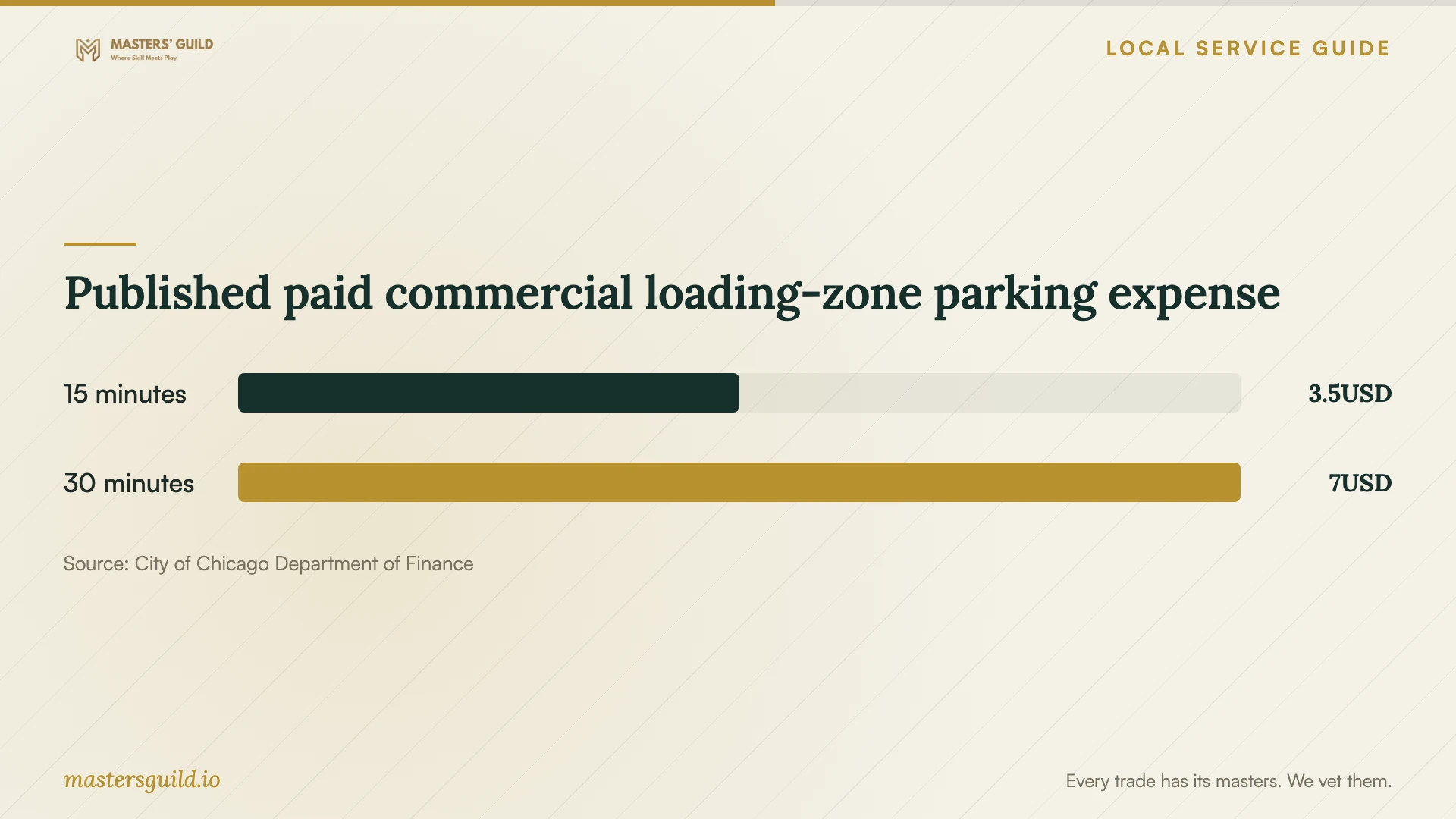
Chicago publishes a user-paid commercial loading-zone parking fee of $3.50 per 15 minutes. Ask whether the courier includes that expense in the quoted total or bills you after delivery. Use the shipment-specific quote to set your delivery budget. [1]
For a route using Illinois Tollway roads, request the intended route and vehicle category. The agency groups vehicles by axle and tire configuration and provides a trip planner for anticipated route tolls. Discuss the courier’s toll allowance and obtain a route-specific amount before booking. [4]
Read the provider’s loss and damage terms, coverage exclusions and claim deadline. Ask whether coverage applies to your contents and declared value. Agree on the response to an unsuccessful handoff: contact sequence, authorized waiting time, return destination and charges for another attempt.
Arrange the curbside stop and building entry
For a Central Business District delivery, identify a loading option before dispatch. Chicago marks its user-paid commercial loading zones with red end-limit signs and accepts payment through ParkChicago or the appropriate pay box. Coordinate payment with the courier and obtain the service entrance from the building contact. [1]
Chicago allows commercial loading-zone use by vehicles with commercial plates, qualifying attached business identification, or a Non-Commercial Loading Zone Permit for a passenger vehicle. Business identification must be visible from at least twenty-five feet away. An unaffixed paper or cardboard sign does not meet that identification requirement. Check how the dispatched vehicle qualifies before planning to use the zone. [1]
Give the driver dock hours, security procedures and elevator instructions. Ask the recipient to prepare for arrival and provide a fallback contact for an occupied dock or unavailable entrance.
Plan a permitted loading location that keeps bus lanes, bike lanes and bus stops clear. Within its defined pilot area, the city uses Smart Streets cameras to enforce covered parking and standing violations in those locations. [3]
Prepare the package and retain the handoff record
Pack, seal and label each piece before pickup. Keep a record of the contents and condition, and share access instructions with the dispatcher. Avoid putting confidential business information on the package exterior.
At pickup, check the piece count and retain the booking reference. Ask the recipient to check the count and visible condition at delivery. Save the completion record. For a missing or damaged item, preserve packaging and photographs and follow the provider’s claim procedure.
Published paid commercial loading-zone parking expense
Local details that affect your job
49th Ward loading and standing guidance
The 49th Ward office describes loading zones as spaces for commercial deliveries, with up to thirty minutes for loading and unloading. Its guidance distinguishes 15-minute standing zones, where drivers must leave hazard lights flashing while away from the vehicle. For a handoff in the ward, identify the zone type and check posted restrictions. Ask the recipient to be ready before the driver arrives. [2]
Check the Smart Streets pilot boundary
The city’s Smart Streets page defines an enforcement area bounded by Lake Michigan, Irving Park Road, Ashland Avenue and a southern boundary following Archer Avenue, Senour Avenue, 27th Street, Halsted Street and 26th Street back to the lake. The boundary includes both sides of the named streets. Check the city’s pilot-area map for an address near the boundary. The page says the city implemented unpaid-meter and commercial-loading-zone enforcement in early 2026 and currently schedules the pilot to expire in December 2026. [3]
Separate parking expenses from published fines
The Smart Streets schedule retrieved October 13, 2026 lists a $140 initial fine for nonpayment or noncommercial vehicle parking in a commercial loading zone. The page retains an introduction referring to planned enforcement in 2024 and warns that later City Council amendments may change fines or penalties. Treat $140 as the published schedule entry. Agree on permitted loading and reimbursable parking expenses before dispatch. [3]
Choose an arrangement for your shipment
| Your situation | Arrangement to request | Settle before pickup |
|---|---|---|
| Document with a firm deadline | Written arrival commitment and named recipient | Signature requirement, delay contact and missed-deadline terms |
| Parcel with flexible timing | An agreed delivery window | Total charge, recipient availability and completion record |
| Central Business District paid loading-zone stop | Qualifying vehicle and payment plan | Who pays the published $3.50 per 15-minute parking increment |
| Bulky item with indoor delivery | Vehicle and handling assistance matched to the packed item | Stairs, elevator access and final delivery endpoint |
| Route using Illinois Tollway roads | Quote identifying included or reimbursable tolls | Intended route and axle/tire vehicle category |
Your hiring checklist
- Send addresses, suite numbers, entrance instructions and contacts at both ends.
- State the pickup ready time and latest acceptable handoff time.
- Provide packed dimensions, weight, piece count, contents and handling requirements.
- Name authorized recipients and specify the completion record you need.
- Check the loading location, vehicle eligibility and building entry arrangements.
- Get written delivery, waiting, parking, toll and return-charge terms.
- Review shipment coverage and the failed-delivery procedure.
- Save the booking reference, condition photographs and delivery record.
Frequently Asked Questions
How much should I budget for a local courier?
Get a written quote for your shipment, addresses and deadline, including waiting and failed-delivery charges. Chicago publishes a separate user-paid commercial loading-zone parking fee of $3.50 per 15 minutes. Ask the courier to include that expense if the driver plans to use one of those zones. [1]
Can a courier’s passenger car use a commercial loading zone?
Check the vehicle’s eligibility. Chicago lists qualifying attached business identification and a Non-Commercial Loading Zone Permit among its eligibility options. A loose paper business sign on the dashboard does not meet the city’s identification requirement. [1]
What should I arrange if the recipient cannot meet the driver?
Name an authorized alternate before pickup. Specify whether reception may sign or whether you permit an unattended delivery. Give the dispatcher a contact sequence and agree on waiting authorization, return instructions and charges for another attempt.
How should I plan a stop inside the Smart Streets area?
Check the city’s pilot-area map against the delivery address, then provide a permitted loading location and fallback contact. Within the defined area, Smart Streets covers parking and standing violations involving bus lanes, bike lanes and bus stops, along with unpaid meters and commercial loading zones. [3]
Sources and scope
This guide combines the sources below with practical planning guidance. Figures apply to the stated geography and period; request a written quote for your property.