
Local service guide
Car Washing in Chicago: Plan Your Appointment
For Car Washing in Chicago, agree on the cleaning tasks, total price, and work location before booking. For mobile service, ask how the provider will collect and dispose of wash water: MWRD explains that separate storm sewers in its service area empty into waterways, while combined sewers can overflow during heavy rainfall. Confirm access and a weather backup, then compare written quotes for the same work. [1]
Set the cleaning scope and compare written totals
Describe the result you want before choosing a package. Send the vehicle’s make and model, plus photographs of stains, pet hair, dirty wheels, or other concerns. Request a task list that names the surfaces to clean and the work you expect, such as exterior washing, glass, wheels, drying, vacuuming, mats, or upholstery treatment.
Ask each provider to separate optional products and treatments from your requested work. Have them identify any proposed travel, parking, vehicle-size, or condition charges and give you a total. For a stain or odor, ask what treatment they propose and what result they can commit to. Record approval terms for additional work, deposits, cancellation, and collection.
Approve the mobile location and disposal plan together
The Metropolitan Water Reclamation District of Greater Chicago explains that most Chicago-area sewers carry sanitary sewage and rainwater in the same pipes. In separate systems within its service area, storm sewers discharge to waterways. Combined systems can also overflow to waterways during heavy rainfall. A drain beside your parking space therefore does not establish a suitable wash-water disposal route. [1]
Before approving mobile work, ask the provider how it will collect wash water and where it will dispose of it. Send a photograph of the parking space and describe gates, garage clearance, and equipment restrictions. Establish whether the provider brings water and power or needs access to yours. Obtain property-manager permission for work in a shared garage or lot.
If the provider cannot explain its disposal plan or meet the property’s conditions, consider a facility appointment. Ask that operator about wash-water handling too. Settle who will move the vehicle, whether you must leave the keys, and when you can collect it. Request confirmation of insurance applicable to the proposed work.
Account for regional overflow alerts
MWRD offers Overflow Action Alert text messages and asks recipients to reduce water use before, during, and after storms to limit water entering local sewers. Its sewer guidance explains the connection: heavy rainfall can send more water into combined sewers than its water reclamation plants can clean, allowing overflows to waterways. [1] [3]
Ask the provider whether the proposed wash-water disposal would add water to local sewers. If an alert applies to your appointment and the answer is yes, consider postponing an optional wash. Agree on a replacement date and any cancellation charge before booking. This recommendation applies regional water-use guidance to your appointment; MWRD’s cited alert guidance does not establish a car-washing prohibition. [3]
Plan winter work around freezing and salty wash water
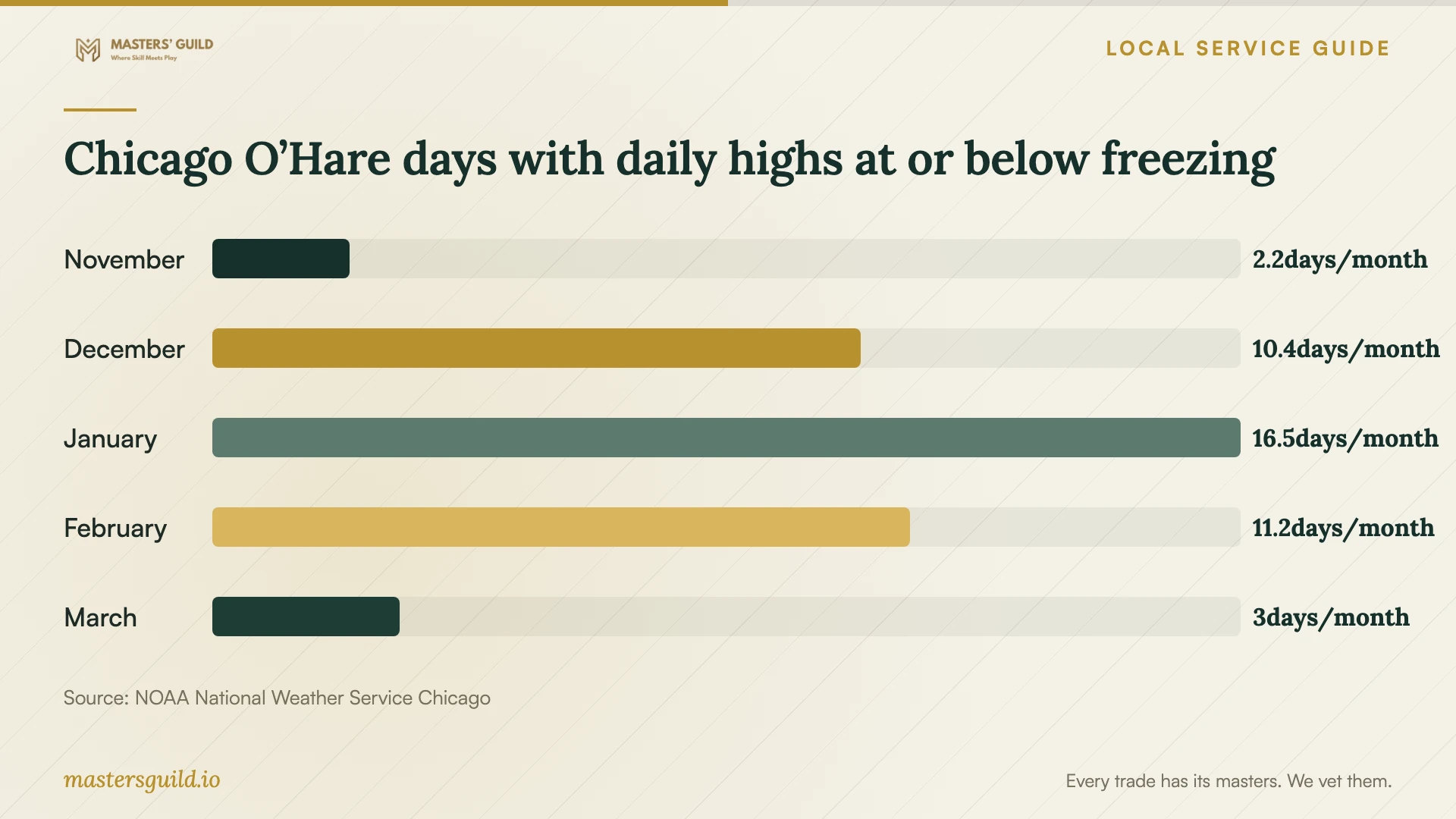
The National Weather Service reports that Chicago O’Hare averaged 10.4 December days and 16.5 January days per month with daily highs at or below 32°F during 1991–2020. These historical station averages give you a reason to arrange a sheltered option. Check the appointment forecast and ask the provider about its operating temperature limit, drying method, and rescheduling notice. [2]
MWRD’s regional salt guidance describes harm from salt runoff to water and soil. It also says its water reclamation plants cannot always filter salt out before releasing water into the Chicago Area Waterway System. For a winter cleanup, include salty wash water in your questions about collection and disposal. This guidance supports a disposal discussion; it does not prescribe a vehicle-washing frequency or authorize a discharge route. [3]
Have the provider explain how it will dry the vehicle and leave the walking surface ready for use. For upholstery work, establish when you can use the seats and whether the provider needs an indoor drying location. Record who decides to reschedule and how that decision affects your deposit or payment.
Prepare for handover and inspect the agreed work
Remove valuables and loose belongings before the appointment. Discuss child seats and accessories you want left alone. Point out scratches, loose trim, damaged upholstery, and manufacturer care instructions you want followed. Take photographs before handing over the keys, and give the provider a contact number for questions or proposed changes.
At collection, inspect the vehicle with the provider using your task list and booking photographs. Check the glass, wheels, mats, and areas that prompted the appointment. Raise missed work before leaving. Request instructions for remaining drying or product curing, and compare the final charge with the quote and additions you approved.
Chicago O’Hare days with daily highs at or below freezing
Local details that affect your job
A nearby drain is insufficient for location approval
MWRD distinguishes combined Chicago-area sewers from separate systems within its service area whose storm sewers empty into waterways. Combined sewers can overflow during heavy rainfall. Before approving driveway or parking-lot washing, ask the provider to identify its wash-water collection method and disposal destination. Do not infer the drainage arrangement at your property from a visible grate. [1]
Overflow alerts can change an optional appointment
MWRD offers Overflow Action Alert text messages that remind recipients to reduce water use before, during, and after storms. Ask whether your appointment would contribute wash water to local sewers. If an alert applies and the wash would add water, consider rescheduling under the terms you agreed with the provider. This is a planning recommendation, not an asserted washing restriction. [3]
Choose an appointment around your goal and location
| Your situation | Appointment to consider | Question to settle |
|---|---|---|
| Exterior cleanup | Exterior wash with a written task list | Does the total cover wheels, glass, and drying? |
| A stain or odor | Assessment followed by an agreed treatment | What result can the provider commit to, and what costs extra? |
| Mobile work beside a drain | Mobile service after resolving disposal | How will the provider collect wash water and identify a suitable destination? |
| A storm alert affecting your booking | Consider postponement if disposal adds water to local sewers | What replacement date and cancellation terms can you agree on? |
| Outdoor winter work | An appointment with a sheltered backup | What are the provider’s temperature limit and drying arrangements? |
Your hiring checklist
- Send vehicle details and photographs of the areas needing attention.
- Compare itemized totals and require approval for additional work.
- Confirm property permission, equipment access, water, and power.
- Ask how the provider will collect wash water and identify its disposal destination.
- Record the appointment window, cancellation terms, and weather backup.
- Remove belongings and photograph existing damage.
- Inspect the agreed tasks at collection and keep the final invoice.
Frequently Asked Questions
How should I set my budget?
Request quotes for the same vehicle and task list. Ask providers to separate optional treatments and identify proposed extra charges. Compare the total with the scope, approval terms, and collection arrangements. Use those written offers to set your budget.
Can a mobile washer use the drain beside my parking space?
Do not approve disposal based on the drain’s presence. MWRD explains that separate storm sewers in its service area discharge to waterways and combined sewers can overflow during heavy rainfall. Ask the provider to explain collection and the disposal destination before agreeing to the location. [1]
Should I cancel when MWRD issues an overflow alert?
MWRD asks alert recipients to reduce water use around storms. Ask whether your wash would add water to local sewers; if so, consider postponing an optional appointment. Discuss charges and a replacement date with the provider. The cited guidance does not state a car-washing ban. [3]
Should I request a wash or a detail?
Describe the surfaces and problems you want addressed, then ask the provider to name and price the required work. Put upholstery treatment, stain removal, and areas to leave untouched in writing. Choose from the task list and expected result rather than the package name.
Sources and scope
This guide combines the sources below with practical planning guidance. Figures apply to the stated geography and period; request a written quote for your property.