
Local service guide
Gardening in Cheyenne: Hiring and Planting Guide
Arrange Gardening in Cheyenne by separating bed cleanup, planting and follow-up care in your written scope. Ask the gardener to schedule each crop using the Cheyenne Botanic Gardens planting guidance, include a frost-protection plan and identify who will water after planting. If the proposal includes restricted-use pesticides, check the applicator’s Wyoming credentials before approving that work. [1] [2]
Define the garden work before comparing quotes
Start with the beds you want serviced and the result you expect. Specify hand weeding, removal of unwanted plants, planting, mulch placement or ongoing care as separate tasks. Mark plants you want to keep and photograph the beds before anyone starts. Ask the gardener to explain any plant they propose removing.
Request a written price with labor, plants, mulch, delivery and debris removal identified. For hourly work, agree on a spending limit and the point at which the gardener must ask before continuing. For a fixed-price job, describe the finished condition of each bed. Compare quotes against the same scope rather than comparing totals for different work.
Decide whether you want a cleanup visit, planting visit or recurring maintenance arrangement. Ask who supplies materials, who selects substitutes if a plant is unavailable and who handles watering between visits. Request proof of liability insurance and agree on access, hose use and disposal before the first appointment.
Schedule planting around the crop
Use the Cheyenne Botanic Gardens schedule to divide bed preparation from planting. Its guidance places peas and spinach after April 15, beets and carrots after May 1, and tomatoes, peppers and eggplant around May 25. It specifies transplants for those three warm-season crops. Ask the gardener to name the crops and planting method in the proposal. [1]
The Gardens publishes May 20 as the average last spring frost date and September 20 as the average first autumn frost date, while warning that weather can shift either boundary. Agree on who checks the forecast, who supplies sheets or frost cloth and who covers plants when frost threatens. Avoid treating an average date as a guarantee. [1]
For a later planting visit, ask which crops fit the remaining season. The local schedule includes bush beans, leafy greens and root crops through June, and spinach, radish and leafy greens in early August. Use those windows to discuss a specific planting plan rather than approving an unspecified seasonal refresh. [1]
Include care after the planting visit
Ask for a handover that covers watering, seedling spacing and temporary protection. The Botanic Gardens advises keeping beds moist until seeds germinate, using a light mulch layer to retain moisture and protecting transplants from direct sun and wind for a few days with cardboard or wood barriers. Make those tasks part of the scope if you cannot do them yourself. [1]
Discuss the water source and your availability before the gardener buys plants. Ask them to demonstrate watering at the bed and leave instructions for the plants they install. Agree on whether a return visit includes thinning seedlings, removing weeds or checking plant condition. Ask what replacement terms apply if a plant fails and which care responsibilities you must meet.
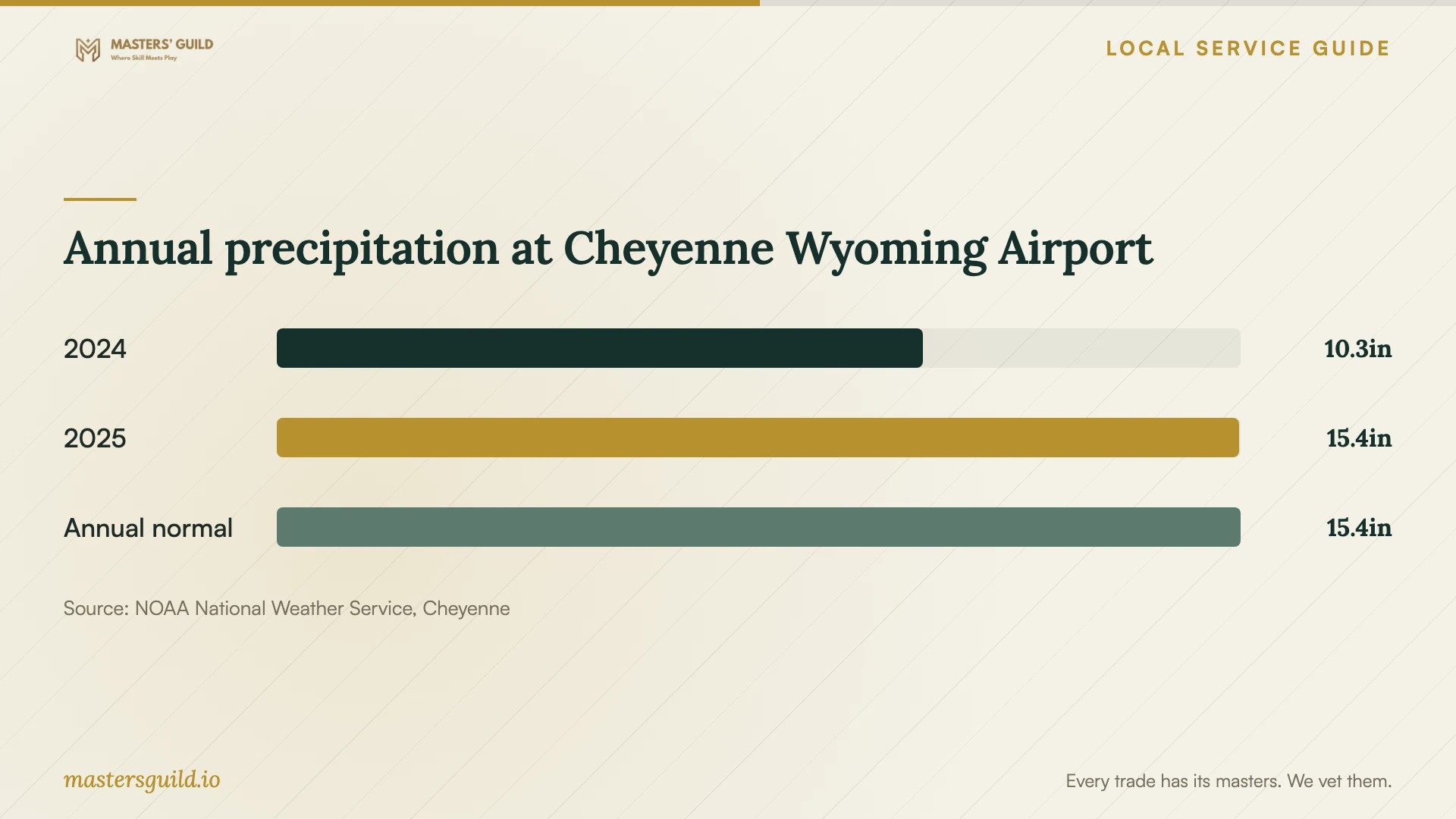
The National Weather Service recorded 15.39 inches of precipitation at Cheyenne Wyoming Airport in 2025, against a 1991–2020 annual normal of 15.41 inches. Its report lists 10.33 inches for the previous year. These airport totals provide background for discussing water access, but they cannot determine a watering schedule for your beds. [3]
Separate pesticide work from routine gardening
Ask whether the gardener proposes hand removal or a pesticide treatment for unwanted plants or pests. If they propose a treatment, request the product name, target problem and application area before approving it. Ask for the applicable label directions, including any restrictions affecting children, pets or edible plants.
The Wyoming Department of Agriculture describes commercial licensing for applicators who use or supervise restricted-use pesticides outside the private-applicator conditions it lists. It provides a searchable listing of private and commercial applicators and requires new commercial applicants to complete a general examination plus supporting category examinations. For restricted-use work at your home, verify the individual applicator and relevant category; ask the department to clarify any uncertainty about the proposed treatment. [2]
If a provider travels from another state, ask for their Wyoming authorization for the proposed restricted-use work. Wyoming offers reciprocal commercial licenses subject to conditions, including verification from the state where the applicator completed testing. Treat an out-of-state credential as a reason to check the Wyoming record before scheduling application. [2]
Annual precipitation at Cheyenne Wyoming Airport
Local details that affect your job
Split early bed preparation from warm-season planting
The Cheyenne Botanic Gardens places peas and spinach after April 15 and tomatoes and peppers around May 25. If your job includes both groups, ask for staged planting visits or a written explanation of how the gardener will handle the different windows. Do not approve one planting date for the entire vegetable bed without discussing the crops. [1]
Arrange temporary transplant protection
The local Gardens recommends protecting new transplants from direct sun and wind for a few days with cardboard or wood barriers. Before arranging planting while you are away, assign someone to maintain that protection and water the beds. Ask whether the gardener includes installing and removing the barriers. [1]
Check the person applying restricted-use pesticides
Wyoming’s agriculture department links to a current searchable applicator listing and requires category examinations for new commercial licenses. Ask for the name of the person who will perform the restricted-use application, then check their license and category rather than relying on the gardening business name alone. [2]
Choose the scope that fits your garden
| Your situation | Work to arrange | Point to settle |
|---|---|---|
| Existing beds need attention | Cleanup and hand weeding | Mark plants to keep and agree on debris removal. |
| You want peas and tomatoes | Staged crop planting | Local guidance places peas after April 15 and tomatoes around May 25. |
| You cannot tend new transplants | Planting plus follow-up care | Assign moist-bed care and the first few days of sun and wind protection. |
| A provider proposes restricted-use pesticides | Credential review before application | Check the applicator’s Wyoming license and relevant category. |
| You want ongoing bed care | Recurring visits with a written task list | Specify watering responsibility and approval for extra work. |
Your hiring checklist
- Photograph each bed and mark plants to keep.
- List cleanup, planting, mulch and disposal as separate tasks.
- Agree on plant quantities, substitutions and material costs.
- Match the proposed planting dates to the crops in the local schedule.
- Assign watering, forecast checks and frost protection.
- Request insurance documentation and check credentials for proposed restricted-use pesticide work.
- Confirm the spending limit, completion standard and follow-up terms.
Frequently Asked Questions
Can I schedule all vegetable planting for one visit?
Ask the gardener to review your crop list first. The local schedule separates early crops such as peas from tomatoes, peppers and eggplant around May 25. Agree on staged visits if your chosen crops need different planting windows. [1]
Does planting after May 20 remove frost risk?
No. The Cheyenne Botanic Gardens gives May 20 as an average spring frost boundary and warns that frost may occur before or after its published dates. Assign forecast checks and agree on who will cover vulnerable plants. [1]
What should a gardening quote include?
Ask for the beds covered, tasks, labor basis, material quantities, plant substitutions, debris removal and watering responsibility. Agree on an approval limit for extra work and define what the gardener must finish before you accept the job.
How do I check credentials for restricted-use pesticide work?
Use the Wyoming Department of Agriculture’s applicator listing to check the person performing the work. Confirm their current license and relevant category. Ask the department about the proposed application if the license type or scope is unclear. [2]
Sources and scope
This guide combines the sources below with practical planning guidance. Figures apply to the stated geography and period; request a written quote for your property.