
Local service guide
Pest control in Charlottetown: Hiring and Planning
Pest control in Charlottetown starts with identifying the pest, arranging an inspection and getting a written treatment and follow-up plan. Residents dealing with nuisance skunks or raccoons can contact Public Works about free City trapping before hiring a private contractor. For pesticide work, specify the application location: the City identifies non-domestic pesticide use on or inside buildings as provincially regulated and describes separate municipal restrictions for commercial cosmetic applications. [1] [2]
Describe the activity before approving treatment
Send photos taken from a safe distance, the locations where you noticed activity and the dates of sightings. Describe what you saw without guessing the species. Ask the provider to identify the pest and explain the inspection findings before you approve treatment.
Tell the provider about inaccessible roof spaces, locked rooms and shared areas. Describe any previous treatment and supply its records if you have them. Explain whether you want removal, pesticide application, monitoring or repairs, and request the inspection scope and charge before the appointment.
Separate wildlife removal from repair work
Charlottetown offers residents free trapping for nuisance skunks and raccoons. Call Public Works to confirm your address eligibility, timing and trap arrangements. Ask what the service includes before arranging private removal, cleanup or repairs. [1]
The City advises residents against feeding or handling wildlife, including sick or injured animals. It recommends sealing compost and garbage containers and preventing wildlife access through openings in buildings and decks. Ask the removal provider to assess a suspected occupied space before you arrange closure. [1]
For a private quote, separate removal from exclusion work, meaning repairs intended to prevent animal entry. Agree on who checks the space before closure, who supplies repair materials and who returns if you notice further activity. Photograph the agreed repair locations and ask the contractor to describe the finished work.
Confirm the rules for the application location
The City's cosmetic pesticide guidance applies to residents and businesses seeking commercial application of non-domestic pesticides. The City states that the province continues to regulate non-domestic pesticide use on or inside buildings, along with domestic pesticide products. Give the provider the exact proposed treatment location when asking about the applicable rules. [2]
For lawn insect treatment, request pest identification, the product name and an explanation of compliance with the municipal bylaw. The City describes allowable products listed in Appendix A and an insect-infestation exception. The homeowner or applicator must submit a $50 administration fee with an exception application and prove that the infestation meets the bylaw threshold. [2]
If the proposal depends on an exception, agree on who gathers the evidence, submits the application and pays the fee. Request confirmation of the exception before authorizing work that depends on it. For treatment on or inside a building, ask the provider to explain the provincial requirements and supply evidence of the credentials needed for the proposed application.
Compare written quotes and follow-up terms
Request property-specific written quotes using the same photos, affected-area description and access details. Ask each provider to name the pest, treatment area, method and included visits. Request separate amounts for inspection, treatment, monitoring, repairs and any application fee, plus the total payable with any tax or travel charges.
Read the return-visit terms before choosing a provider. Establish who decides whether another visit is needed, what it costs and how you report recurring activity. For a maintenance contract, review the schedule, cancellation terms and work included at each visit. Compare the full contract cost and scope rather than the first payment.
Get written preparation instructions covering furniture, stored items, food, pets and access. Confirm whether anyone must leave, when they can return and when you can clean treated areas. If you rent or share the building, coordinate responsibility and access with the owner or manager before authorizing work beyond your unit.
Plan exterior assessment and repairs
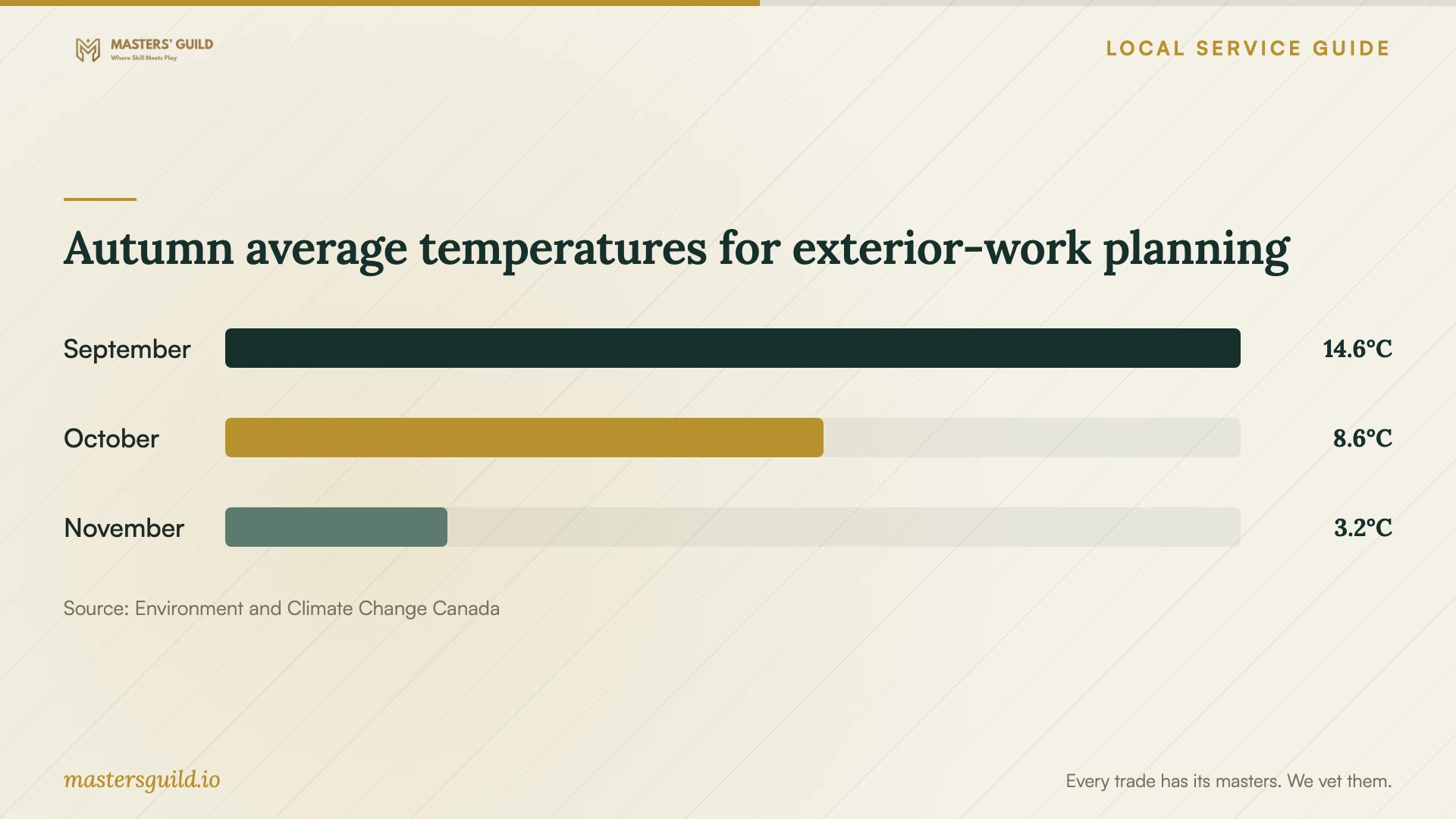
Environment and Climate Change Canada's 1991–2020 normals for Charlottetown Airport give monthly daily average temperatures of 14.6°C in September, 8.6°C in October and 3.2°C in November. Use this historical cooling pattern as context when discussing exterior access and repair scheduling with the contractor. [3]
Ask whether weather affects the proposed application, access or repair materials, and agree on a postponement process. Coordinate removal and repair appointments if different providers handle them. After the work, retain the treatment record and dated observations so you can describe continuing activity through the agreed follow-up process.
Autumn average temperatures for exterior-work planning
Local details that affect your job
Call Public Works before paying for nuisance trapping
Charlottetown residents can request free nuisance skunk and raccoon trapping by calling Public Works at 902-894-5208. Confirm eligibility for your address and the service scope before committing to a private trapping charge. Describe the animal and its location when you call, then ask whether you need to arrange separate cleanup or entry-point repairs. [1]
Assign responsibility for a lawn-treatment exception
The City's insect-infestation exception requires a $50 administration fee with the application and proof that the infestation meets the bylaw threshold. For a lawn-treatment proposal using this route, identify who will submit the application and supporting evidence. Keep the administration fee separate from the contractor's treatment price and ask for confirmation before authorizing exception-dependent work. [2]
Choose the first contact and scope
| Situation | First step | Confirm before committing |
|---|---|---|
| Nuisance skunk or raccoon at a Charlottetown resident's property | Contact Public Works about free trapping | Address eligibility, timing and whether you need separate repair or cleanup work |
| Suspected insects or rodents inside a building | Arrange identification and inspection | Treatment method, preparation, follow-up and provincial requirements for proposed non-domestic pesticide use |
| Commercial lawn insect treatment | Ask the applicator to explain compliance with the City bylaw | Allowable product or exception route; responsibility for evidence and the $50 application fee if needed |
| Suspected wildlife entry beneath a deck or into a building | Ask the removal provider to assess the space | Who checks occupancy before closure and who completes the repairs |
Your hiring checklist
- Record sightings, dates and affected areas; take photos from a safe distance.
- Request pest identification and a defined inspection scope before approving treatment.
- Confirm the appropriate first contact and any application responsibility using the local details.
- Compare written quotes for the same treatment area and included visits.
- Review repair charges, return-visit conditions and the total payable.
- Get preparation, pet-management and re-entry instructions before the appointment.
- Coordinate removal and entry-point repairs, then retain records for follow-up.
Frequently Asked Questions
Does the City trapping service cover my address?
The City requires Charlottetown residency to access its free nuisance skunk and raccoon trapping service. Confirm your address with Public Works before relying on that option, particularly if your mailing address uses Charlottetown but you are unsure of the municipal boundary. [1]
Who regulates pesticide use on or inside buildings?
The City's guidance states that the province continues to regulate non-domestic pesticide use on or inside buildings. Ask the provider to explain the requirements for the product, application location and method in your proposed plan. [2]
Does paying the infestation application fee secure an exception?
The City requires the $50 administration fee and proof that the insect infestation meets the bylaw threshold. Ask the applicator to explain the evidence and application process, and request confirmation of the exception before authorizing work that depends on it. [2]
Should I accept a recurring plan before the provider identifies the pest?
Request identification and an inspection-based explanation of the proposed visits before committing. Review what the provider will do at each visit, how you will assess progress and how you can cancel. Compare that scope with a defined treatment and follow-up proposal.
Sources and scope
This guide combines the sources below with practical planning guidance. Figures apply to the stated geography and period; request a written quote for your property.