
Local service guide
Charlottetown mold removal: Hiring and Planning
Arrange mold removal in Charlottetown by requesting a written assessment and a quote that separates removal, moisture-source repairs, debris hauling and rebuilding. Before you authorize opening walls or removing flooring, confirm how the contractor will assess suspected asbestos. PEI's Workers Compensation Board requires employers to treat suspected material as asbestos until a competent person determines it is free of asbestos. Confirm the disposal destination and who pays the fees before work starts. [1]
Get a quote you can compare
Give contractors the same description: where you see growth, what you know about leaks, which surfaces you want assessed and whether you expect them to rebuild afterward. Share photographs without moving or cutting materials to obtain them. Have the assessor explain what they can establish during the visit and what requires further investigation.
Request separate amounts or clear inclusions for assessment, removal, moisture-source repairs, hauling and replacement finishes. Identify who will perform each part. If the contractor excludes leak repairs or rebuilding, arrange those responsibilities before you agree to the removal work.
Agree on a process for hidden damage: the contractor should document the discovery, explain the proposed change and obtain your approval for the added scope and cost. Specify the completion records you want, such as photographs, disposal receipts and a written account of the work performed.
Resolve suspected asbestos before opening materials
The Workers Compensation Board of Prince Edward Island identifies inspection, demolition and renovation in older buildings as circumstances where workers may encounter asbestos. Its guidance assigns exposure-prevention responsibilities to employers, contractors and owners. Have the contractor explain how they will identify suspect materials before cutting into the affected area. [1]
PEI guidance requires employers to treat suspected material as asbestos until a competent person determines it is free of asbestos. Confirm who will make that determination and how the contractor will document it. Hold off on authorizing demolition until the contractor resolves that question. [1]
Request a separate explanation of any asbestos work, including the person responsible, the containment approach and the disposal arrangements. WCB guidance requires appropriate methods to contain fibres when workers disturb asbestos-containing material. Have the contractor explain how they will handle this additional hazard if they encounter it. [1]
Include debris handling in the work plan
IWMC requires source-separated materials at Waste Watch Drop-Off Centres. Its commercial guidance states that the contractor, hauler or customer transporting material pays applicable mixed-waste surcharges. Have your contractor state who sorts debris, who transports it and whether the quoted disposal allowance includes possible surcharges. [2] [3]
IWMC lists asbestos and contaminated material among special categories that may not be accepted at all facilities and require a Department of Environment permit. Have the contractor confirm the classification and acceptance arrangements for your debris. Do not assume that mold-affected material falls into one of those categories. [2]
For a homeowner transporting an accepted load, IWMC instructs customers to cover and secure it, sort it and unload as directed by facility staff. Confirm the material's acceptance before arranging transport, and allow time to unload and leave before closing. [2]
Use disposal fees to review the hauling allowance
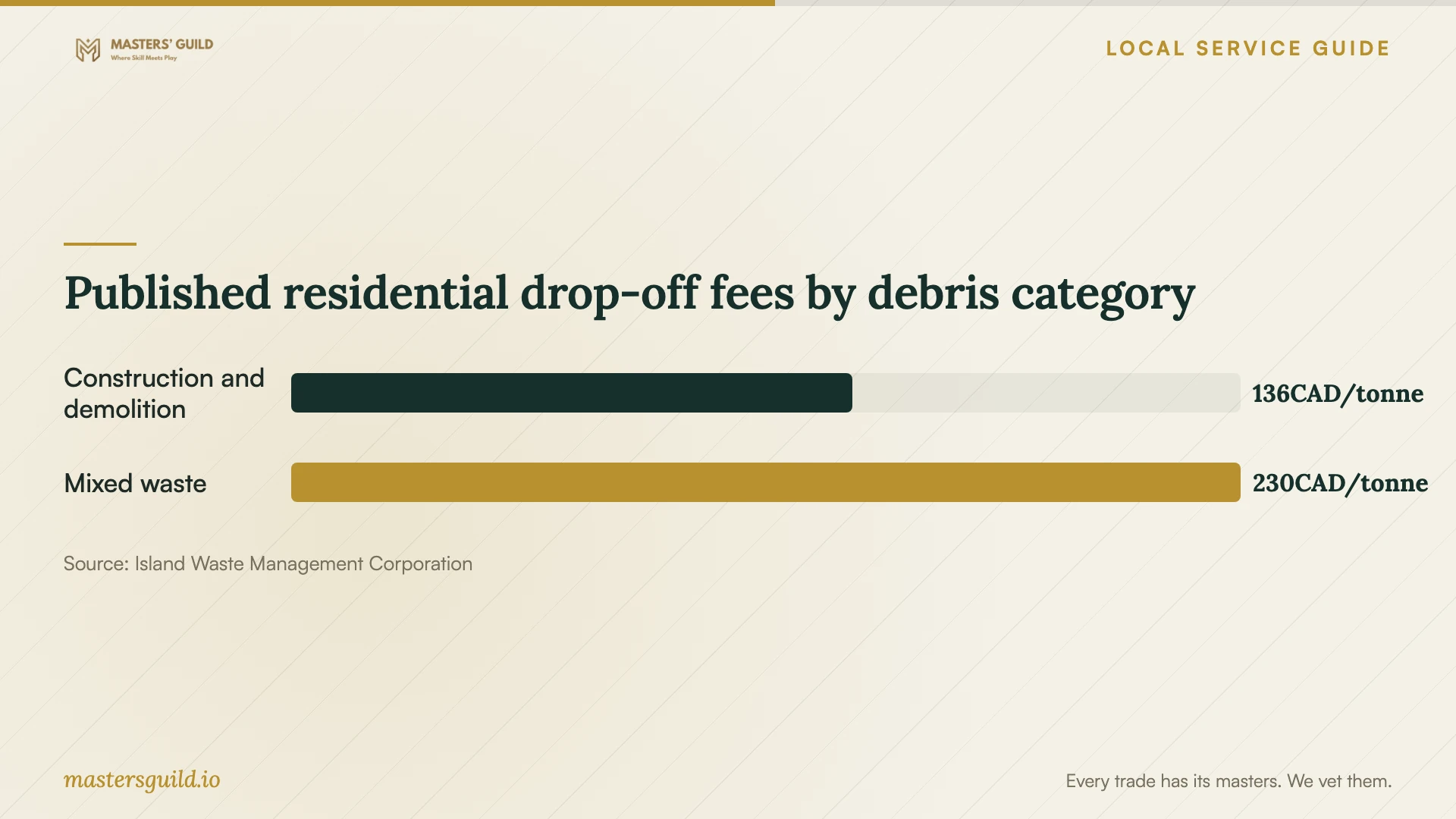
IWMC's residential Waste Watch Drop-Off Centre schedule lists construction and demolition material at CAD 136 per tonne with a CAD 5 minimum. It lists mixed waste at CAD 230 per tonne with a CAD 50 minimum. Use these published categories to review the disposal portion of a quote. Budget separately for the contractor's labour, equipment and hauling. [2]
Confirm whether your contractor used residential or commercial rates when preparing the allowance. IWMC publishes a separate commercial schedule. Request the expected debris category, estimated quantity and method for reconciling the allowance against receipts. [2] [3]
Request a project-specific quote for remediation, repairs, hauling and rebuilding. Have the contractor identify any allowance they may revise after assessment and explain how you will approve the change.
Published residential drop-off fees by debris category
Local details that affect your job
PEI asbestos precautions change demolition preparation
PEI WCB guidance requires employers to treat suspected asbestos-containing material as asbestos until a competent person determines it is free of asbestos. If your removal plan involves opening suspect walls, ceilings or flooring, confirm who will assess the material and document the determination before you authorize that work. [1]
Capital drop-off centre: confirm acceptance before hauling
IWMC lists the Charlottetown Capital Waste Watch Drop-Off Centre at 8 Superior Crescent, telephone 902-892-1333. Its listed hours are Monday through Friday, 7:00 a.m. to 5:00 p.m., and Saturday, 7:00 a.m. to 2:00 p.m., subject to change. Customers must finish unloading and depart by closing. Confirm acceptance of the specific debris and current hours before scheduling a load. [2]
Special debris may require another disposal arrangement
Across PEI, IWMC lists asbestos and contaminated material as categories requiring a Department of Environment permit and warns that some facilities may not accept them. It gives 1-866-368-5044 for permit enquiries. If your assessment identifies either category, have the contractor resolve the permit and destination before demolition. [2]
Contractor waste needs an explicit sorting plan
IWMC's PEI commercial guidance permits businesses to hire a commercial hauler or transport sorted material to a drop-off centre and pay applicable fees. IWMC can reject unsorted material and non-transparent bags or apply surcharges. Have the contractor explain how their debris packaging and sorting will meet the receiving facility's requirements. [3]
Resolve these questions before accepting a quote
| Situation | Next step | What to request |
|---|---|---|
| Contractor proposes opening walls or flooring | Resolve suspected-asbestos assessment before demolition | The responsible competent person and documented determination |
| Debris classification remains unclear | Confirm the category and receiving facility | Written disposal arrangements and any required permit |
| Quote contains a single disposal allowance | Clarify sorting, hauling and fee responsibility | Applicable rate schedule and receipt reconciliation |
| Removal quote excludes repairs or rebuilding | Arrange those responsibilities before work starts | Named responsibilities and separate written scopes |
Your hiring checklist
- Photograph visible damage and write down what you know about the moisture source.
- Request a written assessment scope before authorizing removal.
- Confirm who will assess suspected asbestos before cutting or demolition.
- Separate removal, moisture repairs, hauling and rebuilding in the quote.
- Agree on written approval for discoveries that change the price.
- Identify who confirms debris classification, facility acceptance and any permits.
- Request completion photographs, disposal receipts and a record of the work.
Frequently Asked Questions
How much will the complete job cost?
Request a project-specific quote for remediation, repairs, hauling and rebuilding. Have contractors quote the same assessed scope and identify allowances for further investigation. Compare the inclusions before comparing totals, and agree on how you will approve additional work.
Does suspected asbestos change the removal plan?
Yes. PEI WCB guidance requires employers to treat suspected material as asbestos until a competent person determines it is free of asbestos. Have the contractor resolve that assessment before disturbing the material and explain any resulting change to scope. [1]
Can I take the debris to the local drop-off centre?
Confirm acceptance and classification with IWMC first. Drop-off centres accept source-separated material, but some special categories may require permits and may not be accepted at every facility. Check whether the contractor's quote includes hauling before arranging your own transport. [2]
Who pays a mixed-waste surcharge?
IWMC's commercial guidance assigns surcharges to the contractor, hauler or customer transporting the material. Have your contractor state whether they include that expense in the quote or propose passing it to you. [3]
Sources and scope
This guide combines the sources below with practical planning guidance. Figures apply to the stated geography and period; request a written quote for your property.