
Local service guide
Heavy Lifting in Charlottetown, PE
Arrange Heavy Lifting in Charlottetown by giving the contractor an item list, measurements, route photos and a clear destination before accepting a written quote. Specify whether you need lifting within your home, loading help, transport or disposal. Ask who supplies equipment, protects surfaces and handles unloading. For removal jobs, confirm the disposal destination and any fees before booking.
Define the lifting job before requesting quotes
Describe each item and its starting and finishing position. Give dimensions and the manufacturer’s weight if you have it; label an unknown weight as unknown. Photograph the item, doorways, stair turns, landings and the outside route. Include both addresses if you want transport, and explain whether you will supply a vehicle.
Measure the narrowest openings and tell the contractor about railings, low ceilings or doors you can remove. Have them confirm the crew and equipment after reviewing the route. For a piano, safe or other unusually heavy item, ask whether they accept that specific job and require an inspection before quoting.
State who will disconnect appliances, remove loose parts and complete any reassembly. Do not assume lifting help includes those tasks. If you are keeping the item, identify its final position and confirm that the crew will place it there before leaving.
Compare the full written price
Request a total or an hourly rate with a minimum booking, plus the conditions for extra charges. Have the contractor identify whether travel, stairs, equipment, truck use, waiting, taxes and disposal appear in the quoted amount. For an hourly job, agree when the clock starts and stops and how the contractor seeks approval for extra time.
Compare offers against your written item list. Request exclusions and a plan for an item that cannot pass through the proposed route. Agree on a stop-and-review point before anyone removes a railing, changes the route or adds work. Keep the agreed scope and price together so you can check the final bill.
For removal, separate lifting and transport charges from disposal charges. IWMC lists appliances and household furniture greater than 4 feet and/or 50 pounds for free residential drop-off. The residential listing does not confirm eligibility for a contractor-delivered load. Have the contractor confirm the applicable treatment with IWMC before including a disposal allowance in your quote. [2]
Check contractor standing and damage terms
WCB PEI recommends requesting a clearance letter whenever you hire contractors or subcontractors. Its lookup accepts an employer name, WCB firm number or CRA business number. Request the contractor’s business identity so you can check the account associated with your job. [4]
WCB says a principal employer may owe assessments if a contractor or subcontractor has an account in default. Keep that stated scope in mind and ask WCB about your situation if you need clarification. Request separate proof of liability coverage and written terms for damage to your belongings or home. [4]
Before work starts, photograph the item and nearby floors, walls and doorframes. Agree who supplies floor coverings, padding and moving equipment. Review the contractor’s damage-reporting process and any coverage limits before accepting the booking.
Prepare access and the disposal handoff
Agree on the truck position and carrying route before the crew arrives. Keep children and pets away from the work area, remove loose objects and empty furniture drawers. Tell the crew about any route changes since you sent the photos. Have them assess the path before lifting.
The City says sidewalk clearing can wait until snowfall ends and warns that winter sidewalks can contain slush and ice. Check the entire path between your door and the truck. Arrange clearing and traction treatment, and agree with the contractor on a rescheduling plan if access remains unsafe. [1]
IWMC requires customers to sort and unload their material as facility staff direct, and to cover and secure loads during transport. Include destination unloading in the job description. Arrange a crew that can complete the handoff rather than relying on facility staff to lift the item out of the vehicle. [3]
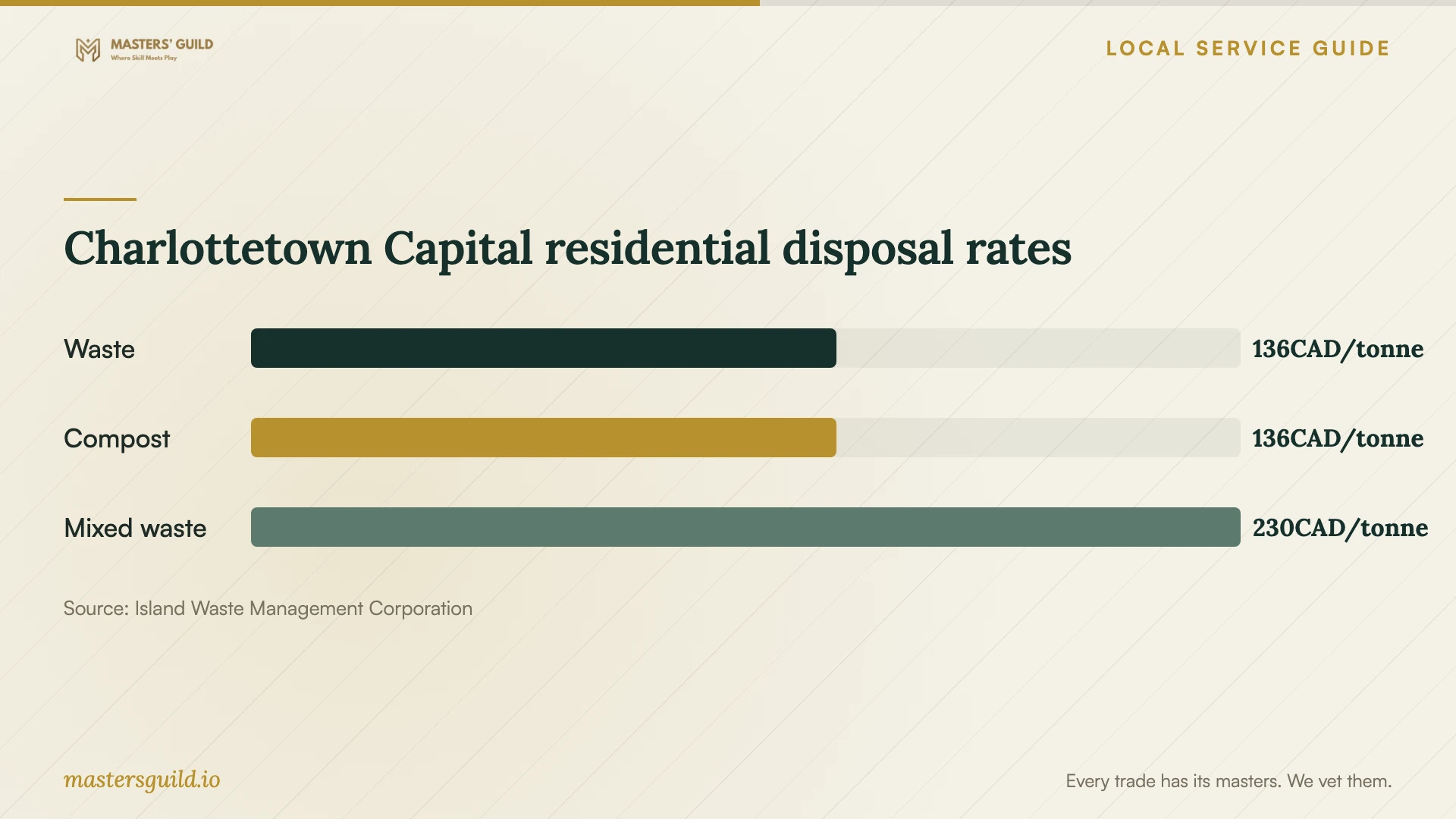
Charlottetown Capital residential disposal rates
Local details that affect your job
Winter parking can change your truck plan
Charlottetown’s overnight street-parking restriction runs from November 15 to April 15, between 11 p.m. and 6 a.m., and includes vehicles with residential parking permits. The City enforces it at its discretion when winter maintenance requires it. The City can also remove vehicles that impede snow removal at other times. Downtown snow hauling can involve temporary street closures. Check Snow Alerts and arrange a permitted truck position before confirming an early, late or post-storm lifting appointment. [1]
Allow time to unload at Capital
IWMC lists the Charlottetown Capital Waste Watch Drop-Off Centre at 8 Superior Crescent, with hours of 7 a.m. to 5 p.m. Monday through Friday and 7 a.m. to 2 p.m. Saturday, subject to change. Customers must finish unloading and depart by closing time; IWMC may deny entry if they cannot do so. Confirm current hours and allow time for queues and unloading when booking the crew. [3]
Choose the scope to request
| Your job | Request | Confirm before booking |
|---|---|---|
| Move furniture within your home | Lifting and final placement | Route assessment, surface protection and reassembly responsibilities |
| Load your own vehicle | Loading help | Equipment, load securing and who handles destination unloading |
| Move an item to another address | Lifting, transport and unloading | Both access routes, truck provision and final placement |
| Remove an appliance or oversized household furniture | Lifting, haulage and disposal | IWMC lists appliances and furniture greater than 4 feet and/or 50 pounds for free residential drop-off; confirm actual load eligibility |
| Arrange a winter street-side pickup | Lifting with an agreed truck position | City parking restrictions, Snow Alerts and a clear carrying route |
Your hiring checklist
- List the items, dimensions, known weights and final destinations.
- Send photos of doors, stairs, landings and the route to the vehicle.
- Confirm crew, equipment, surface protection and item-specific acceptance.
- Get written pricing, exclusions and approval terms for extra work.
- Request WCB clearance and separate liability coverage information.
- Agree on truck access and a weather-related rescheduling plan.
- For disposal, confirm load eligibility, sorting, destination hours and who unloads.
Frequently Asked Questions
Can I book lifting help without a truck?
Describe the job as lifting or loading help and have the contractor confirm that scope. Name who supplies the vehicle, moving equipment and load restraints. If the item travels elsewhere, arrange unloading at the destination before accepting the booking.
Does free appliance drop-off mean free removal?
IWMC lists appliances among free residential drop-off items. Request a hired-removal quote that separates lifting, transport and unloading from any disposal charge. Confirm with IWMC whether a contractor-delivered load qualifies for free residential drop-off. [2]
What should I check before a winter appointment?
Check the truck position, doorstep, steps and path to the vehicle. The City says sidewalk clearing may wait until snowfall ends. It prohibits overnight street parking from 11 p.m. to 6 a.m., November 15 through April 15, with discretionary enforcement for winter maintenance. Review Snow Alerts and agree on a fallback appointment if the route is unsafe. [1]
What does a WCB clearance letter confirm?
WCB PEI says it confirms that the contractor’s WCB account is in good standing. Request the business name or identifying number needed for the lookup. Ask about liability insurance and property-damage terms as separate checks. [4]
Sources and scope
This guide combines the sources below with practical planning guidance. Figures apply to the stated geography and period; request a written quote for your property.