
Local service guide
Charlottetown duct cleaning: Hiring and preparation
Arrange duct cleaning in Charlottetown by asking a contractor to inspect the system, show the contamination and provide a written scope and total price before work starts. Consider cleaning for excessive debris, pest infestation or substantial visible mould growth in hard-surface ducts, with expert confirmation where necessary because appearance alone cannot confirm mould. Identify and correct the underlying cause before cleaning or replacing ducts. Flag suspect insulation before anyone cuts access holes or brushes duct surfaces. PEI's Workers Compensation Board requires employers to treat suspected asbestos-containing material as asbestos until a competent person determines otherwise. [1] [3]
Decide whether cleaning addresses the problem
Start with the reason you are considering the service. The U.S. Environmental Protection Agency recommends cleaning as needed rather than on a routine schedule. Its residential guidance identifies substantial visible mould growth in hard-surface ducts, pest infestation and excessive debris or particles coming from supply registers as reasons to consider cleaning. Use this as technical guidance, not as a PEI licensing rule. [3]
Ask the inspector to show you the affected area and explain their assessment. EPA describes dust on return grilles as normal and says homeowners can vacuum or remove them for cleaning. If someone identifies mould from appearance alone, request expert assessment; EPA says only an expert can confirm mould and may need laboratory analysis. [3]
Identify and correct the underlying cause before cleaning or replacing ducts. EPA warns that contamination can recur when homeowners leave moisture or other underlying problems unresolved. It recommends removal and replacement of wet or mouldy duct insulation by a qualified heating and cooling contractor because cleaning cannot restore it. Request a separate replacement scope that schedules moisture correction before replacement. [3]
Get a scope you can compare
Request written estimates from at least three providers, following EPA's consumer guidance. Give each provider the same description of your system and concern. Ask them to identify the ducts, registers, equipment components and access work included in the price. EPA warns that leaving a contaminated component uncleaned can contaminate the system again. [3]
Have the provider specify coverage for supply and return ducts, the blower compartment, coils and drain pans where present. Request a list of exclusions, optional services, taxes and charges for difficult access. For hourly work, EPA recommends asking for an estimated duration and possible interruptions. Name dryer exhaust, bathroom exhaust and other requested vent work as separate line items so you know what you are buying. [3]
Set your budget using written quotes for your system and agreed scope. Ask each provider to confirm the currency, total payable amount and process for approving additional work. Compare matching inclusions before choosing a price, and keep a copy of the agreement for the completion review.
Check methods and proposed treatments
Ask how the contractor will collect loosened debris and protect furnishings. EPA recommends vacuum equipment that exhausts outside or HEPA vacuum equipment when exhaust remains indoors. It recommends controlled brushing with contact vacuuming and soft-bristled brushes for fibreglass duct board or ducts lined with fibreglass. Have the contractor identify your duct materials before choosing a method. [3]
Request a separate explanation for any proposed disinfectant, ozone treatment or internal coating. EPA identifies unresolved questions about the effectiveness and potential health effects of chemical treatments and advises homeowners to understand the risks before agreeing. Ask for the product name, intended purpose, label and alternatives. Do not interpret U.S. product registration discussions as proof of Canadian approval. [3]
Treat promises to prevent illness or guarantee lower heating bills with caution. EPA says duct cleaning has not been shown to prevent health problems and finds little evidence that cleaning ducts alone improves system efficiency. Ask the provider to explain the condition they will remove and how you will inspect the result. [3]
Prepare for the visit and inspect the result
Before the appointment, clear a route to the equipment and registers. Tell the contractor about concealed ducts, fragile finishes, pets and previous water damage. Confirm the expected heating interruption, hose placement and outdoor access. Agree on floor protection and how the crew will secure the home during work.
At completion, ask the contractor to show representative supply and return duct interiors and the equipment components included in your agreement. EPA recommends visual inspection to verify cleanliness. Check that the contractor has reattached registers, sealed and reinsulated access holes, and demonstrated proper system operation. Record unfinished items before accepting completion. [3]
Follow the equipment manufacturer's filter recommendations and change filters regularly. EPA recommends preventing air from bypassing filters, repairing water leaks and maintaining drain pans to reduce contamination. Arrange inspection and service before each heating season for a fuel-burning furnace, stove or fireplace, as EPA recommends; duct cleaning does not replace that appointment. [3]
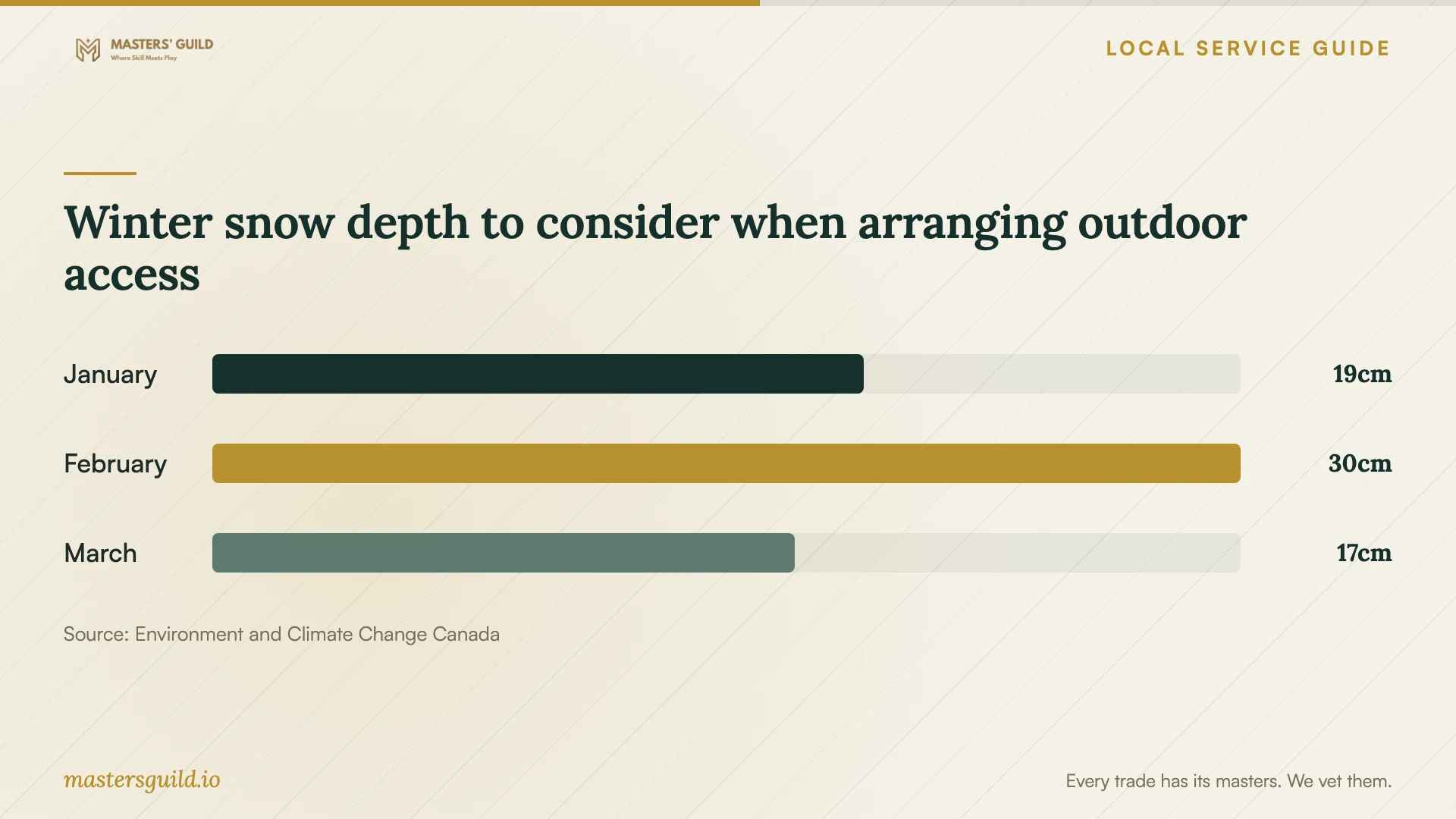
Winter snow depth to consider when arranging outdoor access
Local details that affect your job
PEI suspect-material rule changes the first visit
If the cleaner encounters suspect insulation or other material around the ducts, pause work that could disturb it and arrange assessment. WCB PEI says employers must treat suspected material as asbestos until a competent person determines that it is asbestos-free. Tell the cleaner about known materials and previous assessments before they plan access cuts. Have them resolve uncertainty before disturbing the material. [1]
Abatement requires a separate PEI process
If the job expands into renovation or restoration involving asbestos, arrange specialist work before resuming cleaning. WCB PEI's October 2022 notice says a qualified asbestos abatement contractor must perform that work after obtaining an Asbestos Notification Permit from WCB's Occupational Health and Safety Division. The requirement applies to Island and off-Island companies working in PEI. Ask who will obtain the permit and coordinate the handover. [2]
Winter access needs an appointment check
For a winter booking, ask whether the contractor needs a clear outdoor route for equipment or access to an exterior termination. Charlottetown Airport's 1991–2020 normals report average snow depths of 19 cm in January, 30 cm in February and 17 cm in March. Confirm access shortly before the visit and clear the agreed route. These airport averages do not describe snow at your property or establish a need for duct cleaning. [4]
Choose the next step from what you find
| Finding | Next step | Question to ask |
|---|---|---|
| Dust on a return grille only | Clean the accessible grille and assess inside conditions before booking. | Can you show substantial contamination inside the ducts? |
| Excessive debris or particles leaving supply registers | Arrange inspection, identify and correct the underlying cause, then clean affected components. | Which components are affected, and who will correct the cause before cleaning? |
| Suspected mould growth | Seek expert confirmation where necessary. Correct the underlying cause before cleaning substantial growth in hard-surface ducts. | Who will assess the growth and correct its cause before cleaning? |
| Wet or mouldy duct insulation | Correct the moisture source before a qualified heating and cooling contractor removes and replaces affected insulation. | Who will correct the moisture source before replacement? |
| Suspect asbestos-containing material | Pause disturbance and arrange competent assessment under PEI guidance. | Will your planned access or cleaning disturb this material? |
| Asbestos work during renovation or restoration | Arrange a qualified abatement contractor and the WCB Asbestos Notification Permit before abatement. | Who obtains the permit before abatement starts? |
Your hiring checklist
- Describe the concern and provide photos of accessible affected areas without disturbing suspect material.
- Identify the system and name each additional exhaust vent you want quoted.
- Confirm who will identify and correct underlying causes before cleaning or replacement.
- Compare written inclusions, exclusions and total payable prices.
- Flag known asbestos, suspect materials and previous assessments before access work.
- Ask about vacuum exhaust, duct materials and furnishing protection.
- Confirm heating interruption, hose routes, outdoor access and written approval of additional work.
- Inspect the agreed components and record unfinished work before accepting completion.
Frequently Asked Questions
Should I book duct cleaning every year?
EPA recommends cleaning as needed rather than annually. Ask for evidence of substantial contamination before booking. Keep regular filter care and heating equipment inspections on their own maintenance schedule. [3]
Does a whole-home quote include dryer and bathroom vents?
Ask the provider to name each vent and system included. Do not infer coverage from the package name. Put requested dryer and bathroom exhaust work on separate lines and confirm the total before booking.
Can an off-Island contractor handle asbestos work here?
WCB PEI says its asbestos requirements apply to Island and non-Island companies working in the province. For applicable renovation or restoration involving asbestos, ask for a qualified abatement contractor and confirmation of the Asbestos Notification Permit before work begins. [2]
How can I check whether the cleaner finished the job?
Ask to see the components listed in your agreement. EPA recommends visual inspection, including checking duct cleanliness, secure registers, sealed access openings and proper system operation. Agree on this review before the appointment. [3]
Sources and scope
This guide combines the sources below with practical planning guidance. Figures apply to the stated geography and period; request a written quote for your property.