
Local service guide
Tile Setting in Charlotte, NC: Plan and Compare
Arrange Tile Setting in Charlotte by asking installers to inspect the work area and quote the same written scope: removal, surface preparation, tile layout, waterproofing where applicable, and cleanup. Before approving demolition, settle who will check permit requirements and explain the tax treatment. Mecklenburg County identifies significant kitchen and bathroom upgrades as projects that typically require permits; North Carolina treats tile flooring replacement and regrouting as taxable services, subject to scope-dependent exceptions. [1] [3]
Define the work before choosing an installer
Describe the room, the surfaces you want tiled, and what you want removed. Give each bidder the same photos and measurements, but request a site inspection before accepting a firm scope. Flag loose tiles, visible cracks, damp areas, and any planned changes to fixtures. Ask the installer to explain which conditions they can assess before demolition and which require opening the surface.
For a floor, request a preparation plan and details for thresholds, doors, and adjoining flooring. For a backsplash, agree on the tile's stopping points, edge finish, outlet cuts, and who handles any electrical work. For a shower, request a written waterproofing plan covering the base, walls, corners, penetrations, and drain connection. Ask who takes responsibility for each part of the work.
Compare quotes without guessing a local price
Use project-specific written quotes to set your budget. Ask installers to separate tile and trim, installation materials, removal and disposal, surface preparation, setting and grouting, and any work by other trades. Have them identify allowances rather than folding unknown preparation into an unexplained total.
Request an approval process for extra work: a description of the problem, photos, the proposed repair, and a price before the installer proceeds. Ask whether you or the installer orders materials, checks delivered quantities, and handles returns. Agree on the layout and grout color before setting begins, including cuts at visible edges and transitions.
Compare the final amount you would pay, including applicable tax. NCDOR lists complete or partial flooring replacement, including ceramic tile, as taxable repair, maintenance, and installation services. It also lists regrouting and damaged ceramic tile replacement as taxable. The department allows exceptions based on the transaction's facts, including work performed as part of qualifying remodeling. [1]
Resolve permits before demolition
Mecklenburg County's homeowner guidance identifies significant kitchen and bathroom upgrades and crawlspace floor-joist repairs as projects that typically require permits. The county also advises homeowners to consult its Code Information & Resource Center when they are unsure. Describe the entire renovation when you ask, including planned structural repairs and changes to plumbing or electrical systems. [3]
The county published this guidance in June 2022. Confirm current requirements for your exact scope rather than treating the article as a permit ruling for tile work. Put the permit holder, inspection coordination, and any inspection-dependent pauses into the agreement before work starts. [3]
Agree on access, timing, and handover
Ask the installer for a schedule that distinguishes removal, preparation, waterproofing, setting, grouting, and return to use. Request the waiting periods required by the products they propose. If you have one bathroom, agree on when you can use the toilet and shower and arrange an alternative for any closure.
Decide where the crew can cut tile, store materials, and carry debris out. Identify furniture or appliances you will move and surfaces the crew will protect. At handover, review the agreed layout, edges, transitions, grout, and cleanup together. Request product names, care instructions, spare tile arrangements, and written warranty terms.
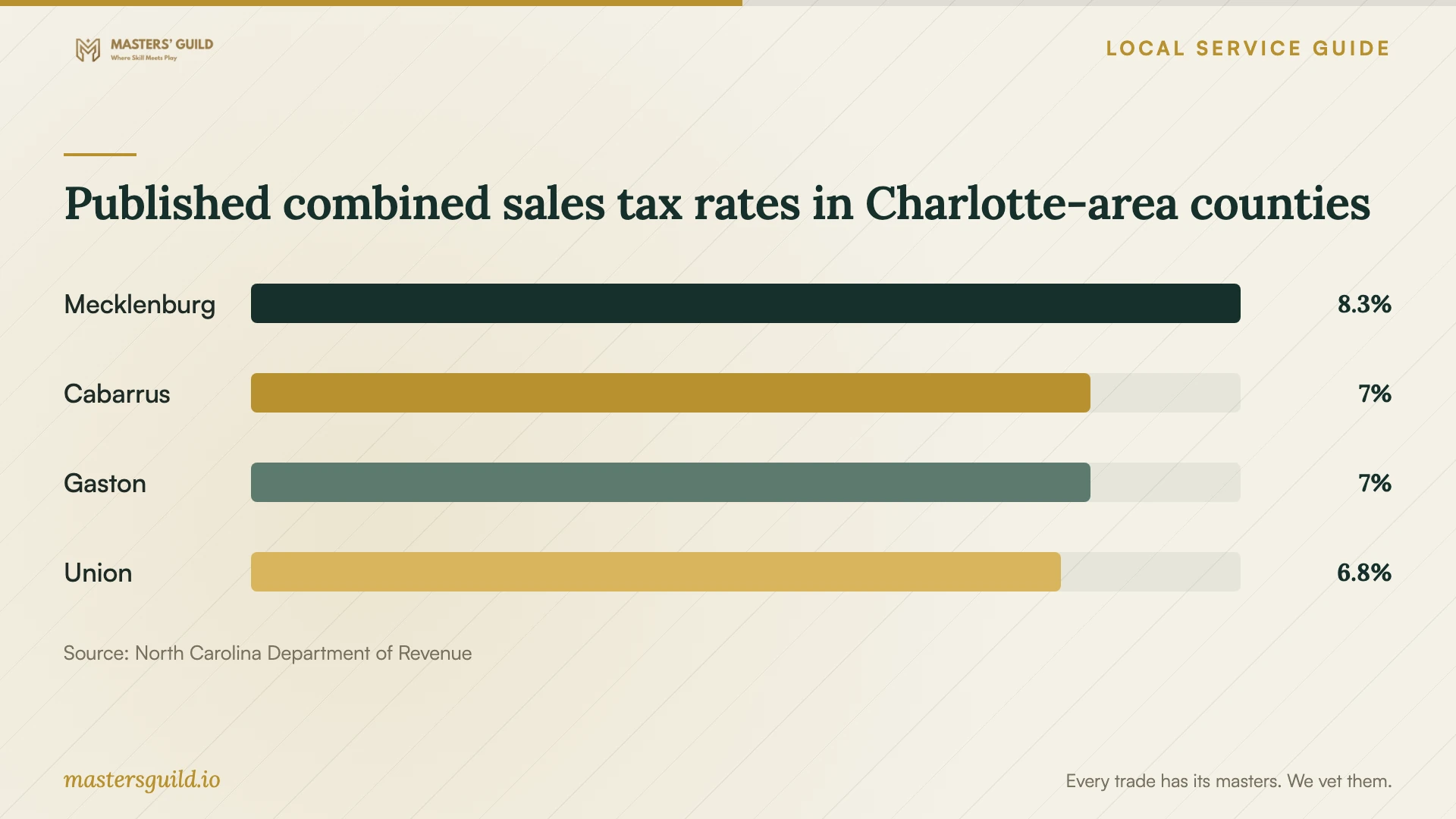
Published combined sales tax rates in Charlotte-area counties
Local details that affect your job
Use the county's permit and inspection process
Mecklenburg County directs permit questions to 980-314-CODE, or 980-314-2633, and lists Code Enforcement's office at 2145 Suttle Avenue in Charlotte. Its homeowner guidance says the county issues permits to the person doing the work and lets homeowners look up property permits and inspection results online. Before demolition, ask who will obtain any required permit; during the project, review inspection completion rather than relying on a verbal assurance. [3]
Account for Mecklenburg's tax change
For a property in Mecklenburg County, NCDOR lists a combined sales and use tax rate of 8.25%, including state, local, and transit taxes. The additional 1% local tax took effect July 1, 2026. Ask the contractor to identify the taxable portion and show whether the total includes tax. NCDOR requires substantiation for capital-improvement treatment, so ask for the basis if a contractor describes a flooring replacement as a capital improvement. [1] [2]
Match the agreement to your project
| Project | Ask before hiring | Local tax or permit point |
|---|---|---|
| Replace existing floor tile | Request removal, preparation, thresholds, and disposal in the scope. | NCDOR lists complete or partial ceramic tile flooring replacement as taxable, subject to exceptions. |
| Regrout or replace damaged tiles | Ask for a repair scope and an explanation of any suspected underlying damage. | NCDOR lists ceramic tile regrouting and damaged tile repair or replacement as taxable, subject to exceptions. |
| Renovate a bathroom | Assign waterproofing, other trades, permit checks, and inspection coordination. | County guidance identifies significant bathroom upgrades as typically requiring a permit. |
| Repair floor joists during tile work | Set an approval process for structural repairs before the crew proceeds. | County guidance identifies crawlspace pier or floor-joist repairs as typically requiring a permit. |
Your hiring checklist
- Give each installer the same room measurements, photos, tile choice, and removal scope.
- Request a site inspection and a written preparation plan before accepting the quote.
- Agree on layout, edge finishes, grout color, and transitions before installation.
- For shower work, request the waterproofing products, installation plan, and responsibility for drain connections.
- Assign permit questions, any required applications, and inspection coordination before demolition.
- Compare totals that identify allowances, exclusions, applicable tax, and payment stages.
- Require written approval and pricing before the crew repairs concealed damage.
- Agree on room closures, product waiting periods, cleanup, care instructions, and warranty terms.
Frequently Asked Questions
Does replacing tile require a permit?
Confirm the full scope with Mecklenburg County Code Enforcement. The county’s June 2022 article does not address tile-only replacement. It identifies significant bathroom and kitchen upgrades and floor-joist repairs as projects that typically require permits. Describe any structural, plumbing, or electrical work when you ask. [3]
Should my tile quote include sales tax?
Ask the contractor to state the tax treatment and show the final total. NCDOR lists flooring replacement and regrouting as taxable services, with exceptions depending on the transaction. Its published Mecklenburg combined rate is 8.25%. Qualifying capital-improvement treatment requires substantiation. [1] [2]
How can I compare two different preparation allowances?
Ask both installers to describe the work covered by their allowance, how they will price additional preparation, and when they need your approval. Request photos and a written change price after demolition if they discover damage. Compare the proposed work as well as the amount.
When can I use the room again?
Ask for separate dates for work completion and return to use. Have the installer give you the waiting periods required by the selected mortar, grout, waterproofing, and sealant products. Agree on bathroom access and furniture or appliance replacement before the crew starts.
Sources and scope
This guide combines the sources below with practical planning guidance. Figures apply to the stated geography and period; request a written quote for your property.