
Local service guide
Special Item Transport in Charlotte, NC
For Special Item Transport in Charlotte, choose a mover who can explain how the crew will handle your item, inspect access at both addresses and document charges and damage protection before pickup. For a household-goods move within North Carolina, check the mover’s North Carolina Utilities Commission C-number. For a move across a state border, follow interstate registration checks. Send item measurements, photos and stair details before comparing offers. [1] [2]
Match the crew to the item and the route
Describe the item before asking for a price. Include its make or model, dimensions, available weight information and photographs of existing damage. For a piano, pool table, safe or antique cabinet, ask the provider to explain the equipment, protective materials and handling method the crew plans to use. Ask who will perform any disassembly, crating and setup, and name those tasks in the written scope.
The NCUC identifies pianos and pool tables among bulky articles that can involve extra charges. It also identifies third-party services as potential additions to the moving bill. Ask whether your quoted price includes the specialist’s work and who takes responsibility for arranging it. [1]
Confirm the name of the company that will arrive. The NCUC warns that an online moving website may belong to a broker that arranges another company to carry out the move. Obtain the operating mover’s name, physical address and credentials before accepting an offer. [1]
Compare the complete charge
For regulated North Carolina household-goods moves, movers charge hourly for journeys of 35 miles or less and use weight and distance for journeys greater than 35 miles. On an hourly move, the NCUC says the clock runs from arrival at your home through completion at the destination; travel charges may also apply. Ask each estimator to explain the billing basis and travel charges for your exact addresses. [1]
Give competing estimators the same item and access information. Ask each one to separate transport, packing, disassembly, setup and any third-party charges. The NCUC lists long carries, stairs, elevators and shuttle services among possible extra services, with applicability depending on the billing basis. Do not compare an offer for curbside delivery with one that includes placement and setup inside. [1]
Ask which estimate type the mover offers. Under the NCUC guide, a binding guaranteed estimate fixes the charge for the agreed services, while a binding not-to-exceed estimate caps it and allows you to pay less if actual charges come in lower. Additional services you request can change either arrangement through an addendum. Keep the agreed scope and any changes together. [1]
Plan access at both ends
Send photographs of the route from the item to the truck and from the destination truck position to its final placement. Measure door openings, narrow turns and landings. Describe steps, slopes and the intended loading position. Ask the mover to review any uncertain clearance before you book.
For a building with shared access, ask management about loading arrangements, elevator reservations, protective coverings and delivery hours. Give the mover those requirements before agreeing on the arrival window. Decide who will meet the crew at each address and who can authorize a change if the planned route does not work.
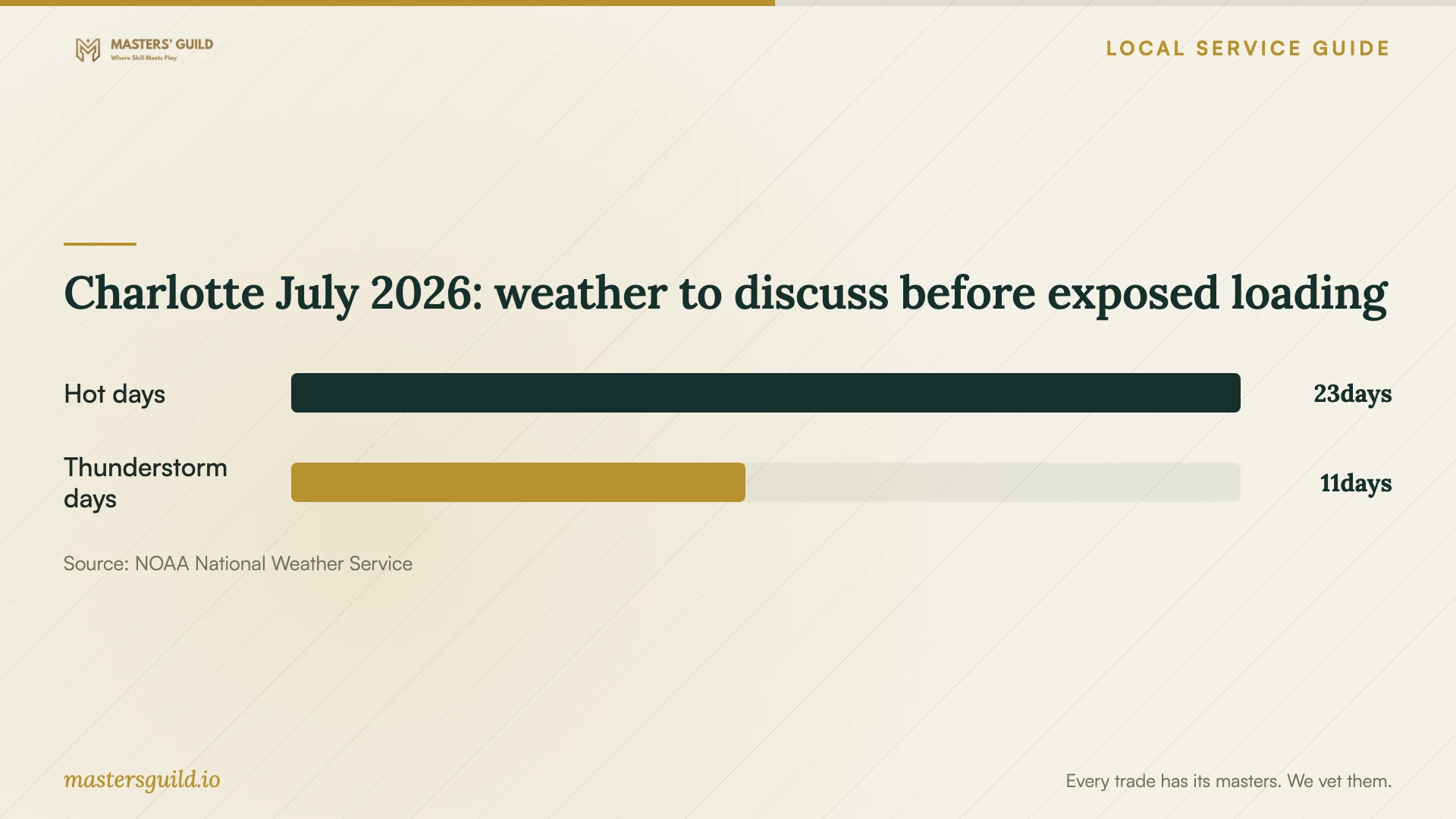
Discuss weather protection for the walk between the building and truck. Charlotte’s July 2026 climate report recorded 23 days with highs of at least 90°F and 11 days with thunderstorms. Those observations support asking about covered loading and a weather delay plan for exposed handling; they do not predict conditions on your moving date. [3]
Choose protection for the item’s value
Ask about both insurance and valuation. The NCUC requires certificated movers to carry insurance, but the valuation you select governs settlement for item loss or damage. For regulated North Carolina moves, basic value protection provides a maximum of $0.60 per pound of the affected item regardless of its actual value. Discuss full value protection and the declared shipment value before the move starts. [1]
The NCUC defines items worth more than $100 per pound as articles of extraordinary value. List qualifying items in writing and have the mover acknowledge them on the bill of lading. Ask the mover to explain any limits that apply to your particular item. An insurance certificate alone does not explain the settlement you would receive. [1]
At delivery, inspect the item and retain your paperwork. Record damage, request the mover’s claim form and preserve damaged materials as evidence. The NCUC says customers should file claims as soon as possible and no later than nine months after delivery. For unresolved intrastate moving claims, its Public Staff Transportation Rates Division offers assistance at 919-733-7766. [1]
Charlotte July 2026: weather to discuss before exposed loading
Local details that affect your job
North Carolina distance changes quote comparison
For a regulated household-goods move starting in Charlotte and remaining within North Carolina, confirm whether the journey falls at or below 35 miles or above it. The NCUC uses hourly billing for the first category and weight-distance billing for the second. Ask the estimator to identify the distance used and explain the basis before comparing totals. Do not assume a nearby destination shares the same billing method. [1]
A state-border move needs a different credential check
If your pickup and delivery addresses fall in different states, use the interstate hiring checks. North Carolina DOJ says interstate moves fall primarily under the Federal Motor Carrier Safety Administration and advises checking the mover’s Motor Carrier number, registration and insurance through the federal lookup. For a household-goods journey entirely within North Carolina, ask for the NCUC certificate number and contact Public Staff at 919-733-7766 to check complaints. [2]
Confirm whether the job falls within household-goods rules
The NCUC excludes commercial office and equipment moves and new furniture or retail deliveries from its jurisdiction. If you are arranging delivery from a retailer rather than moving an existing household item, ask who carries the item and obtain that company’s written handling, payment and damage terms. Do not assume the North Carolina household-goods protections described here apply to that delivery. [1]
Choose the right booking checks
| Your situation | Check before booking | Ask the provider |
|---|---|---|
| Household move within NC, 35 miles or less | NCUC certificate and hourly billing basis | What travel charges and extra services will you include? |
| Household move within NC, greater than 35 miles | NCUC certificate and weight-distance billing basis | How will you establish shipment weight and route distance? |
| Move between states | Federal registration and insurance using the Motor Carrier number | Which operating company will transport the item? |
| New retail delivery | Carrier’s written delivery and damage terms; NCUC household-goods jurisdiction excludes this category | Does delivery include indoor placement and setup? |
| Item worth more than $100 per pound on a regulated NC move | Written extraordinary-value declaration and selected valuation | How will you acknowledge this item on the bill of lading? |
Your hiring checklist
- Send the item’s dimensions, model, photographs and available weight information.
- Provide exact pickup and delivery addresses, including any state-border crossing.
- Photograph access routes and measure narrow openings and turns.
- Ask the provider to describe equipment, protective materials and crew responsibilities.
- Confirm loading access and any building management arrangements.
- Obtain a written scope covering transport, disassembly, placement and setup.
- Discuss valuation, declared value, payment method and weather delays before booking.
- Keep condition photos, the inventory and signed moving documents.
Frequently Asked Questions
Can I obtain a written estimate for one item?
Ask for one and provide photographs and access details. For regulated North Carolina moves, the NCUC generally requires a free written estimate on request, but exempts requests made less than five business days before the move and shipments weighing less than 500 pounds. Confirm what the provider will document for your job. [1]
Does the mover’s insurance cover the item’s replacement value?
Ask the mover to explain your selected valuation and declared shipment value. The NCUC distinguishes the mover’s insurance from the valuation that governs a claim. Basic protection limits liability to $0.60 per pound of the affected item, regardless of actual value. [1]
Will the crew reassemble my item?
Include reassembly and setup in the written scope. The NCUC guide says crews assemble items they disassembled at origin and do not assemble items that others disassembled. Confirm the arrangement before another person takes the item apart. [1]
What should I do if I find damage?
Photograph it, notify the mover, request a claim form and preserve the damaged item and packing materials. For regulated North Carolina moves, file the claim as soon as possible and within nine months after delivery. Keep copies of the bill of lading and inventory. [1]
Sources and scope
This guide combines the sources below with practical planning guidance. Figures apply to the stated geography and period; request a written quote for your property.