
Local service guide
Pest control in Charlotte, NC: Hiring Guide
Pest control in Charlotte starts with identifying the problem and matching the provider’s credentials to the work. Ask for the supervising North Carolina licensee’s name, the applicable license phase, and a written plan covering treatment areas, preparation, follow-up, and total charges. North Carolina distinguishes household pests, wood-destroying organisms, and fumigation; technicians and certified applicators work under a licensee. [1]
Match the provider to the treatment
Ask the provider to name the pest or explain how they will identify it during inspection. Describe where you found activity, when you first noticed it, and whether you have already used a product. Send clear photographs if you can take them without disturbing the affected area. Request an inspection before committing to a treatment you do not understand.
North Carolina separates structural pest control from pesticide applications over land. NCDA&CS describes spraying against, above, into, or under a structure as structural work. For a request combining indoor treatment with lawn or landscape spraying, ask the company to explain which credentials cover each part. The state organizes nonstructural pesticide categories by application site rather than by the pest’s name. [1]
For structural work, ask for the licensee’s name and applicable phase. You can also ask the visiting worker to explain their credential and supervision arrangement. A registered technician or certified applicator does not need to hold an independent structural license to work under a licensee. Confirm the arrangement instead of rejecting a worker based on their title alone. [1]
Compare quotes for the same scope
Give each provider the same description and ask for an itemized proposal. Include the affected rooms, exterior areas, access concerns, and any previous treatment. Ask the provider to separate inspection, initial treatment, scheduled follow-up, and optional work. For a recurring plan, request the payment schedule, cancellation terms, and treatment exclusions.
Ask what happens if you still see activity after treatment: whom you contact, when the provider reassesses the problem, and whether you pay for another visit. For a termite proposal, ask the provider to distinguish treatment coverage from any promise concerning damage. Keep the written terms with your inspection findings.
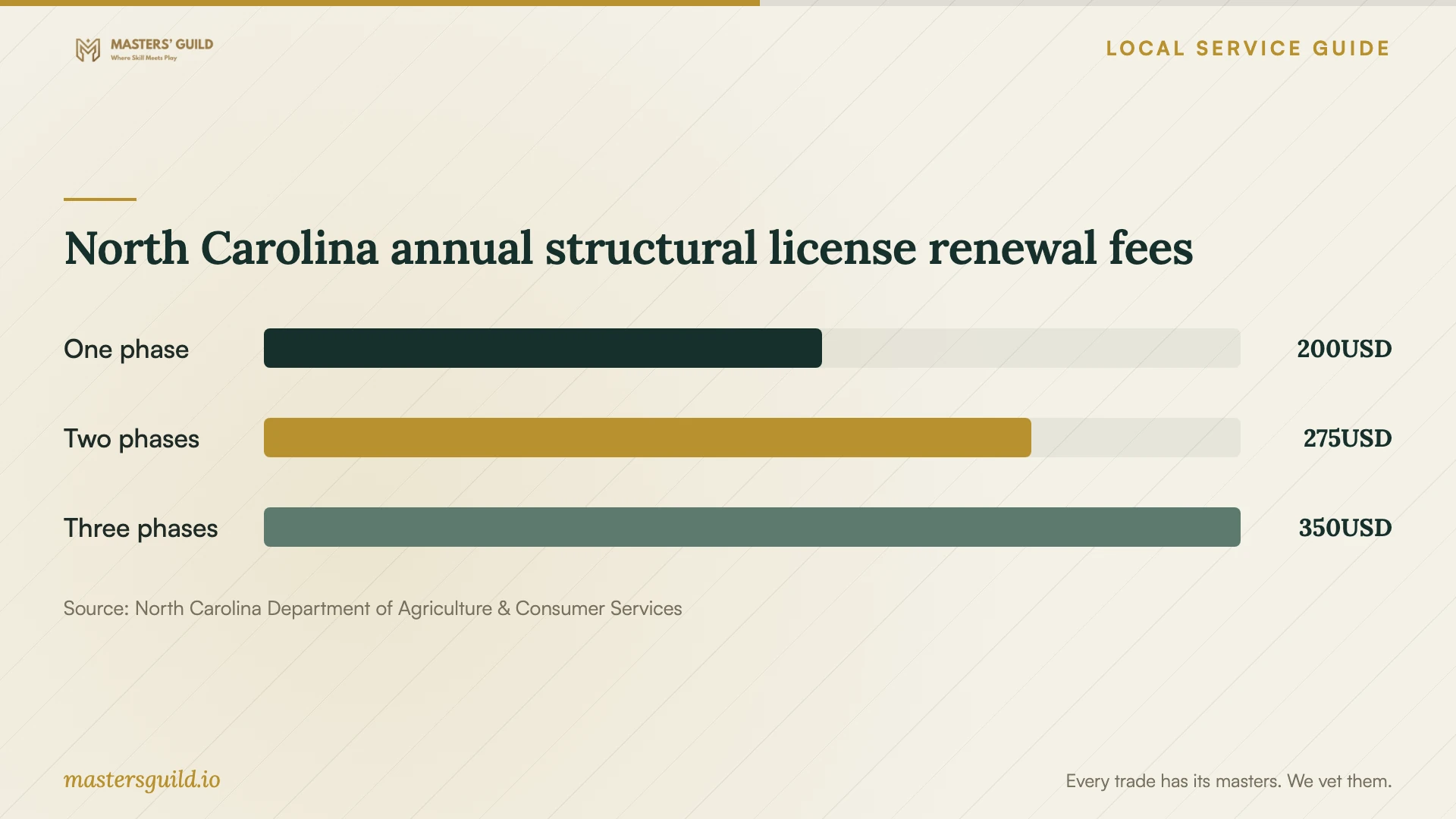
The supplied official sources do not establish homeowner treatment prices in Charlotte. Obtain a property-specific quote rather than treating the state licensing fees below as a service estimate. Ask for the full payable amount and an explanation of any charges the provider may add after inspection. [3]
Prepare around the provider’s instructions
Request preparation instructions before the appointment. Tell the provider about children, pets, aquariums, and rooms you need to keep accessible. Ask which products and methods they propose, where they will apply them, and what instructions you must follow before returning to treated areas. Have the provider explain any unclear instruction before work begins.
Ask before moving furniture, emptying cupboards, cleaning affected surfaces, or adding another pesticide. Agree on access to the spaces the provider needs to inspect. Photograph visible activity and keep a short record of locations so you can explain what changed during follow-up.
North Carolina permits homeowners to apply legally acquired pesticides on property they own when they follow label directions. Restricted-use pesticides require proper credentials. NCDA&CS identifies structural termite treatments and complex infestations as situations that may warrant professional expertise. If you consider doing the work yourself, read the label and ask whether the problem needs professional assessment. [1]
Include water removal in a mosquito plan
Mecklenburg County recommends checking the yard for standing water once a week. Its list includes plant saucers, children’s toys, buckets, wheelbarrows, tarps, bird baths, and pet water bowls. Before arranging backyard treatment, walk the property and identify which containers you can empty or maintain. [2]
Ask the provider to include a breeding-site inspection in the proposed scope and explain which water sources you should manage between visits. Identify water you cannot remove and ask how it affects their recommendations. Agree on who handles each maintenance task so you can assess the treatment plan alongside your own yard work.
North Carolina annual structural license renewal fees
Local details that affect your job
North Carolina credentials need a scope and currency check
For work at a Charlotte home, ask which North Carolina structural phase covers the proposed service and who holds the supervising license. NCDA&CS requires licensees, certified applicators, and registered technicians to renew their credentials each year. The structural credential year runs from July 1 through June 30. Ask for current credentials rather than relying on a card or document from an earlier service year. [1] [3]
Mecklenburg County recommends weekly mosquito prevention
The county’s mosquito guidance gives homeowners a concrete task before and between service visits: tip out standing water once a week. Check small containers as well as obvious collection points, including bottle caps, plant saucers, toys, and folded tarps. Use this walk-through to ask whether a mosquito proposal includes identifying breeding sites and explaining ongoing water management. [2]
Choose the next step for your pest problem
| Situation | Next step | Question to ask |
|---|---|---|
| Household pest treatment | Ask about the P household-pest phase and supervising licensee. | Who covers this work under the company’s license? |
| Suspected termites or other wood-destroying organisms | Request an assessment and ask about the W phase. | What findings support the proposed treatment? |
| Proposed fumigation | Ask about the F phase and request written preparation instructions. | Who oversees the work and explains the occupancy instructions? |
| Backyard mosquitoes | Check standing water each week using Mecklenburg County’s guidance. | Will you inspect breeding sites and explain maintenance between visits? |
| Combined house and landscape spraying | Ask which structural and nonstructural credentials cover the application sites. | Which credential applies to each part of this proposal? |
Your hiring checklist
- Record the affected locations, visible activity, and products you have already used.
- Ask the provider to identify the pest and explain the proposed treatment scope.
- Request credential details for the supervising licensee and the visiting worker.
- Compare inspection, treatment, follow-up, and recurring-plan charges separately.
- Get written preparation and return-to-treated-area instructions.
- Agree on the process and charges for unresolved activity after treatment.
- For a mosquito visit, identify standing-water containers and discuss ongoing maintenance.
Frequently Asked Questions
Does the technician visiting my home need their own structural license?
North Carolina requires every pest control business to have at least one licensee overseeing its registered technicians and certified applicators. Those workers can perform structural pest control under a licensee. Ask for the worker’s credential and the supervising licensee’s name. [1]
Can I do pest control on my own property?
North Carolina allows you to apply legally acquired pesticides on property you own if you follow label directions. Restricted-use products require proper credentials. The state advises that structural termite treatments or complex infestations may warrant professional expertise. [1]
How should I prepare for a mosquito-control visit?
Check the yard for standing-water containers and discuss them with the provider. Mecklenburg County recommends a weekly check of items such as buckets, plant saucers, toys, tarps, bird baths, and pet water bowls. Ask the provider for any additional preparation instructions specific to the treatment. [2]
Are the licensing fees below what I should pay for treatment?
NCDA&CS publishes these amounts as annual structural license renewal fees paid by license holders. They do not establish the price of treating your home. Request a quote that identifies the pest, treatment areas, methods, and included follow-up. [3]
Sources and scope
This guide combines the sources below with practical planning guidance. Figures apply to the stated geography and period; request a written quote for your property.