
Local service guide
Network Setup and Support in Charlotte, NC
Arrange Network Setup and Support in Charlotte by defining the rooms and devices that need service, then asking for a quote that separates troubleshooting, equipment, and any installed cabling. For in-wall work, ask the contractor to explain the applicable North Carolina license classification or exemption. Request an itemized tax calculation: NCDOR lists Mecklenburg County’s combined sales and use tax rate at 8.25%, but the treatment of your cabling transaction depends on its scope. [1] [2] [3]
Define the job before buying hardware
Tell the technician where you lose service, which devices have trouble, and what you are doing when the interruption occurs. Distinguish a connection that drops throughout the home from a problem in one room or on one device. Ask for a diagnostic visit or a defined troubleshooting allowance before approving a shopping list.
Prepare a simple floor sketch with the internet equipment, work areas, television, and proposed cable outlets marked. Include the spaces you want the technician to test. Ask for a recommendation that explains the proposed equipment locations and cable routes, plus an alternative that uses your existing equipment where possible.
For a home office, describe the tasks you need to complete: video calls, file transfers, printing, or access to an employer’s network. Agree on an acceptance check using your own devices. A successful handover should answer whether you can complete those tasks in the intended rooms.
Check qualifications against the cabling scope
The North Carolina electrical board authorizes holders of the special restricted fire alarm/low voltage license, SP-FA/LV, to install, maintain, or repair low-voltage wiring and directly related wiring within that classification’s scope. The board also permits work on certain low-voltage systems without its license when the installer meets all conditions in Rule .0805. [1]
Ask the contractor to identify the license classification or exemption they intend to use for your installation. The exemption includes conditions concerning the system’s code status, circuit class, voltage, current protection, location, and potential shock or fire hazard. Avoid accepting a blanket explanation that all network cable work needs a license or that all low-voltage work qualifies for an exemption. [1]
Request a written cable route before authorizing holes in finished walls. Ask who will handle access openings, patching, labels, and testing. If the proposal adds electrical power work, have the contractor identify that work as a separate scope and explain who will perform it. Ask them to resolve permit questions with the inspection authority for your address before installation.
Compare complete quotes and tax treatment
Ask each provider to separate the diagnostic charge, installation labor, equipment, cable materials, wall repair, and follow-up support. For cable outlets, specify the locations and what each finished outlet includes. For equipment setup, identify who buys the hardware and who handles returns if the proposed arrangement fails your agreed checks.
NCDOR’s real-property chart lists repair, maintenance, and installation of computer cable, telephone wiring, speaker wire, and coaxial cable as taxable, excluding underground utility installation from that entry. The department also describes exceptions involving construction, qualifying capital improvements, and other circumstances. Ask the provider to explain the treatment of your particular transaction rather than assuming installed cable makes the entire project tax-exempt. [2]
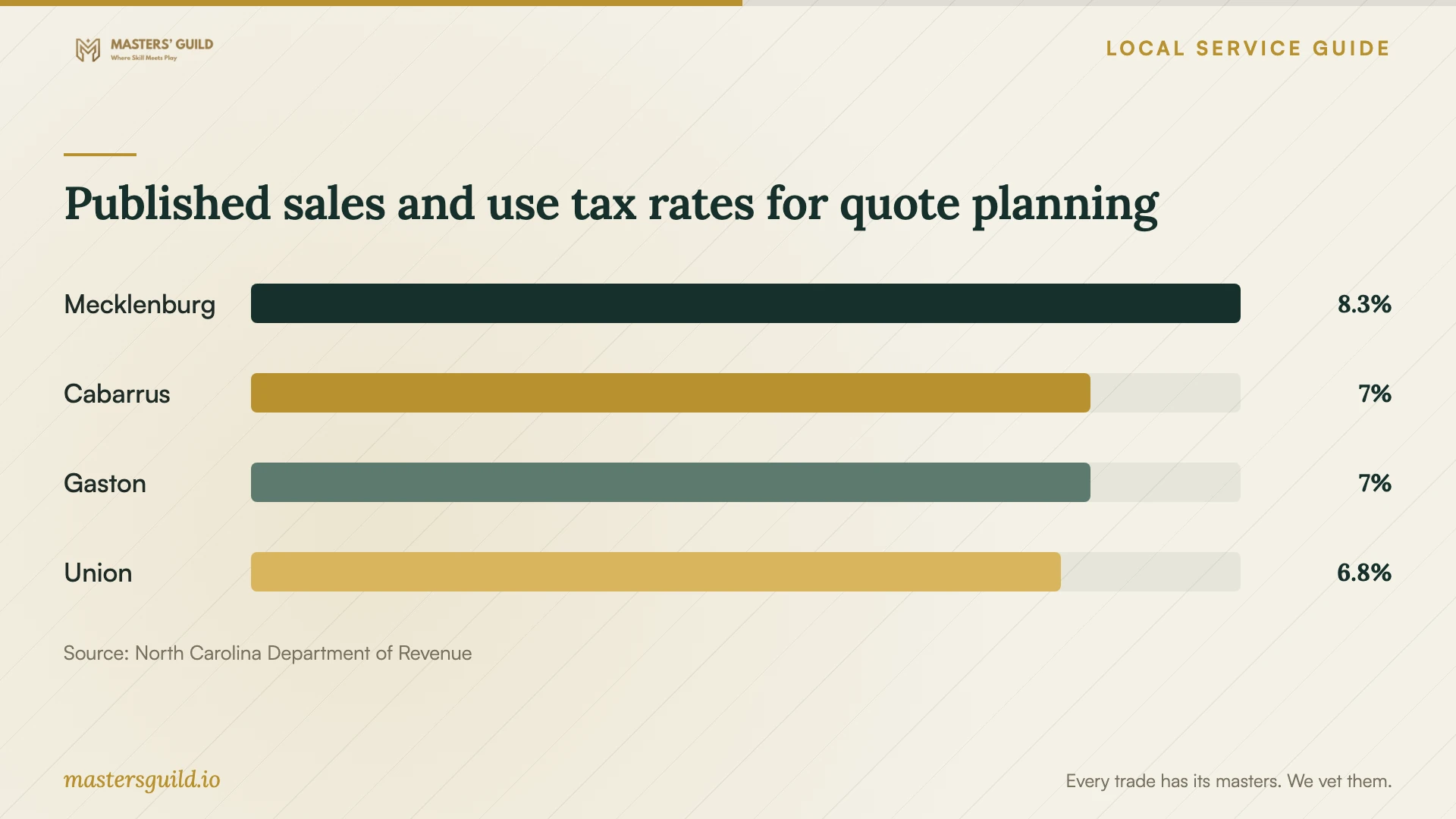
For taxable amounts subject to Mecklenburg’s published county rate, NCDOR lists a combined rate of 8.25%. Its current table lists different rates for neighboring counties. Give the provider the installation address and ask them to state the applicable rate, taxable subtotal, and final amount in the quote. [3]
Prepare access and agree on a handover
Have an account holder available for any internet-provider or equipment sign-in. Gather model names and account access without putting passwords in a public job description. Photograph the existing connections before the visit and tell the technician which devices must remain connected during the work.
Agree on the interruption window before installation. Clear access to the equipment and proposed cable endpoints, and identify any rooms the technician cannot enter. If you rent or share responsibility for the building, obtain permission for drilling and cable routes before approving the work.
At handover, test the named rooms and devices together. Request a record of equipment locations, cable labels, settings you need to manage, and how to restore service after a reset. Keep control of administrator accounts and ask the technician to remove temporary access. Put the follow-up period and any return-visit charges in writing.
Published sales and use tax rates for quote planning
Local details that affect your job
Mecklenburg’s July 2026 tax change affects quote comparisons
NCDOR reports that Mecklenburg County added 1% local sales and use tax on July 1, 2026, bringing its published combined rate to 8.25%. For an installation here, ask the provider to use the current applicable rate and show the taxable subtotal. An older quote may need a revised tax calculation before you compare final totals. [3]
North Carolina’s low-voltage exemption requires a scope check
For cabling in a Charlotte home, use North Carolina’s electrical-board rules to question the contractor’s qualifications. Rule .0805 makes the exemption conditional and includes the electrical inspector’s judgment about shock or fire hazard. Ask the contractor to identify the provision covering your proposed system and resolve uncertainty with the inspector who has jurisdiction before starting work. [1]
Choose the scope to request
| Your situation | Scope to request | Question before approval |
|---|---|---|
| Connection problems across the home | A diagnostic visit before equipment purchases | What checks will you perform, and what does the diagnostic charge include? |
| Trouble in specific rooms | Room-by-room testing and a proposed equipment layout | How will we test the proposed arrangement using my devices? |
| You want installed cable outlets | A written route, termination, labeling, and testing scope | Which North Carolina license classification or conditional exemption covers this work? |
| Cabling accompanies a remodel | A quote that explains the transaction’s tax treatment | Does a chart exception apply, and what substantiation supports that treatment? |
| You need support after setup | A handover record and written follow-up terms | Who retains account control, and what will a return visit cost? |
Your hiring checklist
- List affected rooms, devices, tasks, and the times you notice interruptions.
- Mark existing equipment and proposed cable outlets on a floor sketch.
- Request diagnosis before approving replacement equipment.
- Ask the cabling contractor to explain the applicable qualification or exemption.
- Obtain an itemized quote with tax treatment and the final total.
- Agree on access, drilling permission, wall repair, and the interruption window.
- Define room and device checks, account handover, and follow-up charges.
Frequently Asked Questions
Should I buy a new router before booking?
Ask for diagnosis first. Give the technician your equipment models and the rooms or devices with problems. Request a proposal that explains whether they recommend keeping, relocating, or replacing equipment, and agree on the checks you will use before accepting the result.
Does every Ethernet installation require an electrical contractor license?
North Carolina’s board provides a conditional exemption for certain low-voltage systems under Rule .0805. It also defines the SP-FA/LV license scope. Ask the contractor which provision applies to your proposed installation; the exemption requires the installer to meet all listed conditions. [1]
Will I pay sales tax on installed network cable?
NCDOR lists computer-cable repair, maintenance, and installation as taxable in its real-property chart, with exceptions and circumstances that can change the treatment. Ask for the taxable subtotal and an explanation of any claimed exception. NCDOR lists Mecklenburg’s current combined rate as 8.25%. [2] [3]
What should I receive when the technician finishes?
Request the agreed room and device tests, equipment and cable labels, account control, and a written record of the setup. Confirm how to restore service after a reset and whom to contact for follow-up. Agree on those deliverables before work starts.
Sources and scope
This guide combines the sources below with practical planning guidance. Figures apply to the stated geography and period; request a written quote for your property.