
Local service guide
Gardening in Charlotte: Hiring and Seasonal Planning
Arrange Gardening in Charlotte by separating cleanup, planting and ongoing care in your quote, then agreeing on materials, debris removal and watering responsibilities. Before approving chemical weed or pest treatment, request the applicator’s current North Carolina pesticide license. The state requires commercial applicators to hold a license for applying any type of pesticide for compensation. [3]
Define the work before comparing gardeners
Start with the result you want: weeded beds, replacement plants, a seasonal cleanup or a recurring care plan. Photograph each area and mark plants you want to keep. Ask the gardener to identify unfamiliar plants before removing them. Agree on hand weeding or request a separate proposal for chemical treatment.
For planting, request a written plant list with quantities and container sizes. Discuss the light each bed receives, your water access and the care you want to provide between visits. Require approval before substitutions. Decide who will buy the plants, handle returns and remove pots and packaging.
For recurring work, list the tasks for each visit and those that need separate approval. Set a spending limit for extra materials. Ask how the gardener will report plant problems and reschedule work after unsuitable weather. Keep any initial cleanup separate from the ongoing maintenance quote.
Compare quotes with the same scope
Request a written quote that names the beds, tasks and materials you discussed. For hourly work, agree on an initial spending limit and require approval before the gardener exceeds it. Ask whether the hourly charge covers one worker or a crew, and how the provider charges for buying supplies and hauling debris.
For a fixed price, confirm the quantities and areas it covers. Ask the gardener to separate optional planting or mulch work from your essential cleanup. Before choosing an offer, resolve exclusions, payment timing, access arrangements and responsibility for damage. Request proof of liability insurance and examples of comparable work.
Arrange soil testing before buying amendments
Ask the gardener to quote soil sampling before you approve fertilizer or lime purchases. NCDA&CS provides recommendations specific to what you are growing. Identify the intended plants when completing the submission: the department requires a crop code on the form and delivers reports by email. [2]
NCDA&CS offers free soil testing to North Carolina residents through November 30, 2026. From December 1, 2026, through March 31, 2027, the laboratory charges $5 per sample. To avoid that fee, samples must reach its Raleigh facility by 5 p.m. on November 30. The department uses laboratory arrival, rather than shipping or local Extension drop-off, to determine the fee. [2]
Use official NCDA&CS soil boxes, fill them to the red line and match the identifying information on the boxes and form. Keep a copy of the form. The department instructs clients to pack boxes in a sturdy shipping container rather than padded envelopes. Before choosing a county Extension collection service, confirm that it collects samples and can meet your arrival deadline. [2]
Check credentials for chemical treatment
North Carolina requires commercial applicators to hold a pesticide license when they apply any type of pesticide for compensation. NCDA&CS identifies the Commercial Ground Applicator license for paid, non-aerial applications on someone else’s property and includes landscapers and lawn-care providers among its examples. License holders must renew pesticide licenses each year. [3]
For ornamental beds, shade trees and turf, ask about category L, Ornamental & Turf. NCDA&CS assigns that category to pesticide work involving ornamental plants, shade trees and turf, including home lawns. Request the applicator’s name, current license details and applicable category before approving treatment. [3]
Ask the gardener to explain the problem they propose to treat and identify the treatment area. Request the product name and instructions for access, watering and follow-up. Discuss hand removal if you prefer it. Give separate approval for treatment rather than including it in general permission to weed, plant or spread mulch.
Plan planting and the handover
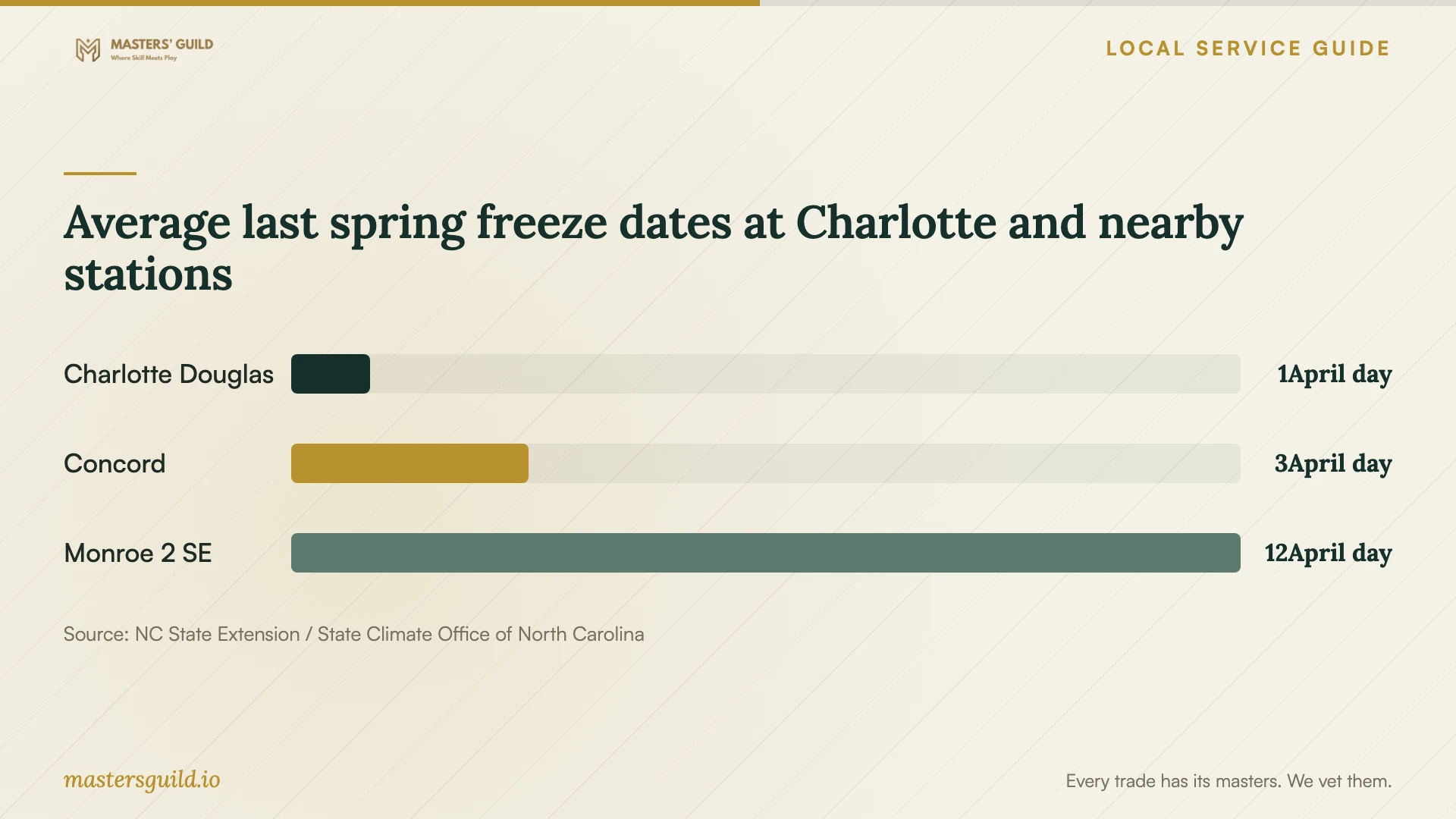
NC State Extension lists April 1 as the average last spring freeze and November 5 as the average first fall freeze at Charlotte Douglas, using observations from 1939 through 2019. Use these historical averages as scheduling references. They do not predict the weather at your property on a proposed planting date. [1]
Before approving a date, ask the gardener how they will handle a forecast freeze and who will provide any agreed protection. For a fall visit, decide whether you want planting, cleanup, soil sampling or a combination. Specify which tasks you want completed if weather prevents planting.
Inspect the garden together at completion. Check plant quantities and cleanup areas against the quote, then request a written watering and care plan. Confirm who will remove unused materials. For follow-up visits, record their purpose and require approval before the gardener buys replacement plants.
Average last spring freeze dates at Charlotte and nearby stations
Local details that affect your job
Plan fall sampling around the Raleigh arrival deadline
Charlotte homeowners can use NCDA&CS’s North Carolina resident soil-testing schedule. Arrange sampling and transport so the Raleigh laboratory receives samples by 5 p.m. on November 30, 2026, to avoid the $5-per-sample peak-season fee. A local Extension drop-off does not establish the fee date. Ask whoever handles transport to confirm the expected laboratory arrival. [2]
Check application authority before hiring for spraying
North Carolina requires a license for compensated pesticide application. Request Commercial Ground Applicator credentials and the category appropriate to your garden treatment. A Pesticide Consultant license authorizes paid pesticide advice but does not authorize applications. If a provider presents that credential for spraying, request their application credential before approving the job. [3]
Use the Charlotte station for seasonal planning
NC State Extension gives Charlotte Douglas average freeze dates of April 1 and November 5 from 1939 through 2019 observations. Before booking tender planting or fall protection, review the forecast with the gardener. Treat the station dates as historical references rather than a safe planting date for your individual garden. [1]
Choose the scope that fits your garden
| Your priority | Request | Resolve before booking |
|---|---|---|
| Overgrown beds | A defined cleanup visit | Plants to retain, weed-removal method and debris disposal |
| New planting | A plant list and preparation plan | Quantities, substitutions, watering and amendment approval |
| Soil recommendations | Sampling and submission | Laboratory arrival by 5 p.m. November 30, 2026, to avoid the $5-per-sample peak-season fee. |
| Chemical weed or pest treatment | A treatment proposal | Current application license and category appropriate to the work |
| Ongoing care | A written visit schedule | Included tasks, extra-work approval and care between visits |
Your hiring checklist
- Send photographs and mark plants you want retained.
- Separate cleanup, planting and recurring care in the task list.
- Request itemized labor, materials, delivery and disposal charges.
- Decide who will collect, submit and pay for soil samples.
- Request application credentials before approving pesticide treatment.
- Agree on water access, gate access and material storage.
- Record weather rescheduling and plant substitution arrangements.
- Request a care plan and inspect the completed work together.
Frequently Asked Questions
How should I compare gardening quotes?
Give each gardener the same photographs and task list. Request separate charges for labor, plants, mulch, delivery and disposal. For hourly work, set an initial spending limit and an approval point before the gardener exceeds it. For a fixed quote, confirm the areas and tasks it covers.
Does a gardener need a license to spray my beds?
North Carolina requires a pesticide license for commercial applicators applying any type of pesticide for compensation. For paid ground applications, ask about the Commercial Ground Applicator license and the appropriate category. The state’s Ornamental & Turf category covers ornamental plants, shade trees and turf. [3]
Can I avoid the soil-testing fee by mailing samples on November 30?
NCDA&CS must receive samples at its laboratory by 5 p.m. on November 30, 2026. The department bases the fee on arrival at its Agronomic Services facility, rather than mailing, postmark, online submission or local Extension drop-off. Arrange transport to meet that arrival deadline. [2]
Does April 1 mean I can plant without freeze protection?
April 1 is Charlotte Douglas’s average last spring freeze date in the Extension table, using observations from 1939 through 2019. It is a historical average. Ask the gardener to assess your proposed plants and the current forecast before deciding on planting and protection. [1]
Sources and scope
This guide combines the sources below with practical planning guidance. Figures apply to the stated geography and period; request a written quote for your property.